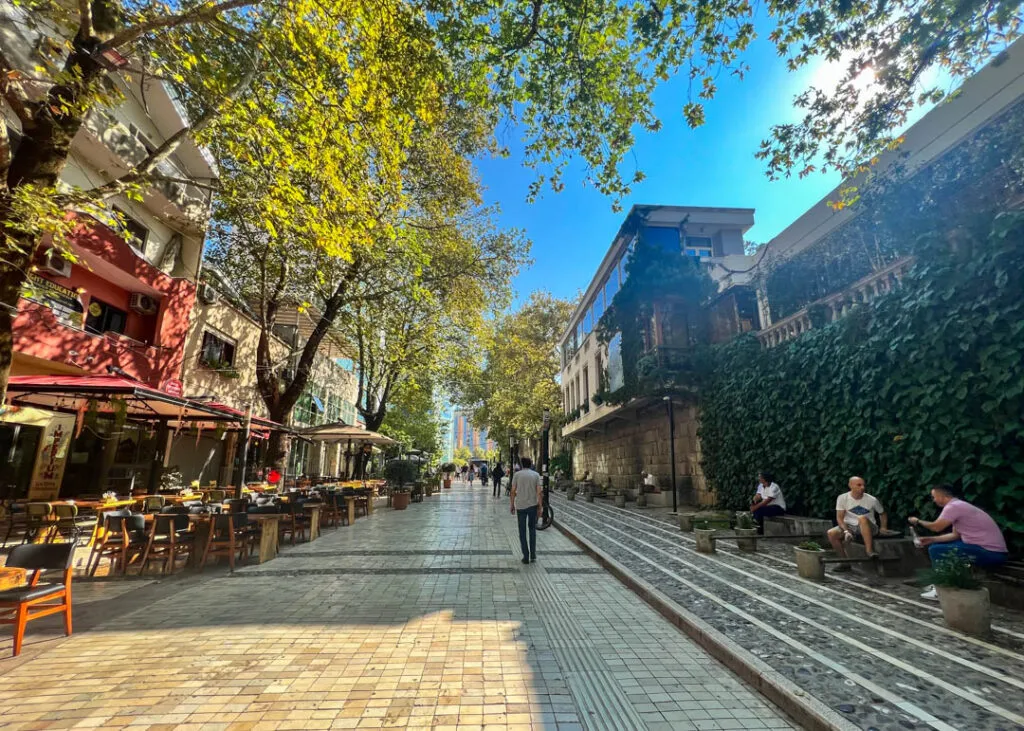
Ask a Tirana local where to eat, drink coffee or simply sit and watch the city, and the answer is almost always Blloku. It is a small grid of streets a short walk south west of the centre, and until 1991 it was the one part of the city ordinary Albanians were not permitted to enter at all. Most visitors now meet it after dark, as a strip of bars. That is only the second half of the story: by day, Blloku runs on coffee, an evening walk that has nothing to do with drinking, and a set of restaurants that outnumber the bars by a wide margin.
Where the boundaries actually are
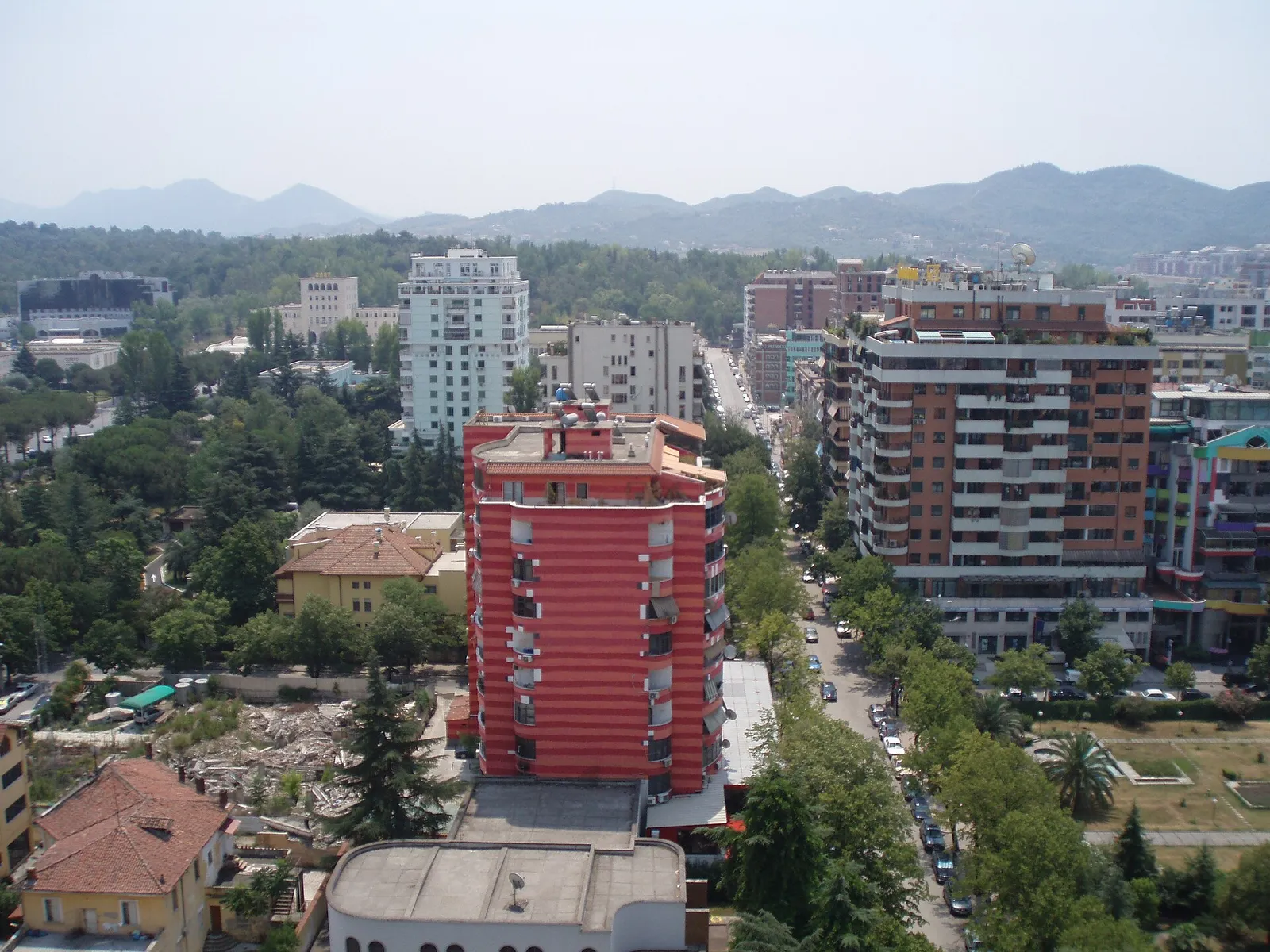
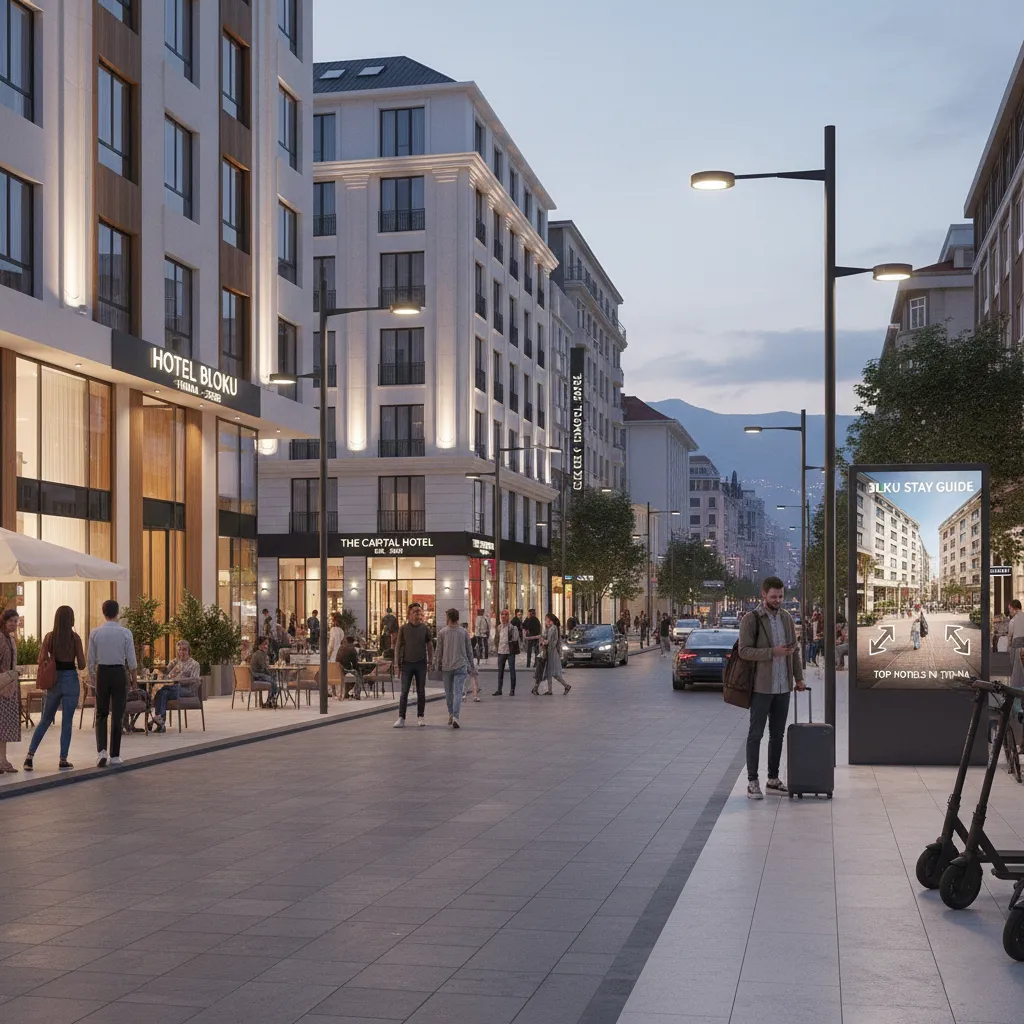
Blloku sits in a rough rectangle bounded by the Lana river to the north, the Grand Park to the south, Rruga Pjeter Bogdani to the east and Rruga Ibrahim Rugova to the west. Two streets carry most of the life inside it: Rruga Pjeter Bogdani, a pedestrianised spine lined with terraces, and Rruga Ismail Qemali running parallel. Just past the southern edge, where Rinia Park begins, a plaza of fountains and terrace cafes marks the handover into the rest of the city, worth a slow look despite sitting outside the boundary. From almost any hotel in central Tirana, Blloku itself is a ten to fifteen minute walk, which matters when you are choosing where to base yourself, and our guide to where to stay in Tirana covers the trade offs between sleeping inside the district and a short walk from it. Once you are inside, walking is genuinely the only transport you need.
A compound closed until 1991
For most of the communist period this small grid of streets was fenced off and guarded, the residential compound of the party leadership. Ordinary Albanians needed special permission to enter, and few ever had reason to ask. The dictator’s own house still stands among the restaurants today, unmarked and indistinguishable from its neighbours. When the system collapsed in 1991, the guards and the fence went with it, and the district reopened to a city that had never really seen it. Cafes filled the space first, then restaurants, then bars, and the layout still shows its origins: quiet, low rise streets never built to carry a nightlife district, which is why every terrace still looks slightly improvised.
Mornings run on coffee
Albanians do not treat coffee as something to grab and carry off. An espresso is a reason to sit for an hour, and Blloku in the morning is the easiest place in Tirana to watch that happen. Tables fill from around seven or eight, long before any restaurant has opened for the day, and the pace barely changes until lunch. A few cafes lean into the ritual more than others: one occupies a converted old mill and roasts its own beans in view of the street, another sits inside a building styled after the communist era, and a third has become the unofficial office for remote workers, since nobody minds a laptop on the table for two hours over one coffee. Expect an espresso somewhere in the range of 150 to 200 lek and a cappuccino a little more, though it is always worth confirming current prices on the menu rather than assuming.
The evening giro
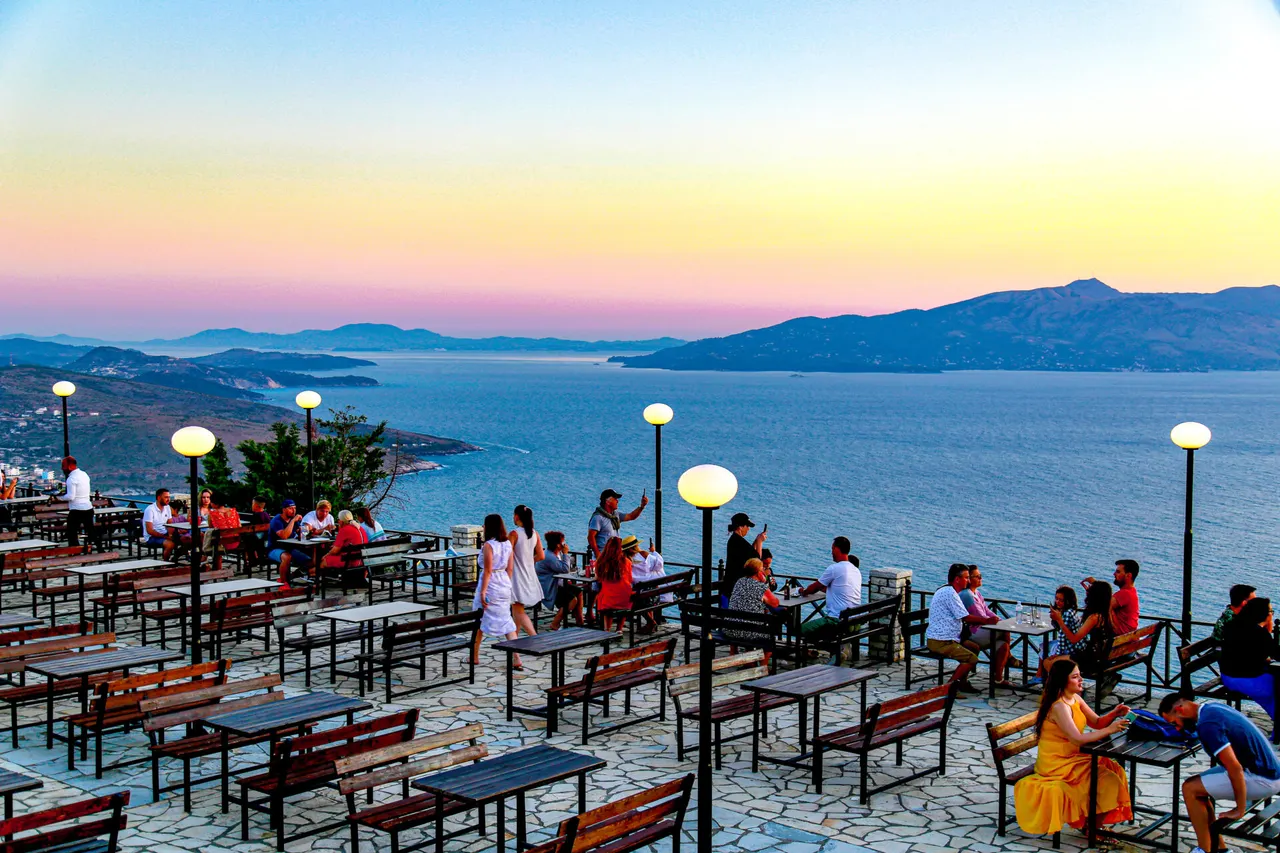
Between roughly seven and nine in the evening, the pedestrian spine fills for the giro, the slow evening walk that is a genuine Balkan institution rather than a performance staged for visitors. Families push strollers, groups of teenagers move in loose clusters, older couples walk arm in arm at half the pace of everyone around them, and the street becomes something close to a shared living room. Nobody is trying to get anywhere. Joining in costs no more than an ice cream or an espresso from any terrace with tables outside, and standing at the edge of the crowd to simply watch is just as normal as walking it yourself. It is one of the few times in the day you will see three generations of the same family on the same stretch of pavement, students in current streetwear passing grandmothers in traditional headscarves.
Restaurants, shops and a cheaper alternative
Restaurants in Blloku range from traditional grill houses serving slow roasted meat and yoghurt dishes to contemporary kitchens plating modern versions of the same ingredients, alongside a good spread of Italian and wider Mediterranean options. A full dinner for one runs roughly 1,200 to 3,000 lek depending on how far upmarket you go, though as with everywhere in this guide, treat that as a starting point to confirm rather than a fixed number. Between the restaurants sit a scattering of small clothing boutiques and design shops, and a few foreign embassies on the quieter corners, a reminder that this was residential streets long before it was a dining district. If Blloku’s prices feel steep, the parallel streets a few blocks east around Rruga e Kavajesit serve similar food for noticeably less, mostly because the crowd there is local rather than visiting. It rounds out well as one half of a full day of sightseeing, and our guide to things to do in Tirana covers the museums, the main square and the rest of what fills the hours before dinner.
When the terraces turn into bars
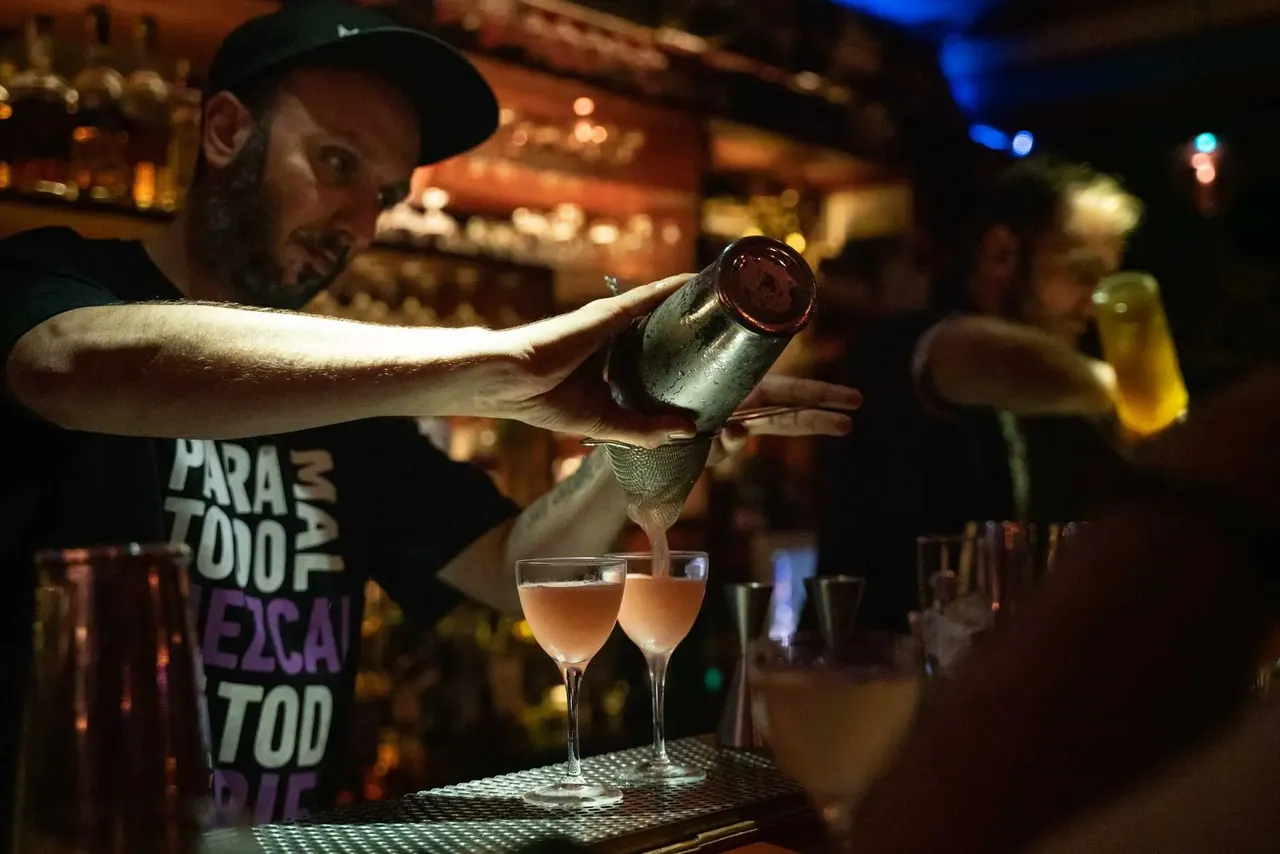
By around ten in the evening, the same terraces that served espresso all day are serving cocktails, and the crowd changes with them. This is the point where Blloku becomes the nightlife district visitors already know by reputation. Which bars, what the door looks like, and what time things get going are covered properly in our Tirana nightlife guide rather than repeated here. What is worth knowing about the neighbourhood as a whole is more mundane. Cards are accepted in most restaurants and cafes, though small kiosks and older places still prefer cash, so carrying two or three thousand lek in notes avoids any awkwardness. Dress is casual, with rare exceptions at the fancier evening spots. The district is well lit, heavily walked, and counts among the safer parts of an already low crime city, though uneven, poorly lit pavements are the more realistic hazard.
Blloku rewards a visitor who treats it as somewhere to return to across a single day rather than a single stop after dark. Have coffee here in the morning, come back for the giro at seven, and let the evening decide for itself whether it ends at a dinner table or a bar stool two streets over.
In one line: the compound nobody could enter is now the place everybody in Tirana eventually goes, and mornings here are better than the reputation suggests.