Let us start with the reassuring truth: Albania is a safe country, violent crime against visitors is rare, and the overwhelming majority of trips need none of what follows. But travel goes better when the boring numbers are already in your phone, and Albania has a few local quirks, from how pharmacies work to who rescues you in the mountains, that are worth five minutes of your time. Save this, then forget about it.
The numbers to save right now
Albania uses the standard European emergency system alongside its older direct lines. All of them are free from any phone, and 112 works even from a foreign SIM with no credit.
| Service | Number |
|---|---|
| General emergency (all services) | 112 |
| Ambulance | 127 |
| Fire brigade | 128 |
| Police | 129 |
| Roadside breakdown | The number on your rental agreement |
| Albania country code | +355 |
When you call, lead with your location, then the problem. Outside cities, addresses barely exist, so learn to describe position the local way: the road you are on, the direction you were heading, the last village you passed. Better still, send your live location by WhatsApp to your accommodation host and ask them to coordinate; hosts in Albania take spectacular ownership of their guests’ problems, and this is often the fastest route to help of all.
Hospitals: where to actually go
The system splits sharply between public and private, and knowing the difference in advance saves precious time.
In Tirana, the flagship public facility is the University Hospital Centre “Mother Teresa” (QSUT), the country’s biggest hospital and its main trauma centre. For most visitors, though, the practical first choice is private: the American Hospital network (several sites, including one near the airport road), Hygeia Hospital on the Tirana ring road, and Salus Hospital all offer modern equipment, short waits, English-speaking staff and pricing that a normal travel policy absorbs without drama. A standard consultation costs far less than in Western Europe or the US.
On the coast and in smaller towns, each district capital, including Saranda, Vlora, Shkodra and Korça, has a public regional hospital that handles stabilisation, alongside growing numbers of private clinics in the tourist areas. The pattern seasoned travellers follow: minor issues get handled locally, and anything serious travels to Tirana, two to four hours from most of the country. That is precisely why insurance with evacuation cover is the single most useful thing to arrange before your trip, and our guide to travel insurance for Albania sets out what to check in a policy before you buy it.
Pharmacies: Albania’s secret health service
For the everyday stuff, sunburn, stomach trouble, infections, a lost blood-pressure pill, your first stop is not a doctor but a farmaci, marked by the familiar green cross. They are everywhere, even in small towns, and Albanian pharmacists are well trained, pragmatic and used to tourists miming symptoms. Many medicines that require prescriptions elsewhere are sold over the counter, and prices are low.
Two useful habits: bring a photo of the generic name of any regular medication, since brand names differ, and note that cities operate a rotating night-duty system, with the on-duty pharmacy posted on pharmacy doors. Tirana and the larger towns also have 24-hour branches.
On the road
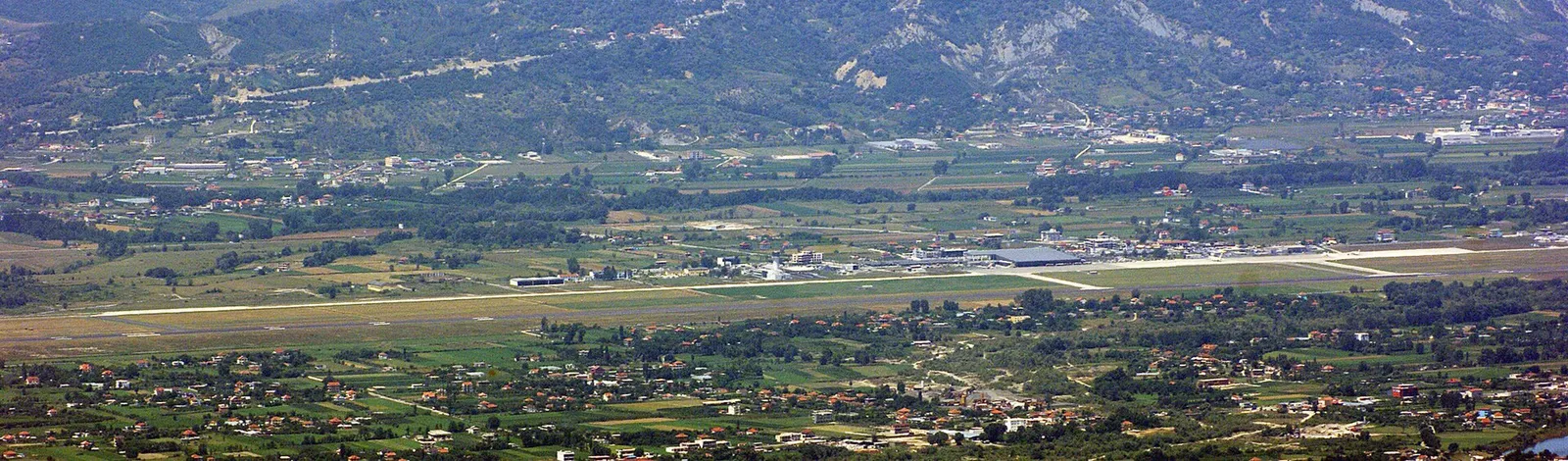
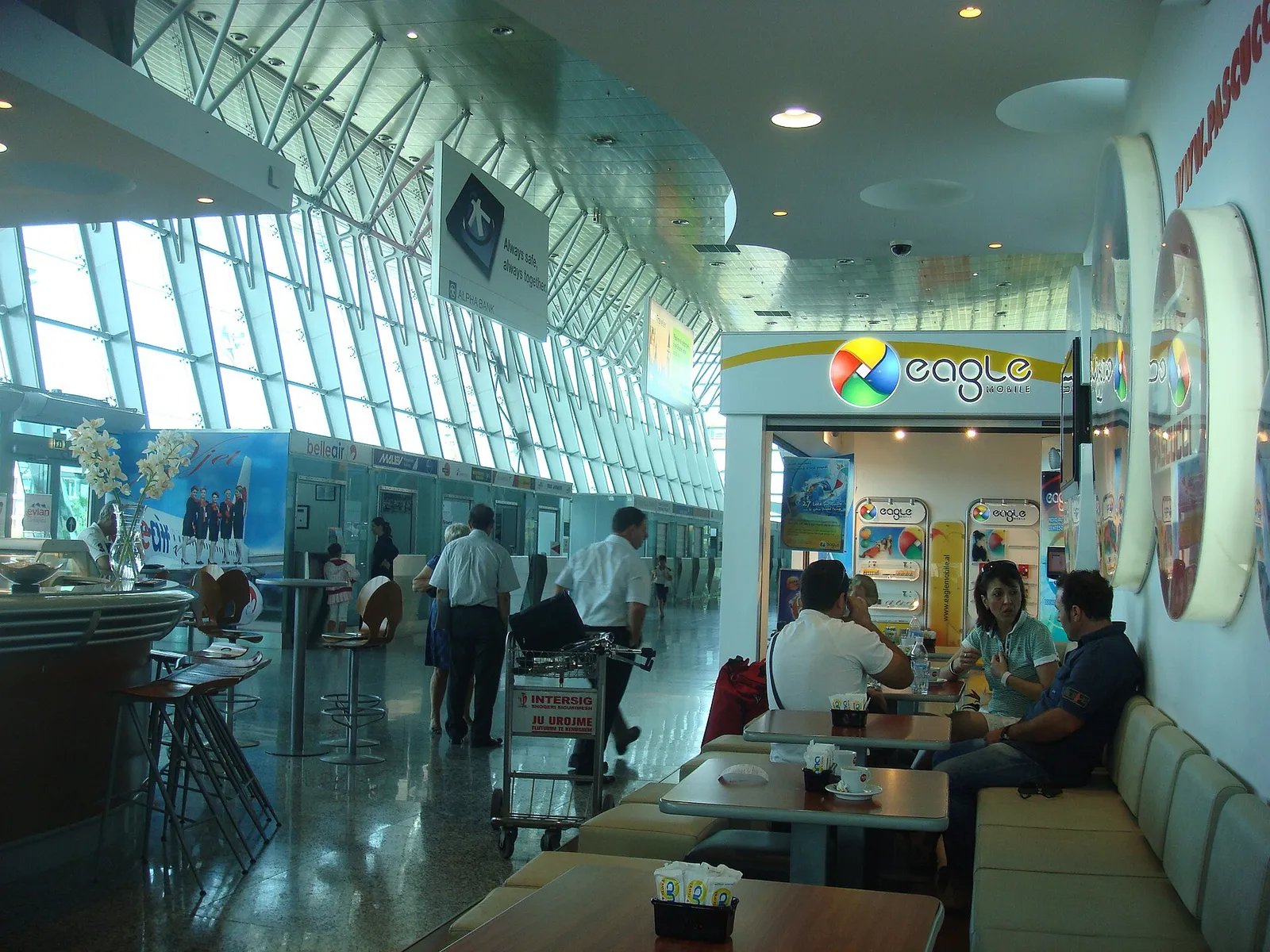
Driving is where visitors most often meet Albania’s emergency services, usually for small stuff: a pothole-bent rim, a dead battery, a scrape in a parking scramble. The one road journey nearly every visitor makes is the run in from the airport, and it is worth deciding how you are doing it before you land tired rather than at the arrivals door; our guide to Tirana airport transfers compares the bus, the flat-rate taxis and the hire counters. After that, for a breakdown, your rental company’s own assistance line is the number that matters, so photograph the agreement and save that number in your phone the moment you collect the car; recovery in Albania is generally arranged through the hire company rather than a national motoring club. For any accident with damage or injury, call 129 or 112, stay put, and wait for police; a report is required for insurance claims, and rental companies expect one. Our driving guide covers the paperwork side. One habit worth adopting locally: hazard lights go on early and generously here, for herds, stopped cars and surprises around blind bends.
In the mountains
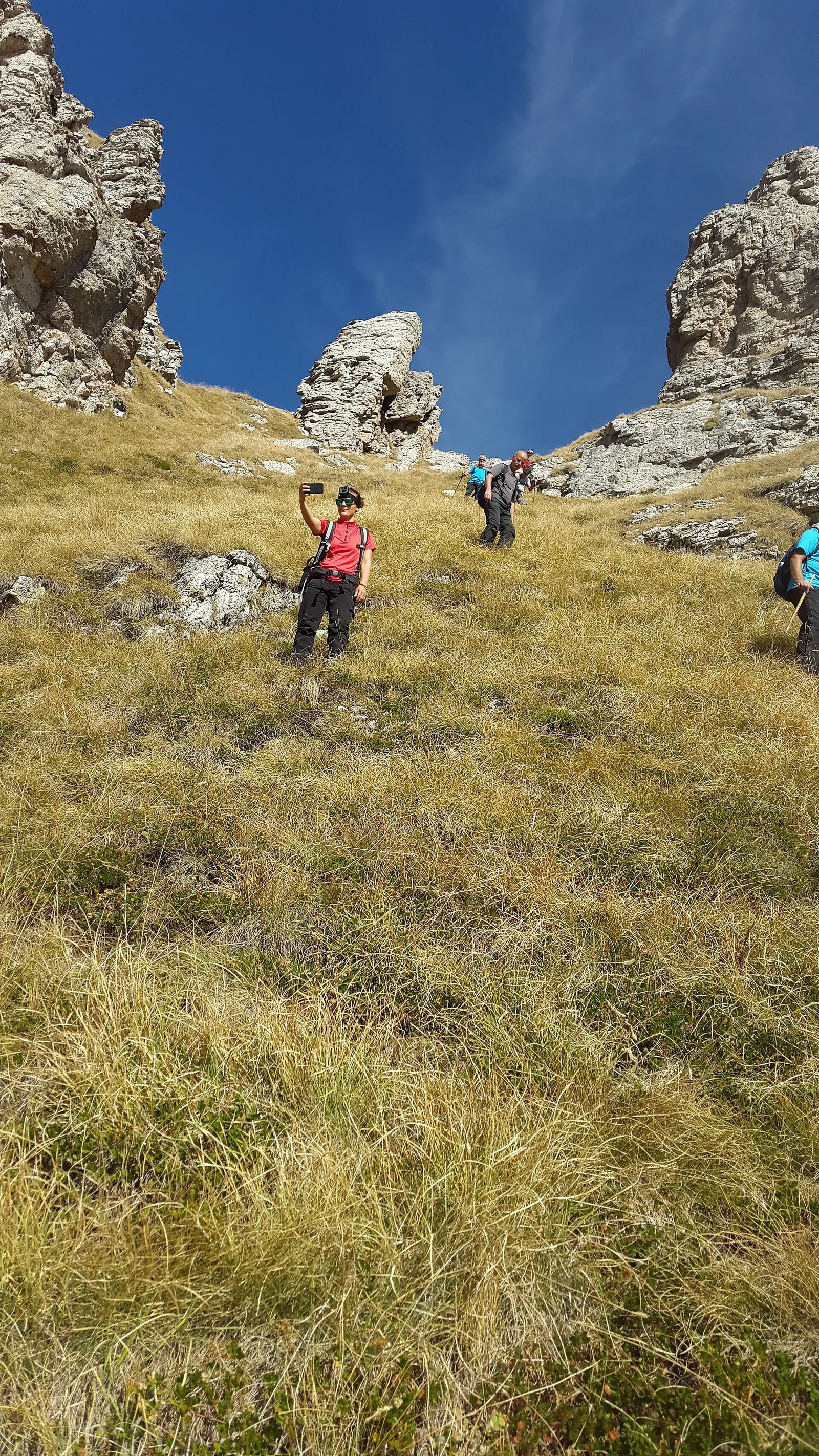
The north is the wild card. On the Theth to Valbona trail and the wider Alps, phone signal is patchy, weather turns fast even in August, and rescue is a coordination effort rather than a helicopter on standby. Mountain rescue is reached through 112, which coordinates police, local guides and, when needed, military support. Realistic response times are hours, not minutes.
So prevention does the heavy lifting: tell your guesthouse your route and expected arrival, download offline maps with the trail on them, carry water, layers and a headtorch even on “easy” day hikes, and start early. Guesthouse owners in Theth and Valbona informally track hikers between valleys, and that network, not an app, is the region’s real safety system. Solo hikers should check in at both ends. None of this should put you off; thousands cross safely every week all summer. It just rewards the prepared.
Police, embassies and the paperwork of bad luck
Tourist-targeting crime is genuinely uncommon, and the likeliest incidents are the universal ones: a phone lifted at a beach bar, a bag left in a furgon. Report thefts at the nearest police station and insist politely on a written report, which your insurer will require. For lost passports, the report is step one; step two is your embassy or consulate, nearly all of which sit in Tirana. Check where your country’s nearest mission is before you travel, as some nationalities are covered from a neighbouring capital, and note that citizens of EU countries without a local embassy can seek help from any EU member state’s mission.
Keep digital copies of your passport, insurance policy and prescriptions in your email and phone. It turns every one of these headaches from a crisis into an errand. It also helps to know exactly what your passport needed to get you in here in the first place, since validity requirements and stamp rules differ by nationality; our Albania visa and entry guide covers that by passport.
The short version
Save 112, 127, 128 and 129, plus your rental company’s assistance number if you are driving. Know that pharmacies solve most problems, private hospitals in Tirana solve the serious ones, and insurance with evacuation cover ties the whole system together. Tell someone your hiking plans in the north, get police reports for anything lost or bent, and know where your embassy is. Do that in the five minutes it takes, and then get on with enjoying one of Europe’s safest and most welcoming countries.