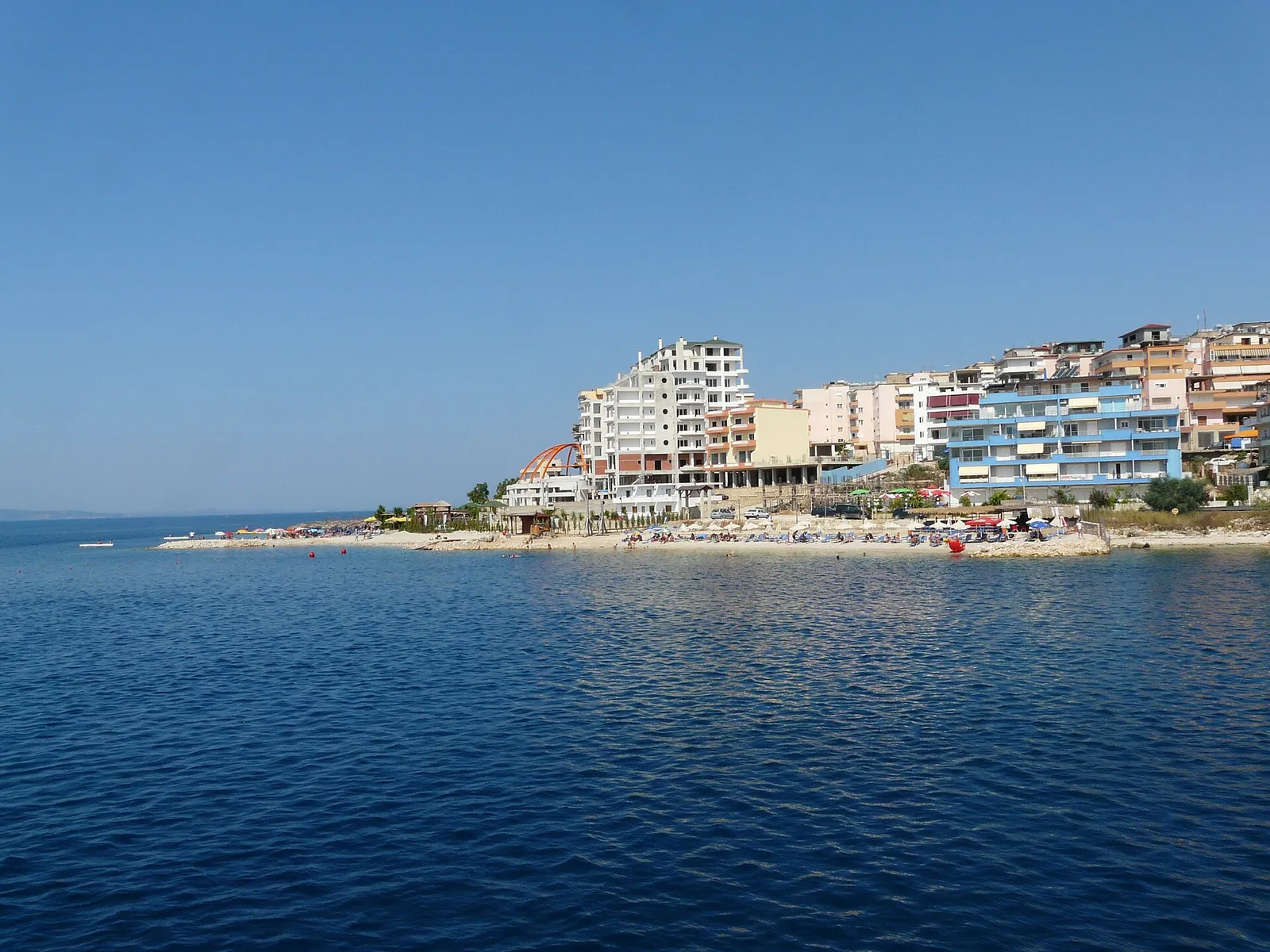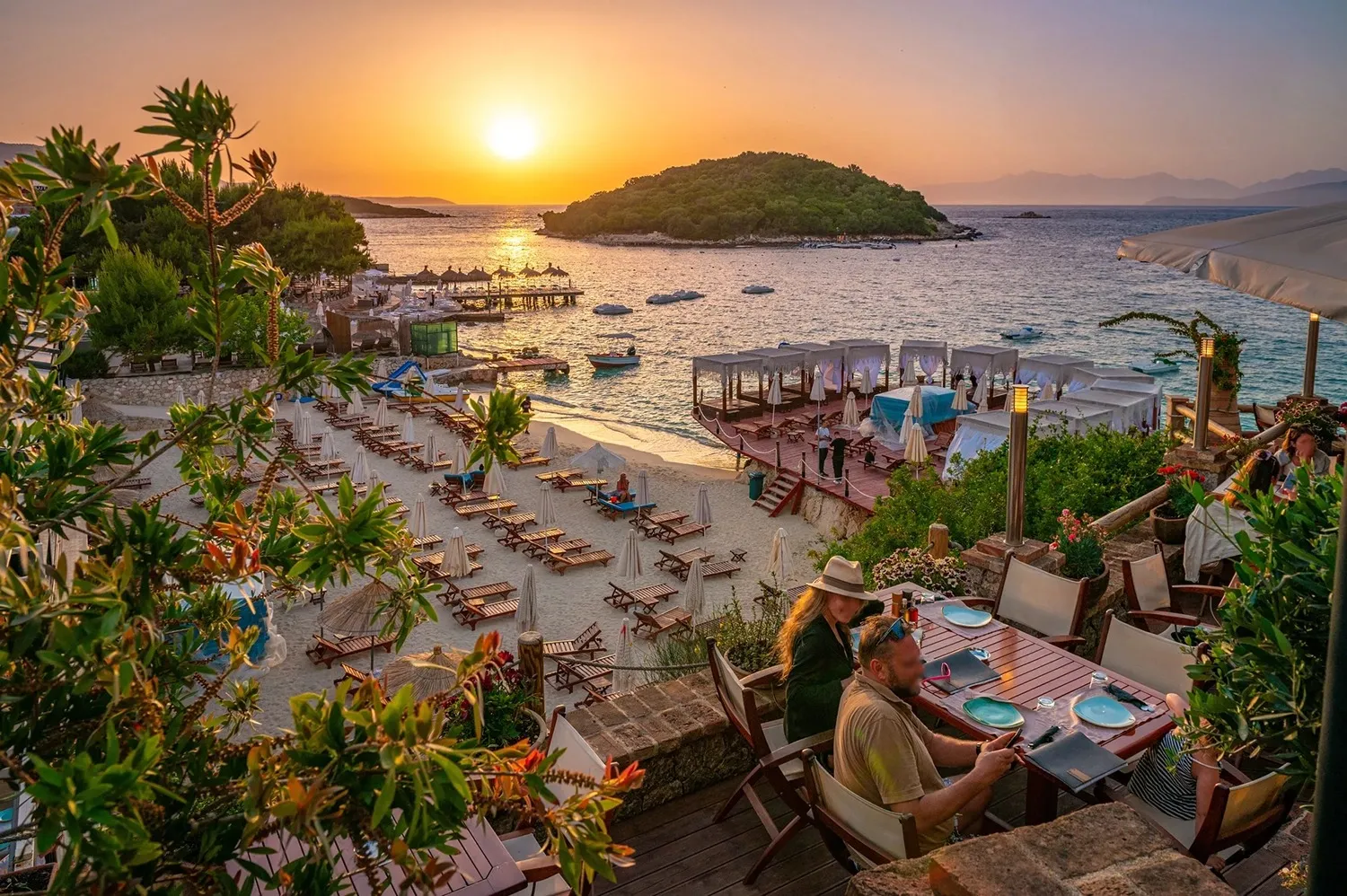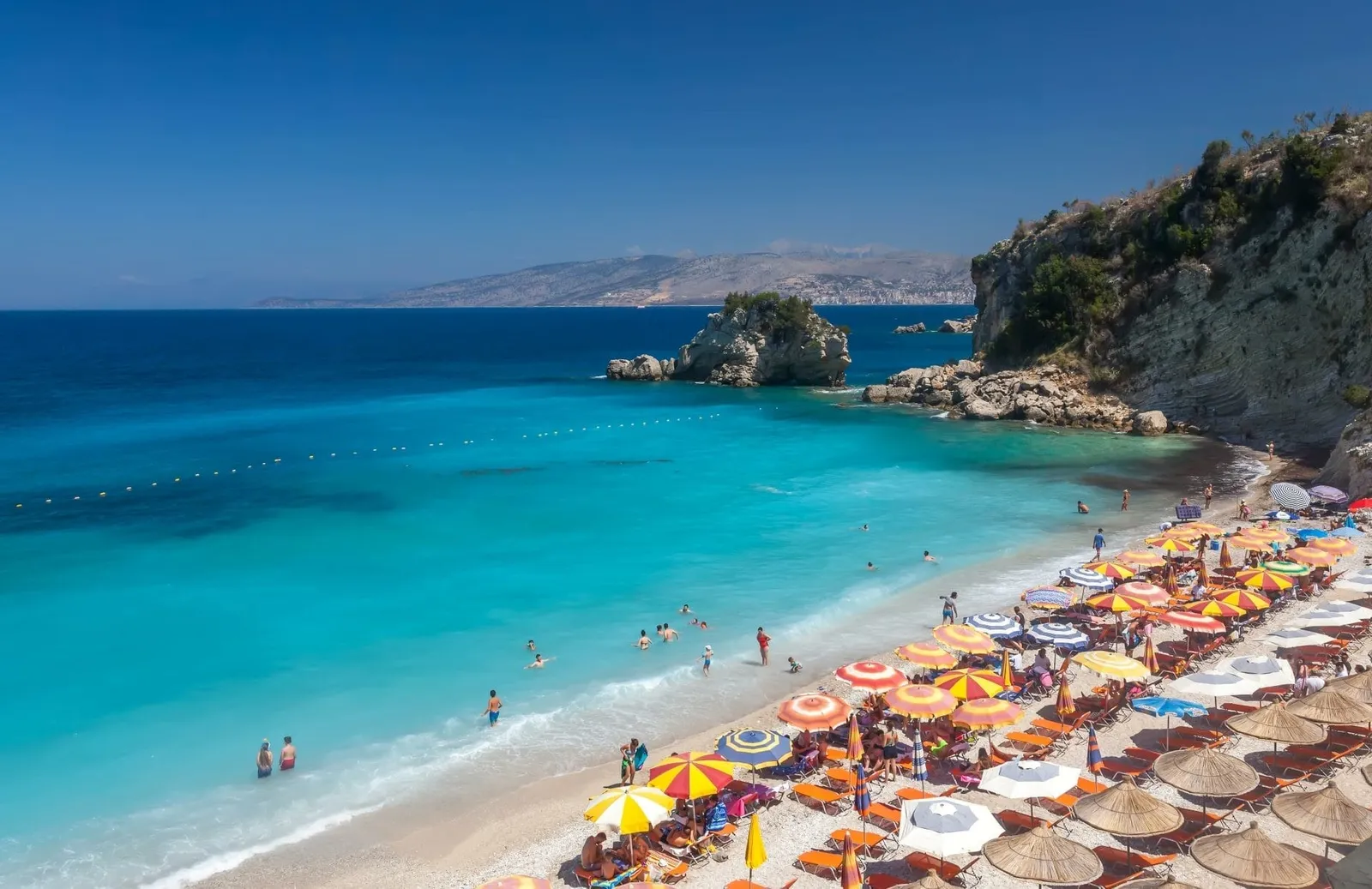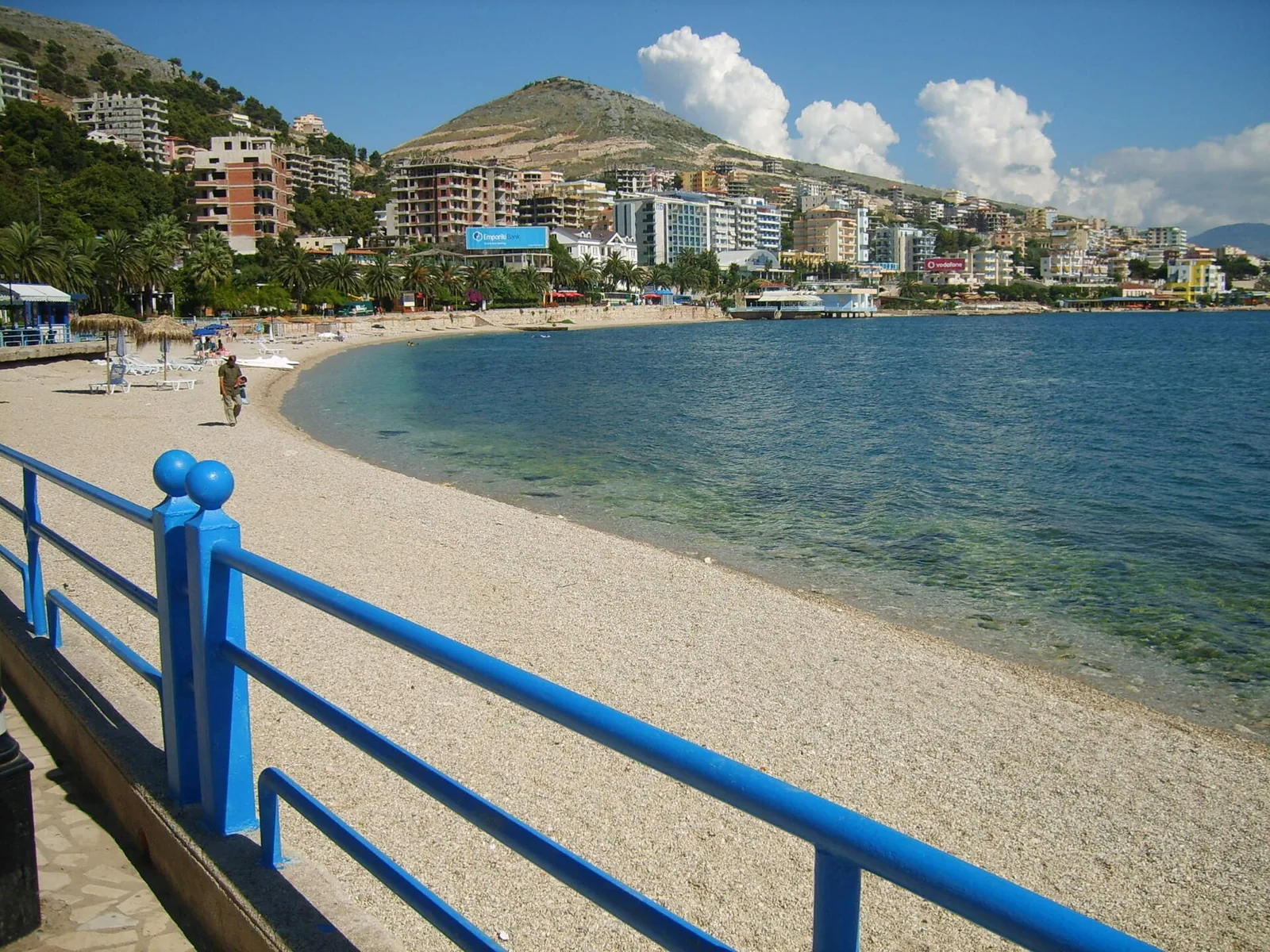
The Albanian Riviera is the reason so many people fall for this country. For roughly 70 kilometres, the coast tumbles from the Llogara pass down to the Greek border in a run of turquoise coves, pebble beaches, olive-terraced villages and a sea so clear it looks edited. It has drawn comparisons to the Greek islands and the Amalfi coast, at a fraction of the price, and the best way to experience it is to drive the whole thing slowly. Here are the places worth building a trip around, roughly north to south.
How to get here, and where the coast begins
Almost every Riviera trip starts inland. The international airport is at the capital, and the drive south takes the best part of a day once you factor in the mountains, so the usual shape is a night or two in the city at the start or the end of the trip; our guide to things to do in Tirana covers what to do with that time rather than treating it as dead space.
Geographically, the Riviera proper begins after Vlorë, the port city where the Adriatic gives way to the clearer, deeper Ionian. Vlorë itself is a working town rather than a beach idyll, but it is the gateway, and it is the launching point for boat trips out to the wild Karaburun peninsula and the island of Sazan, which is the most remote-feeling water on this coast. South of the city the road climbs, and everything changes.
The Llogara pass: the entrance nobody forgets
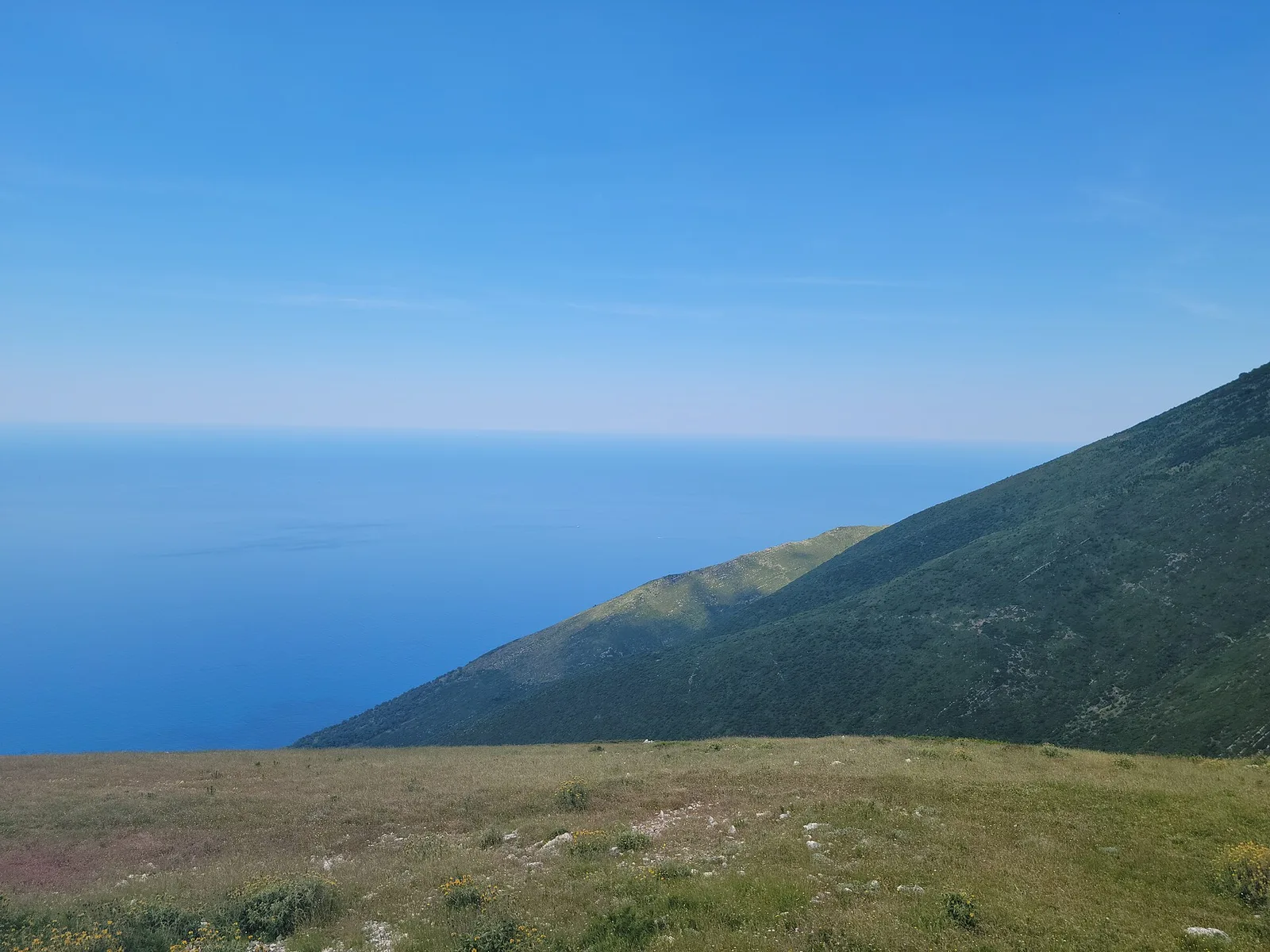
The road over Llogara climbs to over 1,000 metres through pine forest before dropping to the sea in a sequence of hairpins, and it is the most dramatic drive in the country. Paragliders launch off the ridge on clear days, and the viewpoints near the top look down the whole coastline at once.
Treat it as an event rather than a transit. Allow far longer than the distance implies, stop at the top, and cross in daylight, because the descent in the dark with oncoming headlights is nobody’s idea of a holiday. Time it for late afternoon and the light down the coast is extraordinary.
Dhërmi and Drymades: the stylish heart
Dhërmi is the coast’s cool centre, a whitewashed village spilling down to a long pebble beach, backed by dramatic mountains. Just beside it, Drymades is the more laid-back, boho stretch, all beach bars and olive-shaded loungers. This is where the Riviera feels most like a scene, with sunset DJ sets in summer and some of the best beach clubs on the coast. Base here and you are perfectly placed to explore both directions.
Note that there are effectively two Dhërmis: the old village up on the hillside, quiet and stone-built, and the beach strip below it. They feel like different places and the road between them is steep, so check which one your accommodation is in before you book, especially if you are not driving.
Gjipe: the wild one
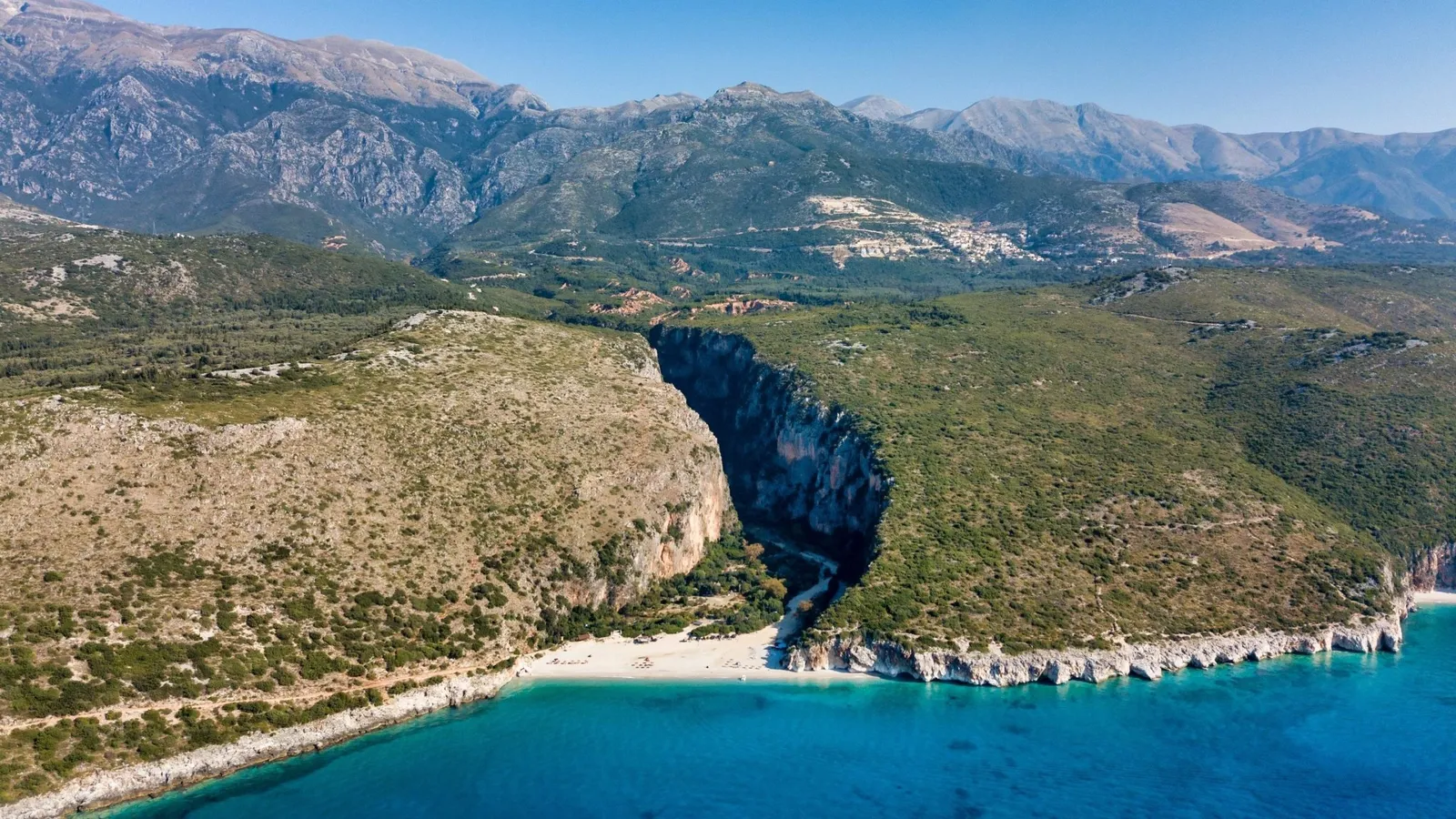
Tucked in a canyon mouth between Dhërmi and Himarë, Gjipe beach is the coast’s cult favourite: a slice of pebble and sand where a gorge meets the sea, with no road in. You reach it by a rough 20-minute walk down from a parking spot, or by boat, and that little effort keeps it gloriously undeveloped. Bring water and shade, and stay for a swim into the canyon. It is the beach people describe in a lowered voice.
Two honest warnings. The walk down is easy and the walk back up in the afternoon heat is not, so carry more water than you think and time your return for later in the day. And facilities are minimal by design, so bring what you need rather than expecting to buy it at the bottom.
Himarë: the easygoing base
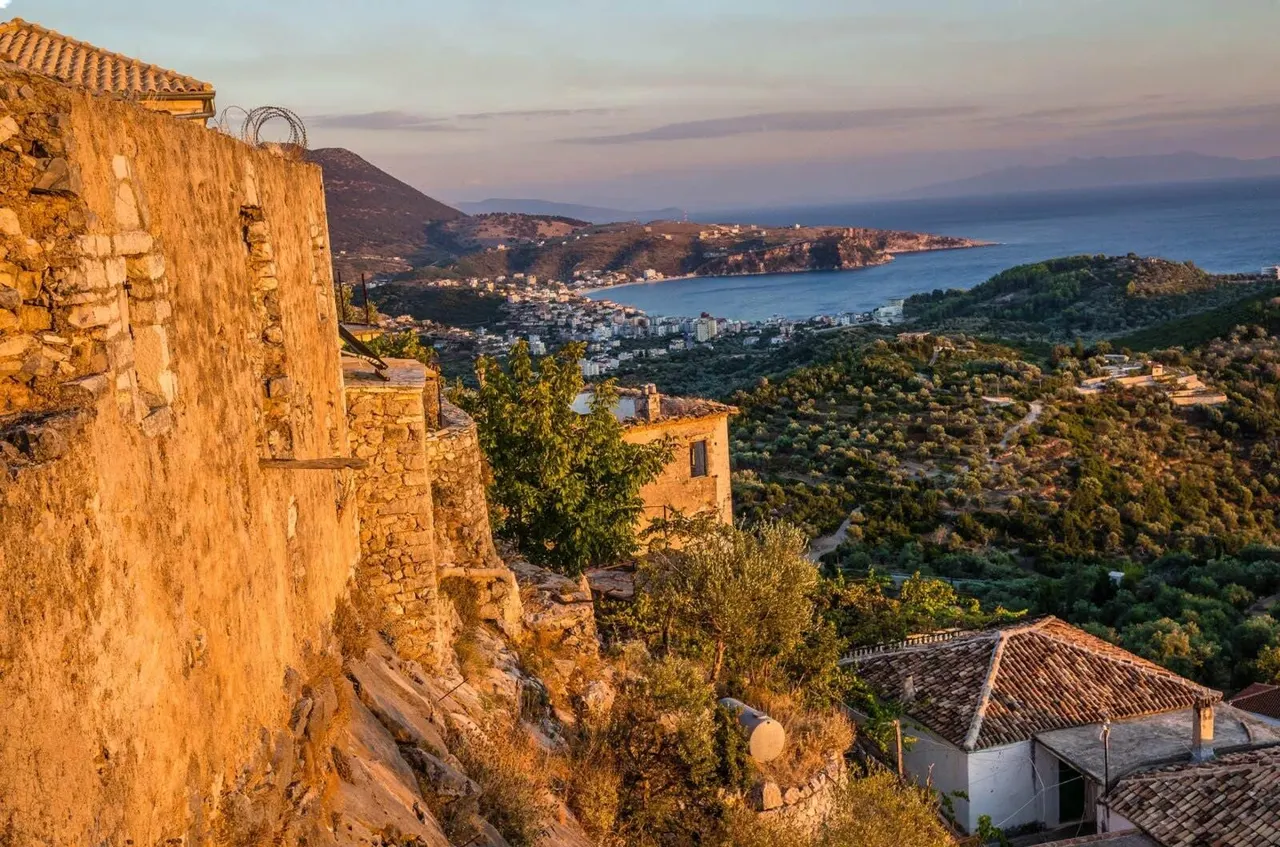
Himarë is the Riviera’s most balanced town, big enough for good restaurants, guesthouses and a proper harbour, small enough to stay relaxed. Its town beach is pleasant, but the treasures are the coves just outside it: Livadhi, Llamani and Filikuri, some reached only by boat. Himarë also has the best food-to-price ratio on the coast, with grilled fish straight off the boats. Many travellers make it their calm home base for the whole southern stretch.
Just south of town, the Porto Palermo castle sits on its own small peninsula in a sheltered bay, a squat stone fortress with one of the prettiest swimming spots on the coast beside it. It is a half-hour stop that most people driving past never make, and it is worth the detour.
The Riviera rewards a car most of allThe SH8 coast road strings the beaches together, and the empty coves sit between the famous onesSaranda: the lively hub
Down at the southern end, Saranda is the Riviera’s biggest town, a bustling seaside resort curved around a bay, looking across the water to the Greek island of Corfu. It is not the prettiest stop, but it is the most useful: the widest choice of hotels, a long waterfront promenade, buzzing nightlife, ferries to Corfu, and the best transport links on the coast. Use it as a practical base for the far south, and for the big day trips inland.
The promenade at dusk is the town at its best, when the whole population comes out for the evening walk. It is also the practical centre of the region: cash machines, supermarkets, pharmacies and bus connections are all easier here than in the villages, which matters more than it sounds if you are basing yourself somewhere small nearby.
Ksamil: the postcard
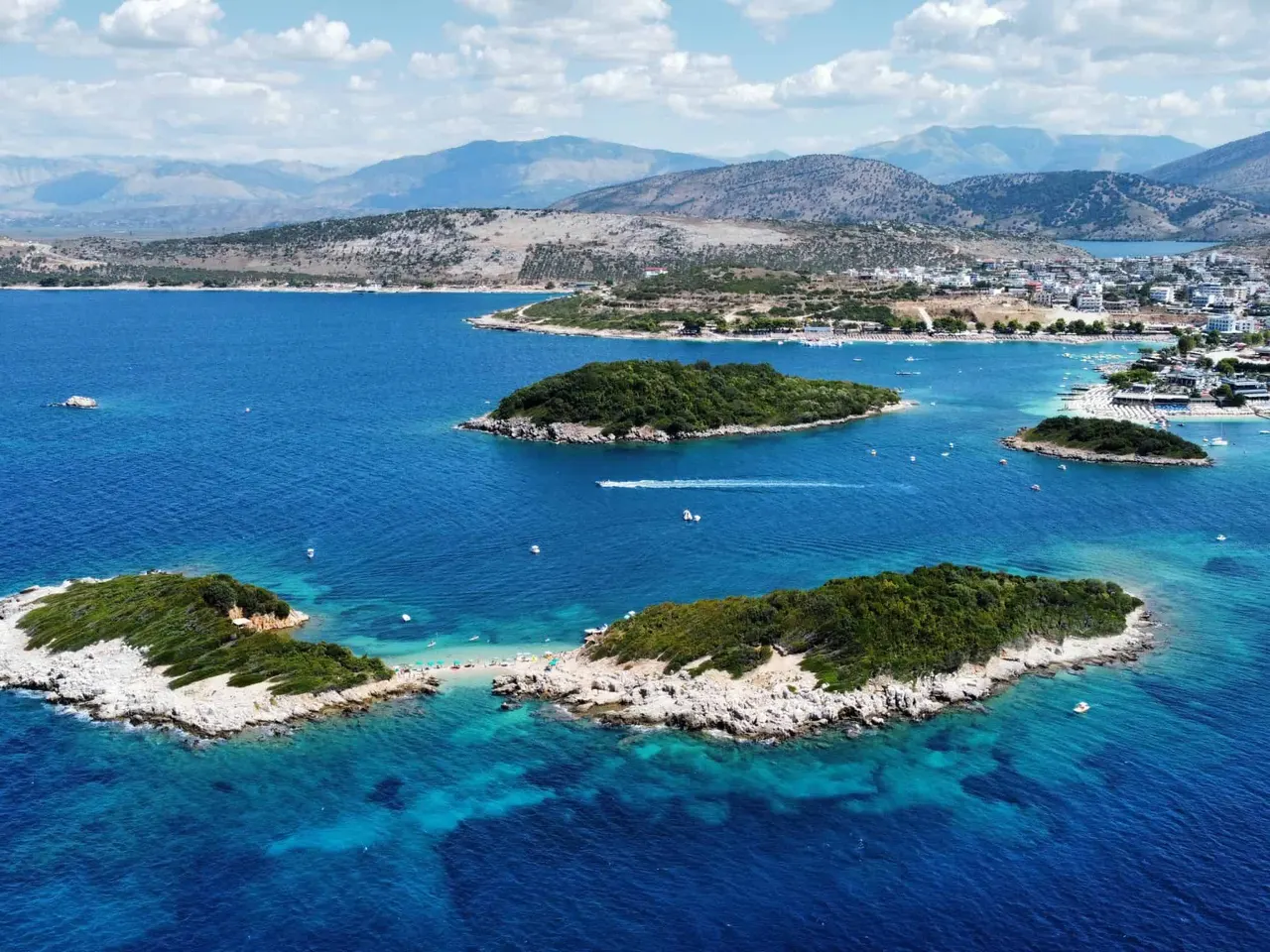
A short hop south of Saranda, Ksamil is the image that sells Albania: powder-soft coves, water in impossible shades of turquoise, and a scatter of tiny green islands just offshore that you can swim or paddle to. It is the most developed and busiest beach zone on the coast, packed in August, so come early in the day or outside peak weeks to see it at its best. Even crowded, that colour of water is unforgettable. Nearby Butrint, a vast ruined ancient city in a lagoon, makes the perfect half-day pairing.
Ksamil versus Saranda is the single most common question people ask about this coast, and the answer genuinely depends on whether you want the sea or the town. Our comparison of Saranda and Ksamil works through the trade-off properly, including what each is like in the evening, which is where they differ most.
The Blue Eye and the inland detours
Two non-beach wonders bookend the coast. Inland from Saranda, the Blue Eye (Syri i Kaltër) is a mesmerising natural spring, a deep pool of electric blue water bubbling up from an unknown depth, ringed by forest. At the northern end, the Llogara pass climbs to over 1,000 metres before plunging to the sea, delivering the most jaw-dropping drive in the country, with paragliders often floating off the ridge. Time your crossing for golden hour.
Butrint deserves more than a footnote. It is one of the most complete ancient sites in this part of Europe, layered with Greek, Roman, Byzantine and Venetian building, and it sits in a quiet lagoon setting that most Mediterranean ruins would envy. Go early or late, since there is little shade, and give it a couple of hours rather than twenty minutes.
Driving the SH8, honestly
The coast runs along one road and driving it is the whole experience, but it is slower and more demanding than the map suggests. Expect winding mountain sections, blind bends, slow lorries and, in August, a great deal of traffic. The main road surface is generally decent; the access tracks down to individual beaches are where you meet steep gradients, gravel and very tight parking.
Practical habits that make it painless: fill the tank when you see a station rather than when you need one, park before the beach rather than trying to squeeze to the front, avoid driving the pass after dark, and hire the smallest car you are comfortable in. Note too that a hire car in Albania normally cannot be taken across the border, so a Corfu day trip means leaving the car behind and taking the ferry as a foot passenger.
What the beaches are actually like
Set expectations and you will love this coast. Most beaches are pebble rather than sand, which is why the water stays so clear, and Ksamil is the sandy exception that gets photographed for exactly that reason. Water shoes cost very little locally and transform the experience.
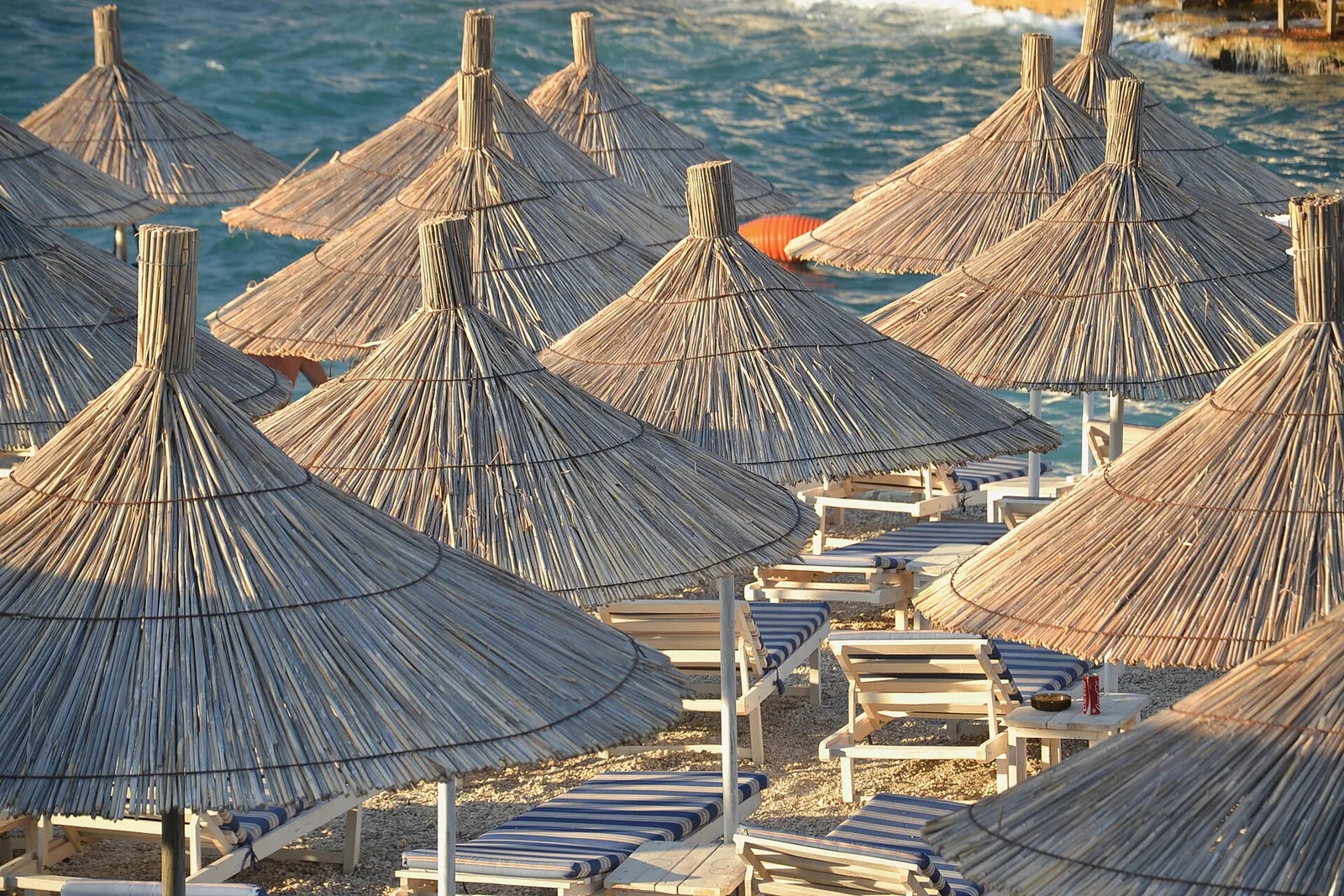
The developed beaches run on sunbed and umbrella hire, usually charged per set for the day, with free public stretches alongside. There is very little tide, the water shelves gently in most coves, and shade is scarce away from the beach clubs. Bring a hat and reapply sunscreen: the combination of sea reflection and a Mediterranean July catches out even people who think they know better.
Staying safe and comfortable
This is a safe, easy coast, and the risks are the ordinary ones of a hot Mediterranean summer. Heat and dehydration do more damage than anything else, particularly on the walk out of Gjipe and around the unshaded ruins. Swim within the marked areas where they exist, be aware of boat traffic in the busy coves, and take the same care with hired jet skis and boats that you would anywhere.
Phone coverage is generally good along the coast and patchier in the gorges and on the mountain roads. It costs nothing to read our guide to emergency numbers in Albania before you travel, so that if you do need help on a beach road you already know who to call. Carry cash as well: card acceptance has improved a lot, but beach bars, sunbed hire and small tavernas frequently still want notes.
How to string it together
The Riviera runs along one scenic road, the SH8, so the smart plan is to drive it end to end and pick two bases: one in the north around Dhërmi or Himarë for the wild coves, one in the south around Saranda or Ksamil for the islands and day trips. Fill the days with beach-hopping, a boat trip to reach the coves with no road, a sunset over the Llogara pass, and long seafood lunches. Give it at least four days, and you will still leave wanting more. If you want that shape already worked out, our four days on the Albanian Riviera runs exactly this route north to south, two bases and all, with a signature experience pencilled in for each day.
The short version
The Albanian Riviera is a single glorious drive dotted with distinct moods: stylish Dhërmi, wild Gjipe, easygoing Himarë, lively Saranda and postcard Ksamil, plus the Blue Eye, Butrint and the Llogara pass in between. Rent a car, base yourself north and south rather than hopping nightly, pack water shoes for the pebbles, add one boat day, cross the pass in daylight, and go in June or September if you can. It is the best value stretch of Mediterranean coast left in Europe, and it will not stay a secret for long.
Which end of the coast are you starting from, the wild north or the postcard south?