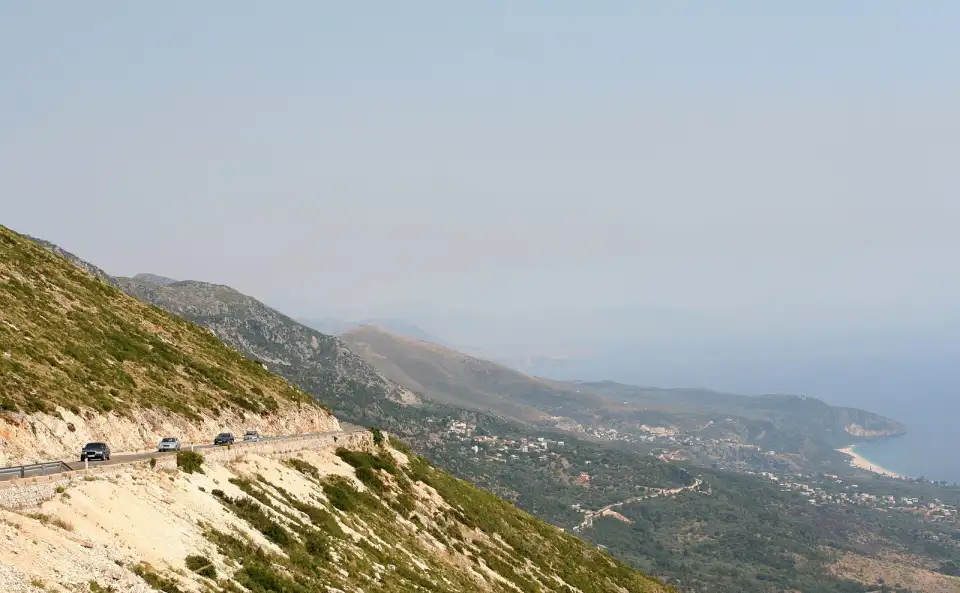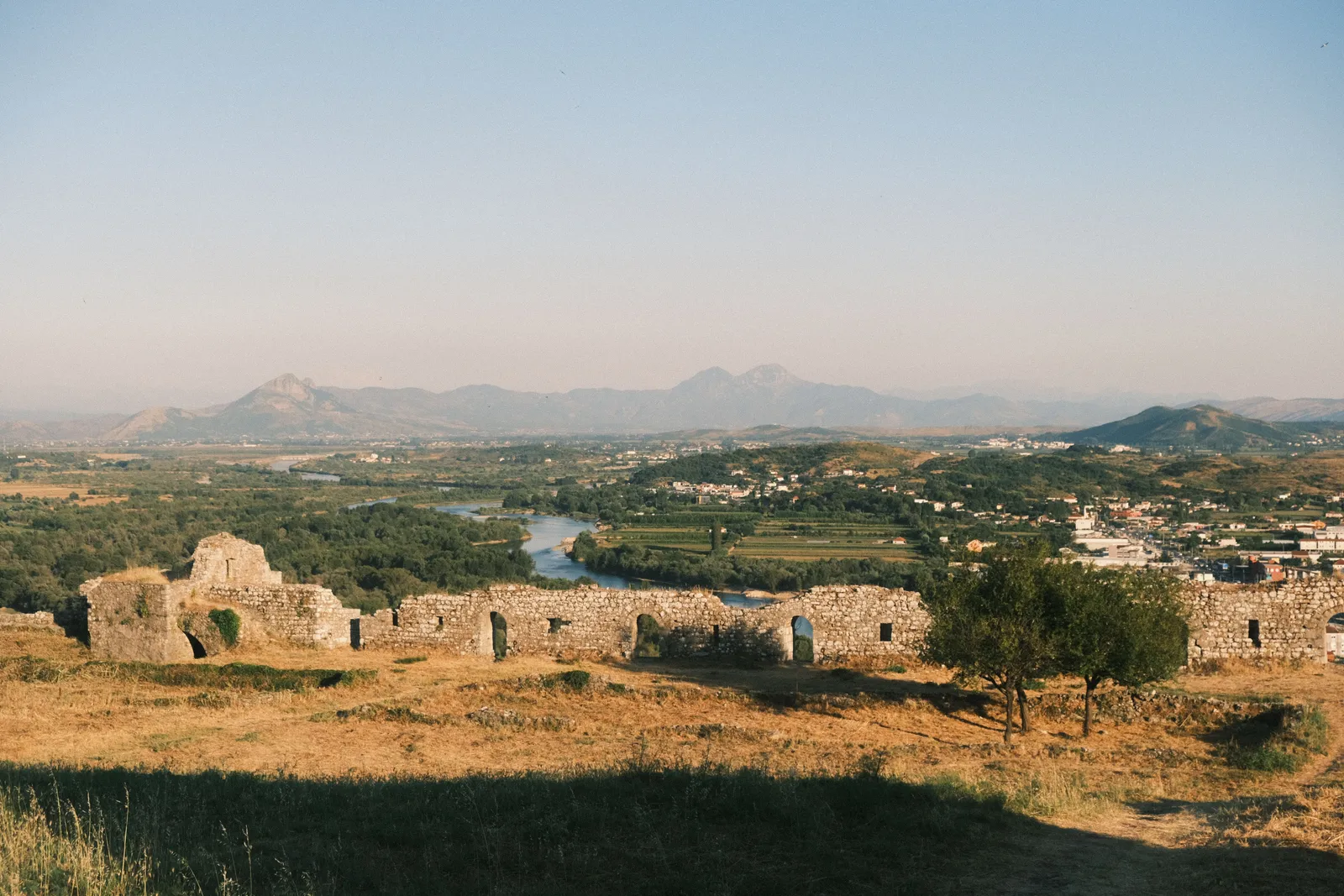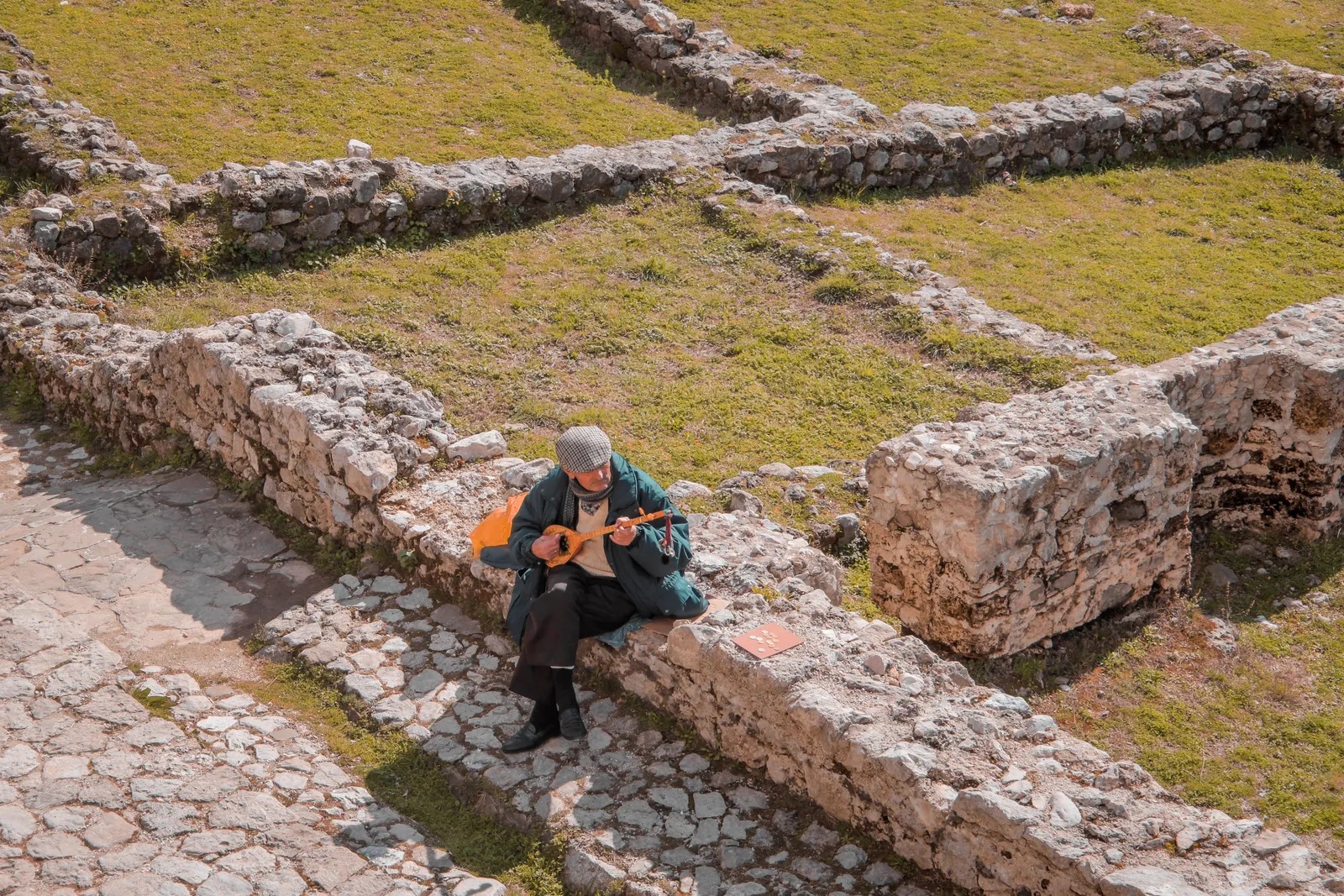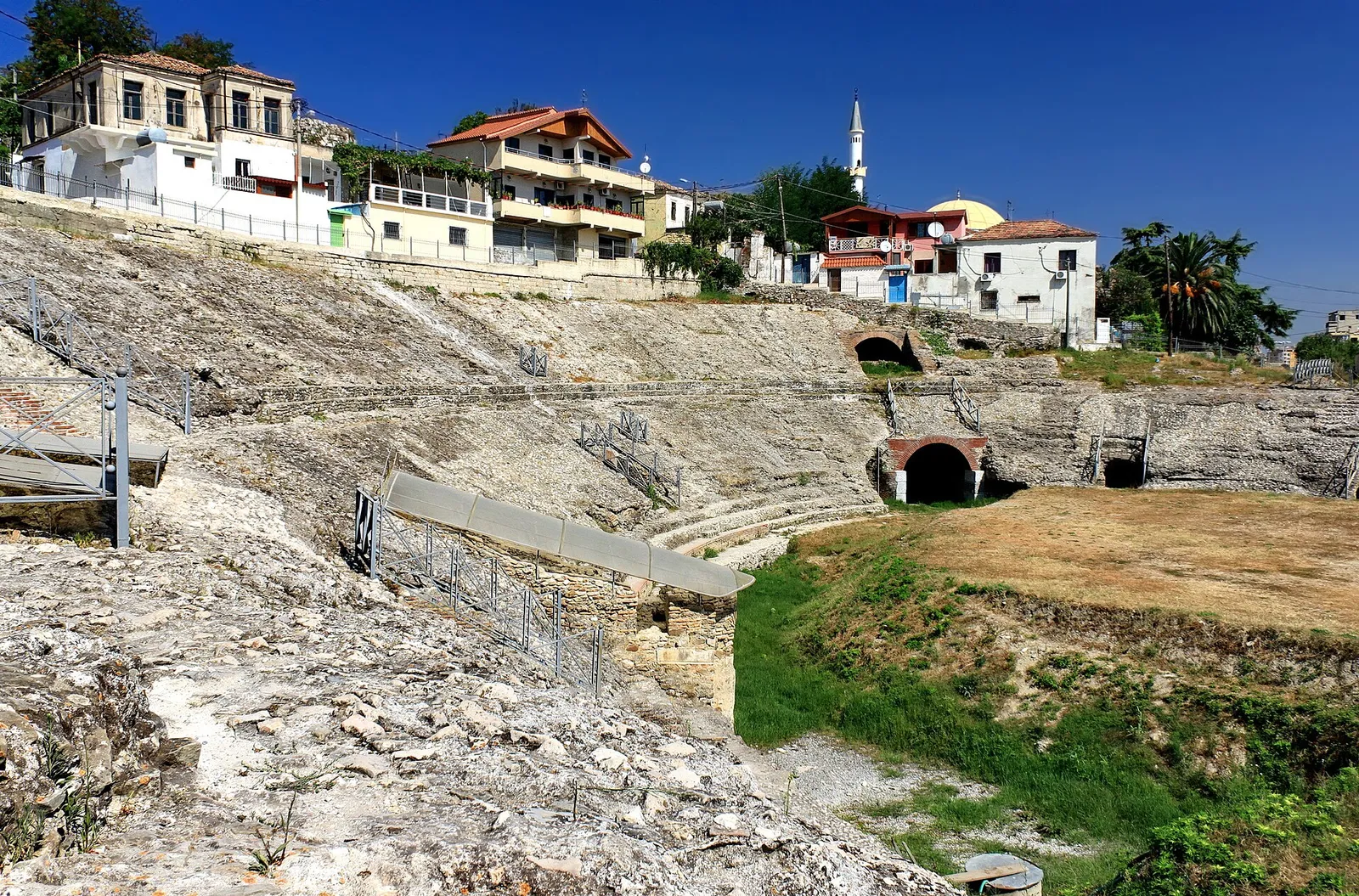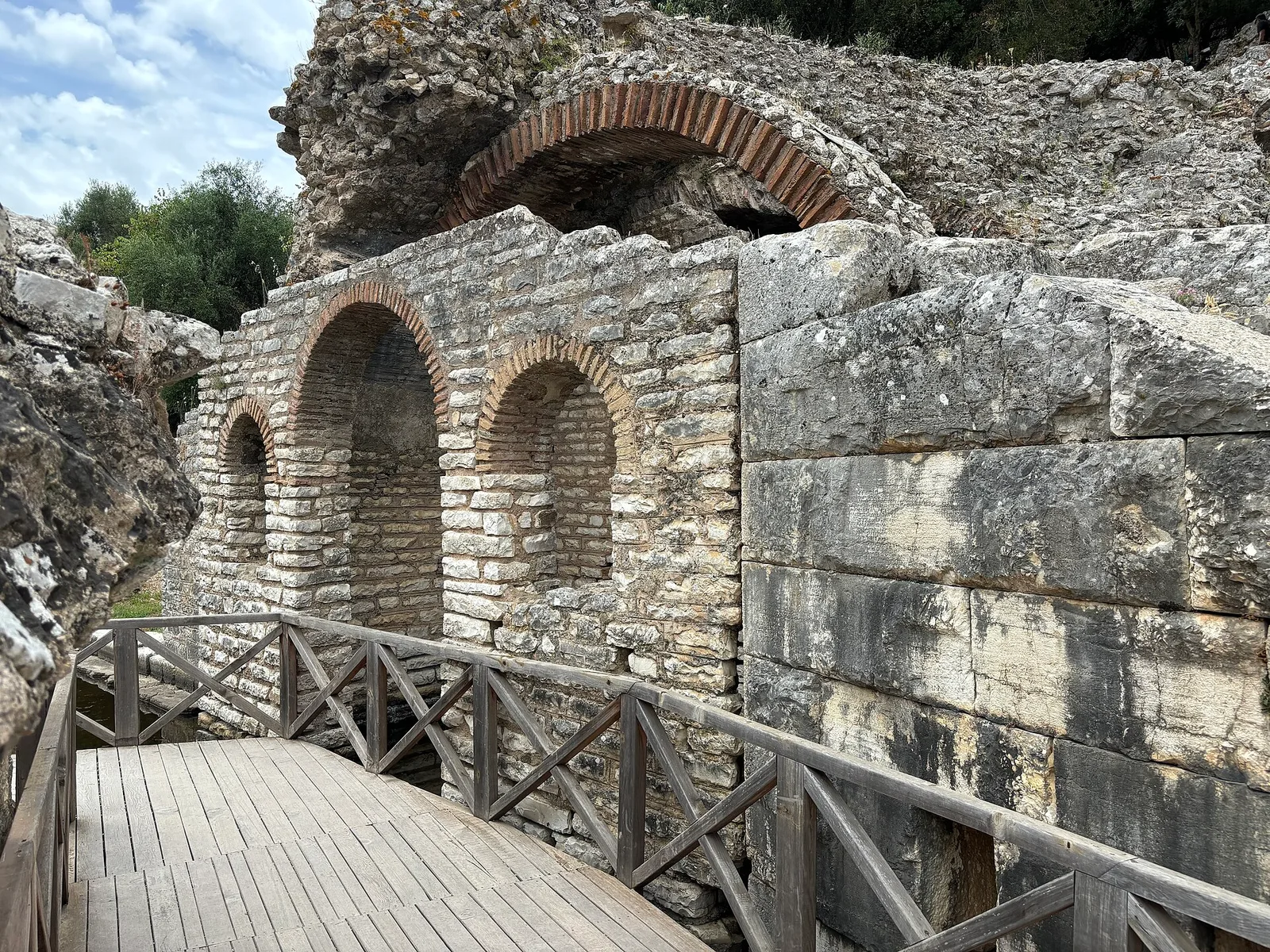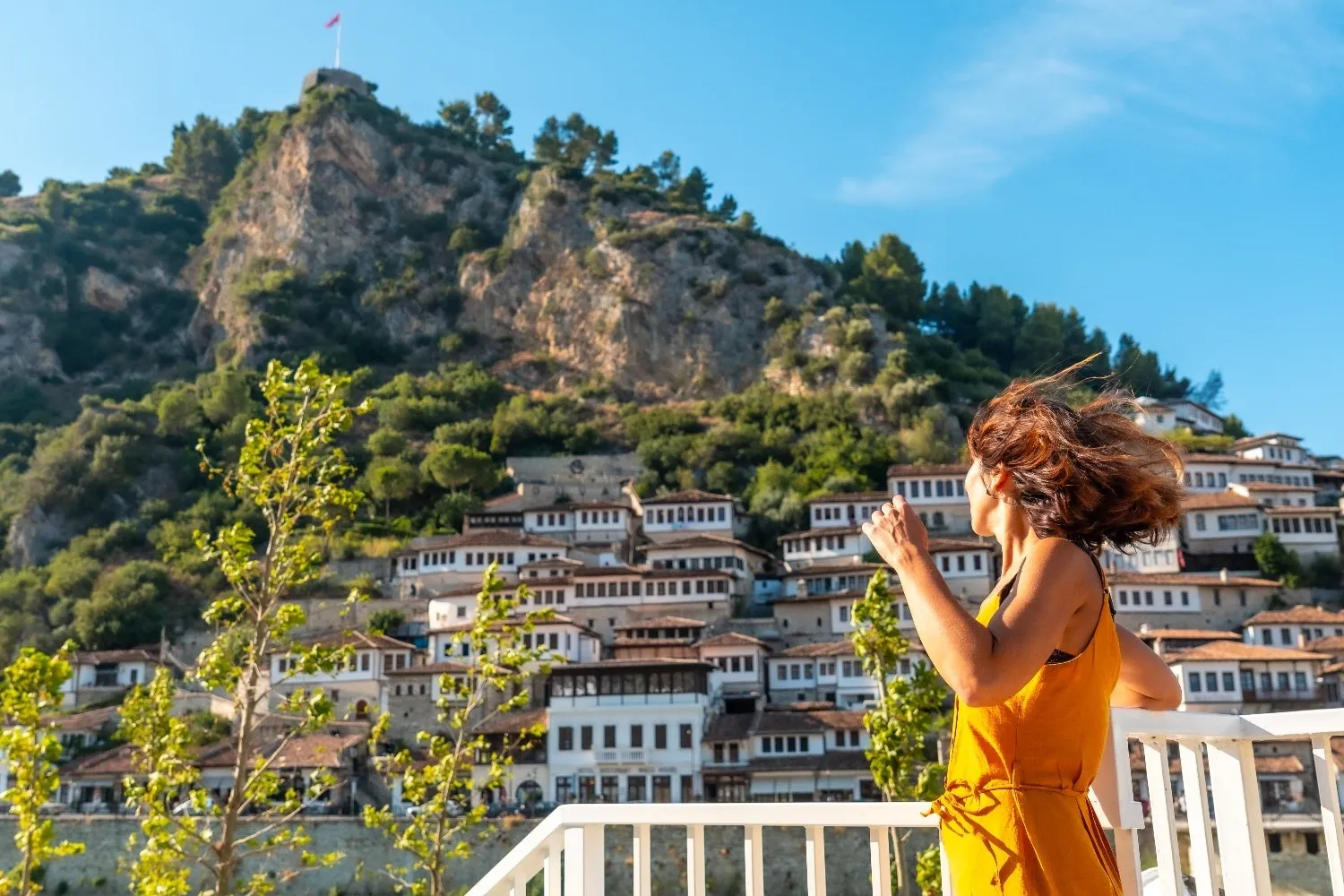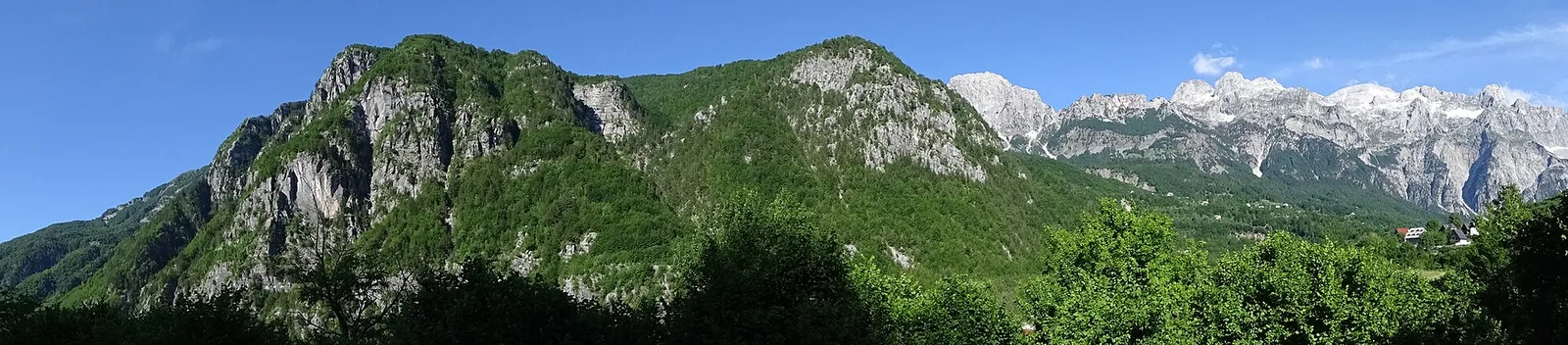
Albania has a standard route, and it is a good one: Tirana, Berat, Gjirokaster, the riviera. Almost every visitor follows it, and almost every visitor is right to.
This is about the other list. Five places that sit off that line, that between them cover most of the landscapes the country has, and that share one practical characteristic: the bus does not really go there.
Korce, in the southeast
The most underrated town in Albania, by fairly broad agreement among people who have been.
It sits at altitude in the southeast, and it does not feel like the rest of the country. Wide boulevards, a restored old bazaar quarter, a serious local brewery, and a cafe culture shaped by long contact with Greece and with France.
It is also the natural base for the southeast, which is where the next two on this list are.
⚠️ It is genuinely cold in winter, in a way the coast never is. This is a spring, summer and autumn destination.
Voskopoja, above it
A short drive from Korce, and the strangest entry on this list.
Several centuries ago this was one of the most significant towns in the Balkans, with a printing press and schools, and a population many times what it has now. Almost none of that survives.
What does survive are stone churches with painted interiors, standing in what is now a very small village. The contrast between what the buildings imply and what is around them is the entire reason to go.
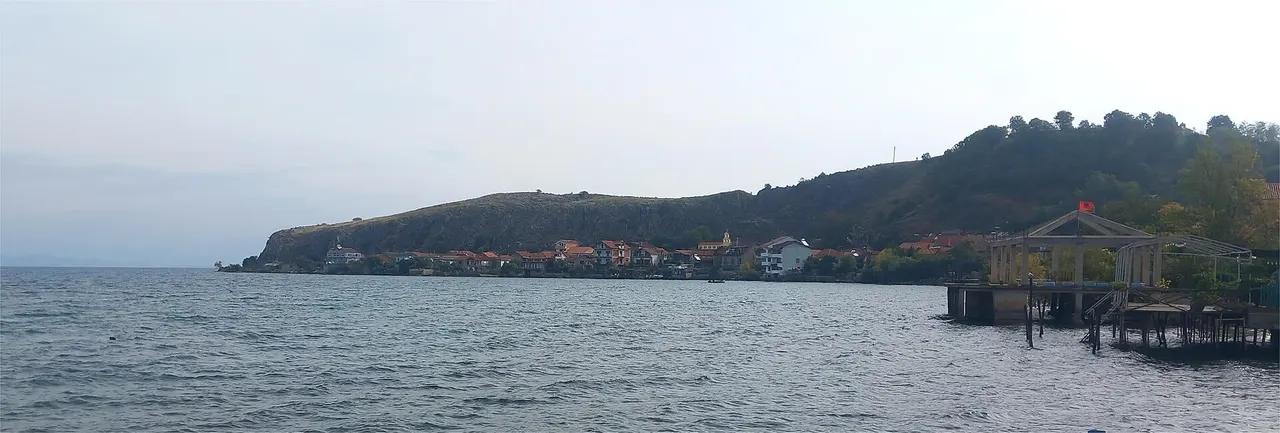
Permet, in the river valley
Inland in the south, on a river, near the Greek border.
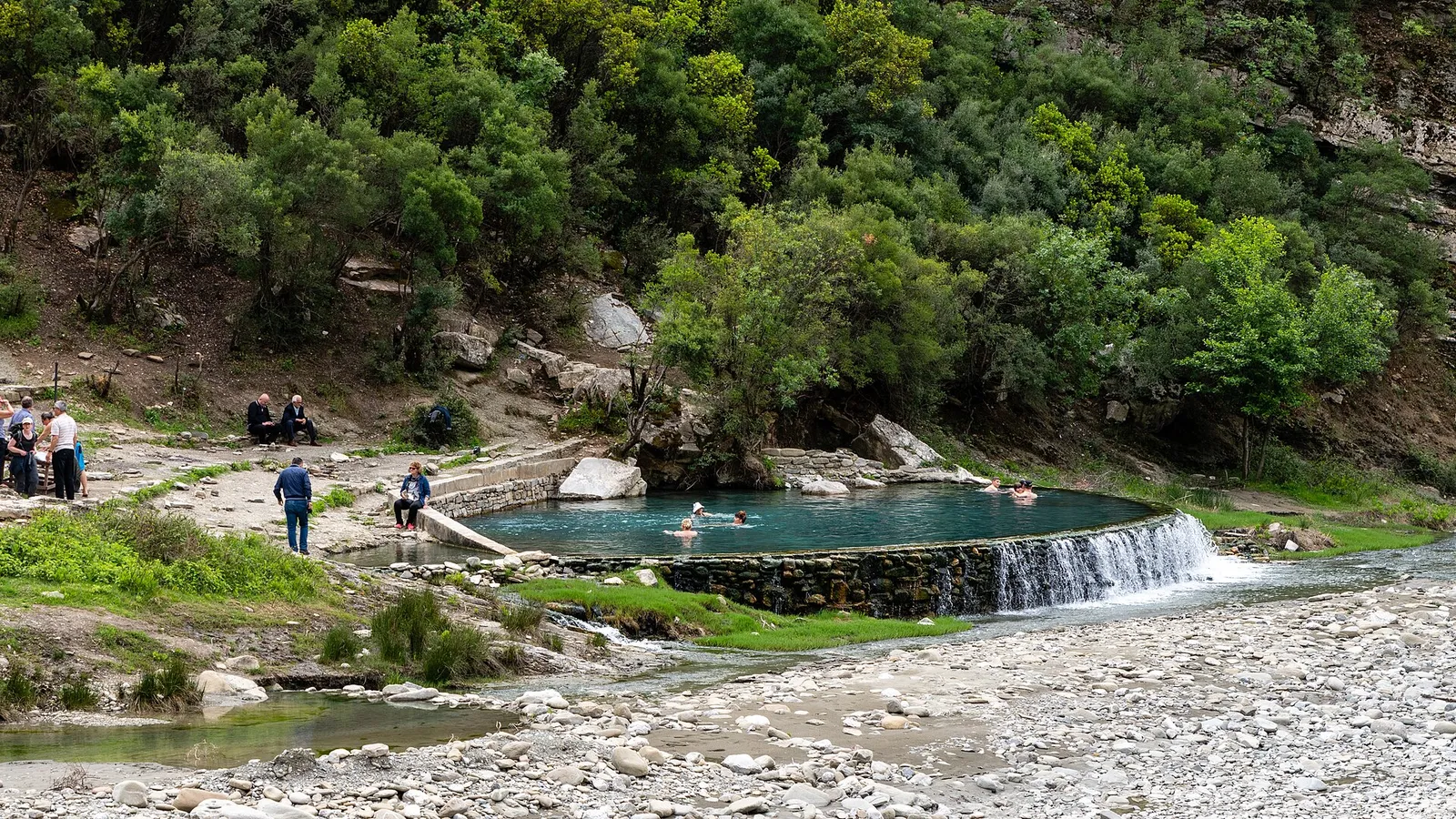
The town is quiet and small. What brings people is the surroundings: thermal pools in stone basins by the river, an Ottoman bridge above them, and a canyon behind.
It is also known locally for food and preserves, and it makes a much better overnight than a day trip. The detail is in the Permet and Benja springs guide.
Theth, in the north
The one that has stopped being secret, and is included because it still belongs on the list.
A valley in the Accursed Mountains, reached by a road that has improved considerably, with stone houses, a waterfall, a river spring and a defensive tower of a kind that used to be common here.
⚠️ It is seasonal in a hard sense. In summer it is busy by Albanian standards and superb. In winter it is largely closed to ordinary visitors. The whole northern leg is in the wild north guide.
Kruje, the accessible one
Included because it is the only entry on this list that requires no planning at all, and because most short trips skip it anyway.
A castle on a cliff, a restored Ottoman bazaar street, and the story of Skanderbeg, which is the story every other Albanian town refers to. Half a day from Tirana, with organised trips leaving constantly.
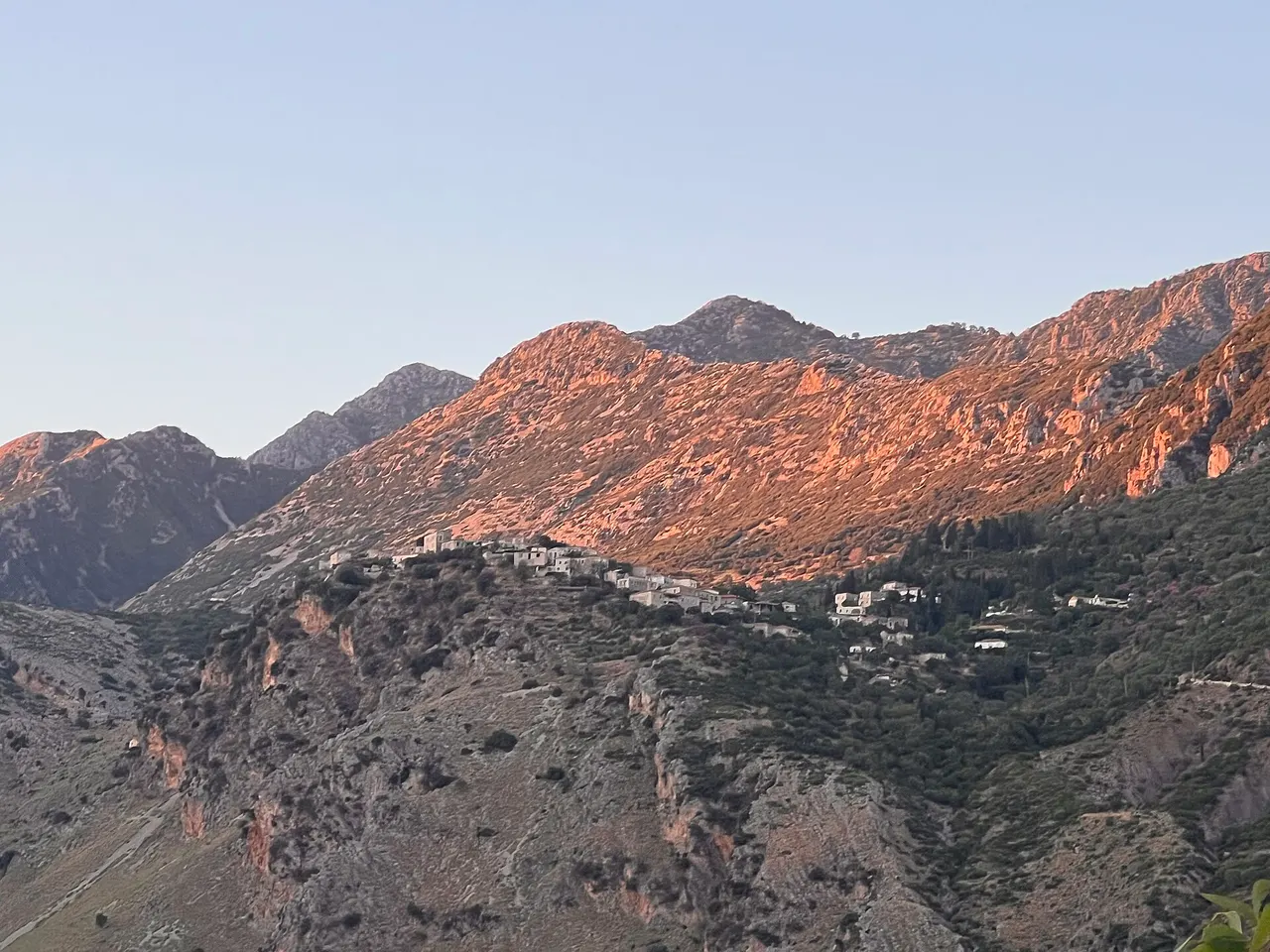 The interior needs a carCompare hire and pickup points
How to actually combine them
| Group | Fits together | Needs |
|---|---|---|
| Korce, Voskopoja, Permet | Yes, a southern interior loop | Car, 3 to 4 days |
| Theth | Separate northern leg | Car to the trailhead |
| Kruje | Half day from Tirana | Nothing |
🔑 The mistake is trying to string all five together. The southern three form a coherent route. Theth is at the far end of the country. Attempting the lot in under ten days produces a driving holiday.
The general principle is in the itinerary planning guide, and it applies here more than anywhere: these places are slow to reach, and the reward is being somewhere quiet rather than seeing more things.
What they have in common
Limited infrastructure. Guesthouses rather than hotels, short menus, cash businesses.
Very few visitors, which is the point.
And a genuine welcome, which is more noticeable here than on the standard route precisely because it is not routine.
Who should not bother
Anyone on a first trip of under a week, who will get more from the standard route done properly. Anyone without a car. And anyone who needs reliable comfort, since these are places where the room is simple and the road is long.
For everyone else, this is the version of Albania that people describe when they say the country is not like its neighbours.
In one line: the standard route shows you Albania, and this list shows you why people come back.
Getting to them
Almost all of these need a car. Public transport reaches the larger towns and thins out sharply beyond them, and the villages that stay quiet stay that way partly because the bus does not go there.
The practical approach is to base yourself somewhere with road connections and drive out. In the north that means Shkoder, which sits at the mouth of the mountain roads and has the accommodation and the hire cars to make it work as a base.