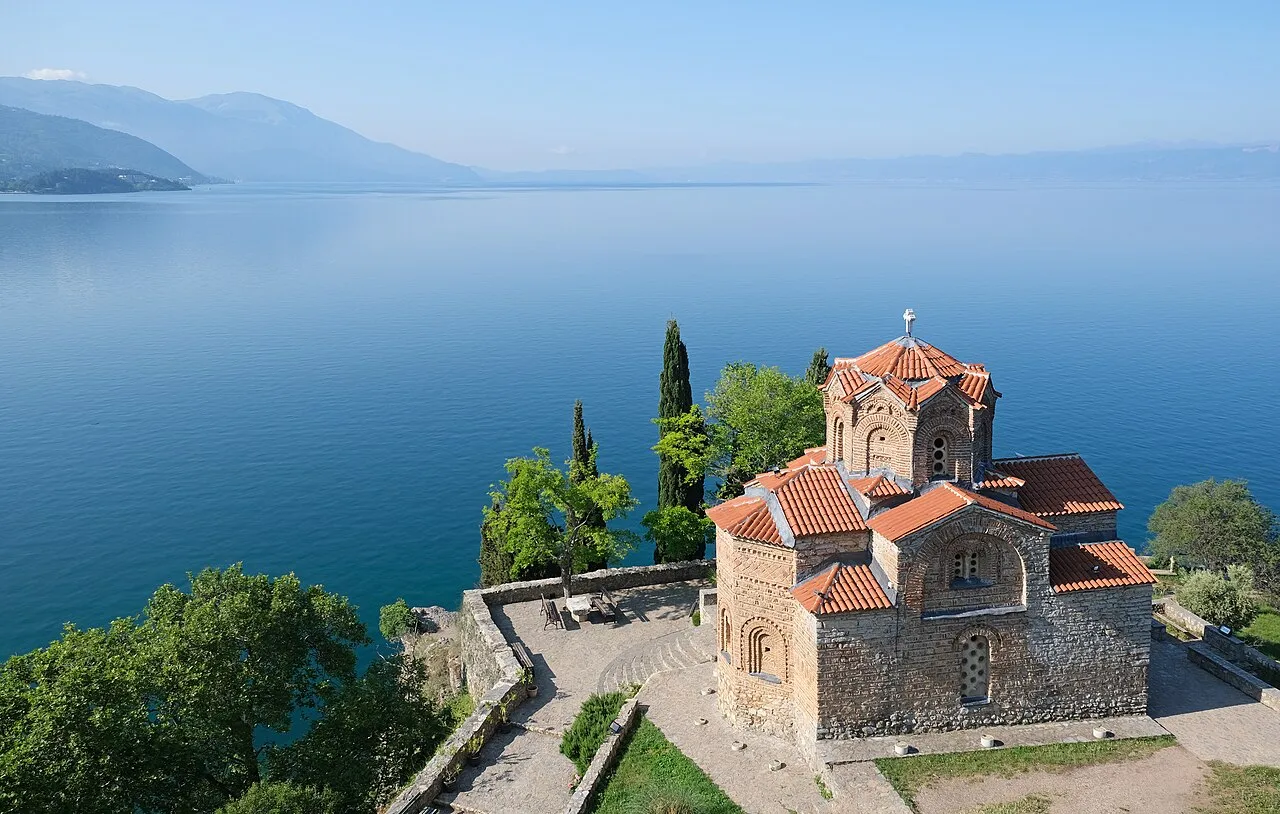
Lake Ohrid is one of the oldest and deepest lakes in Europe, and Albania only owns a modest stretch of its shore. The old town, the hilltop fortress and the small church balanced on a rock over the water are all on the far side, in North Macedonia. A trip to Ohrid from Albania is not a day trip inside one country. It is an international border crossing with a very good day trip attached, and the two halves need slightly different planning.
Who this trip actually suits
Distance on the Albanian side decides whether the day makes sense. Pogradec sits directly on the Albanian shore of Lake Ohrid, and from there the crossing and the drive into Ohrid town add up to roughly an hour to ninety minutes each way. Korce and the rest of the southeastern corner are a reasonable base too, if a little further out. From Tirana it is a longer day: two and a half to three hours each way once the crossing is added in, doable but not relaxed. From the coast around Saranda or Himare, it runs past four hours each way, which is too far for a single day.
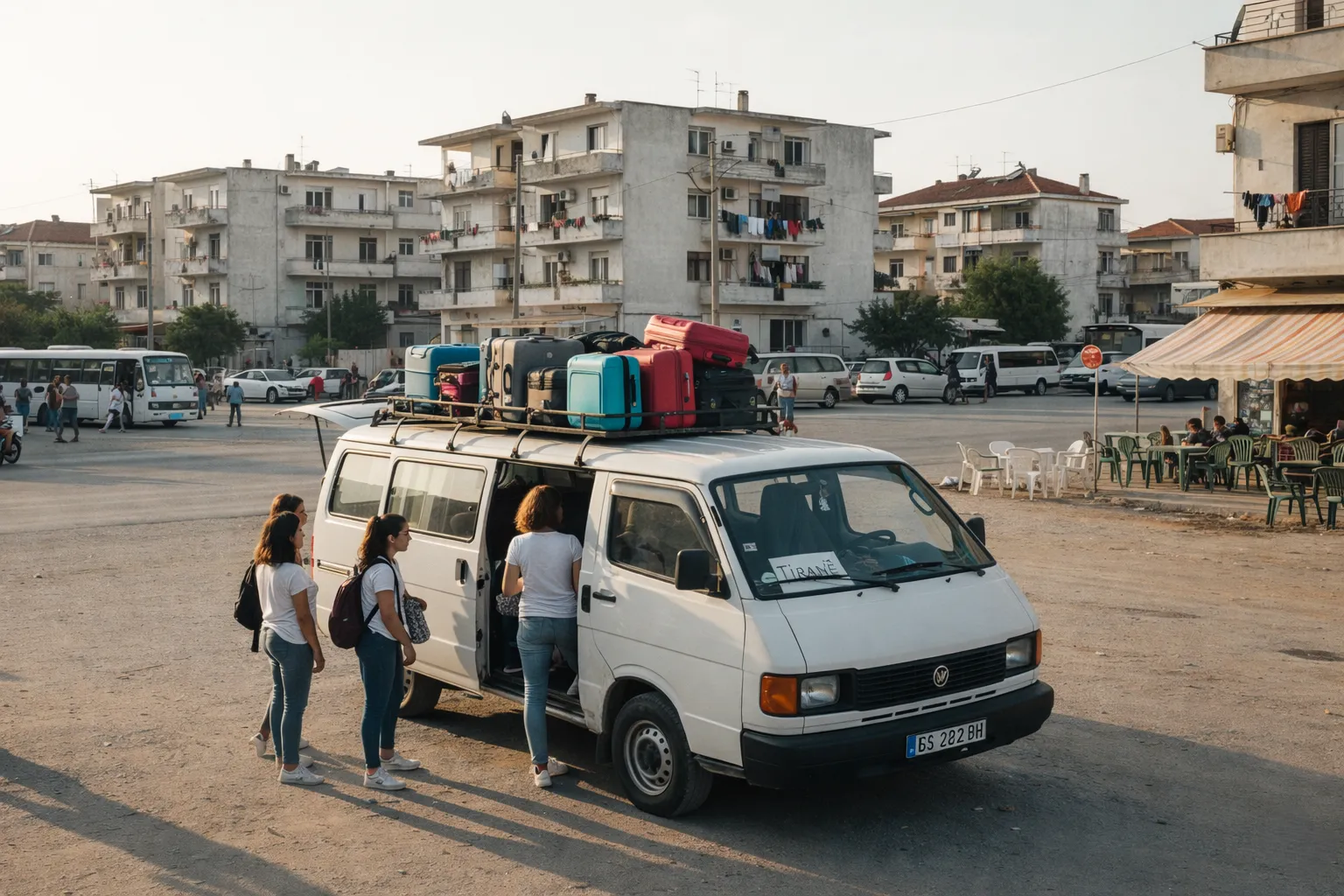
Furgons, the shared minibuses that connect Albanian towns cheaply (our guide to Albania’s public transport covers how they work), do not cross this particular border. Without your own car, an organised day tour or a taxi arranged for both directions is the realistic option.
Crossing the border
The main road crossing near the lake is called Qafë Thanë, an ordinary, functioning border post. Like any border post, its hours, staffing and queue length change with the season and the time of day, so do not plan around a specific wait time from any guide, including this one; check current conditions closer to your date.
What does not change is that this is a genuine international crossing: passports for most travellers rather than a national identity card, and rules that depend on which passport you hold.
Citizens of the EU, the EEA and Switzerland generally do not need a visa for a short visit to North Macedonia, and can often travel on a national identity card as well as a passport, though a passport is still the safer document for a land crossing outside your home region. A number of other passports, including the United States, the United Kingdom, Canada, Australia and New Zealand, currently also have visa-free access for short stays. If yours is not clearly in one of those groups, confirm the current rule for your own nationality with an official North Macedonian source before you plan the day.
For the passport and entry rules that apply to Albania itself, our Albania visa and entry guide covers that ground in full. North Macedonia keeps a separate set again.
The rental car problem
If you are driving a hire car, this is the section that matters most. Many Albanian rental agreements either exclude taking the vehicle out of the country entirely or allow it only with a supplementary green card insurance document and cross-border permission arranged in advance, sometimes for an extra fee. Arriving at the crossing without that paperwork is the single most common way this day goes wrong, and it cannot be sorted out at the barrier.
Contact the rental company before you commit to the day, ideally in writing, and ask specifically whether the car may cross into North Macedonia. If the answer is vague or negative, book an organised tour or a taxi instead.
For the rules of the road and licence requirements inside Albania, our guide to driving in Albania covers that ground; North Macedonia keeps its own separate set outside its scope.
It is also worth checking your travel insurance before the day rather than after it, since policies sometimes treat a day in a second country differently from the country you are based in. Confirm yours covers North Macedonia rather than assuming that it does.
What to see in Ohrid’s old town
Once across, Ohrid rewards a few unhurried hours of walking more than a checklist. The old town climbs a hillside above the water in stone lanes, wooden balconies and small churches tucked into corners, and much of the appeal is simply wandering it.
The fortress above the old town, known as Samuel’s Fortress, gives the best view over the lake, the rooftops below and the mountains on both shores. The climb up is worth doing slowly rather than rushed.
The image everyone comes for is the Church of St John at Kaneo, a small medieval church set directly on a rocky point above the water, reached by a walk of 15 to 20 minutes along the lakeside path. It photographs exactly as well in person as it does online, and late afternoon light on the water behind it is worth timing a visit around.
The old town also holds the Cathedral of St Sophia, with wall paintings from the medieval period, and several smaller churches worth a look if you have time to spare.
Sveti Naum, on the way back
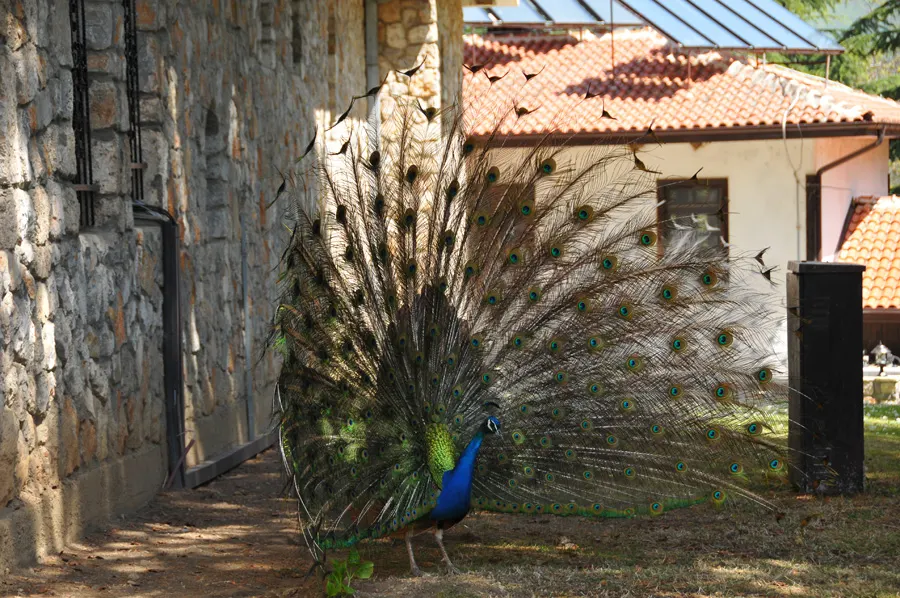
About 20 minutes from Ohrid, close to the border crossing itself, sits the monastery of Sveti Naum, which makes far more sense as a stop on the way back than a detour on the way in. It sits on a spit of land reaching into the lake, and peacocks wander its courtyard freely, giving the place an odd, faintly theatrical charm.
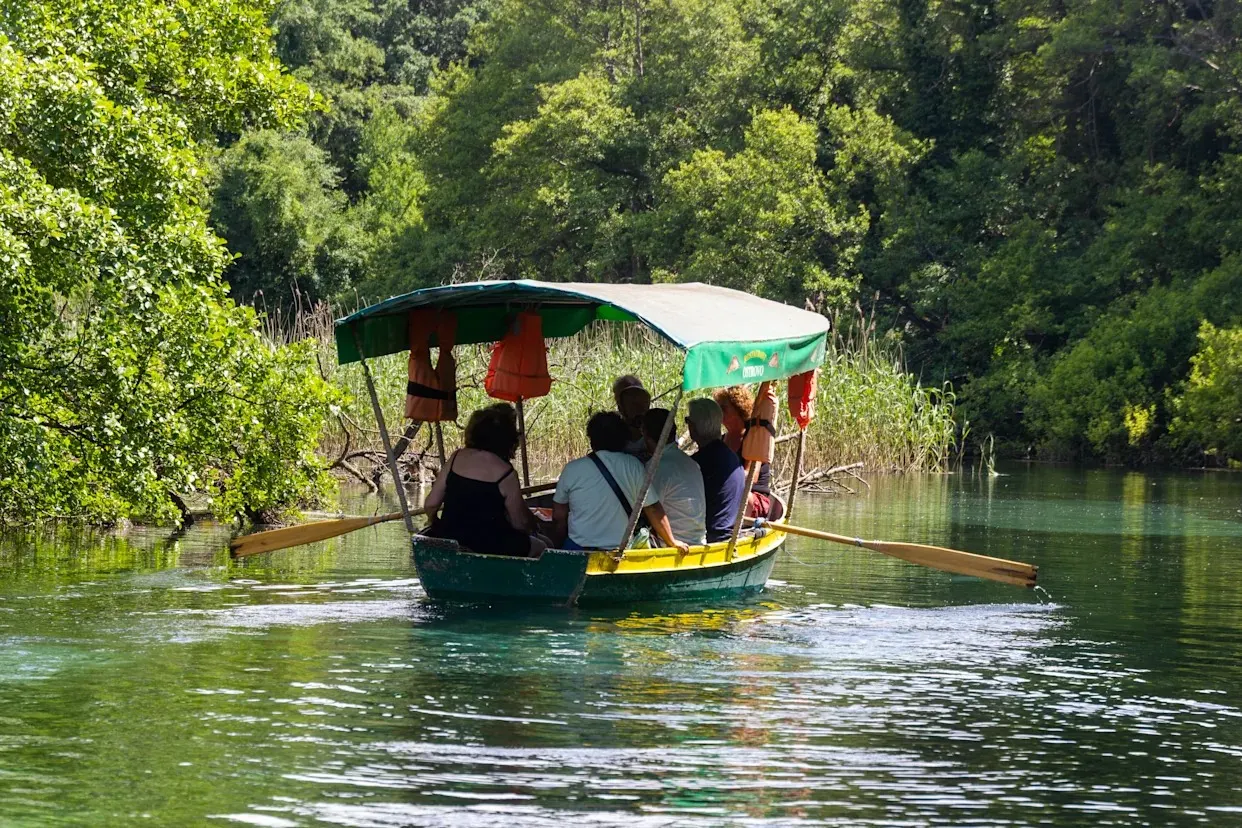
Behind the monastery, natural springs feed startlingly clear water into the lake through narrow channels, and small guided boats run short trips through them: a gentle half hour rather than an adventure, best once the afternoon crowds thin out.
One more crossing to notice: money. North Macedonia uses the denar, not the lek from Albania and not the euro. These are separate currency zones, so do not estimate prices by converting from lek in your head, and do not expect leftover Albanian cash to be accepted. Cards cover most restaurants around the old town, and an ATM in Ohrid covers everything smaller, including the boat trip.
Planning the day
Start early. The border adds a variable amount of time that a short day cannot absorb if it lands at the end rather than the beginning, and Ohrid is more pleasant before the middle of the day gets hot and crowded. A shape that works: fortress and old town in the morning, the church at Kaneo around midday or saved for late light, lunch on the waterfront, and Sveti Naum on the way back towards the border.
None of this is complicated once planned for. It only goes wrong when the border is treated as an afterthought. Sorted paperwork, an early start and a passport matching your nationality’s current entry rule cover the whole of it. The church, the fortress, the lake and the peacocks at Sveti Naum take care of themselves.