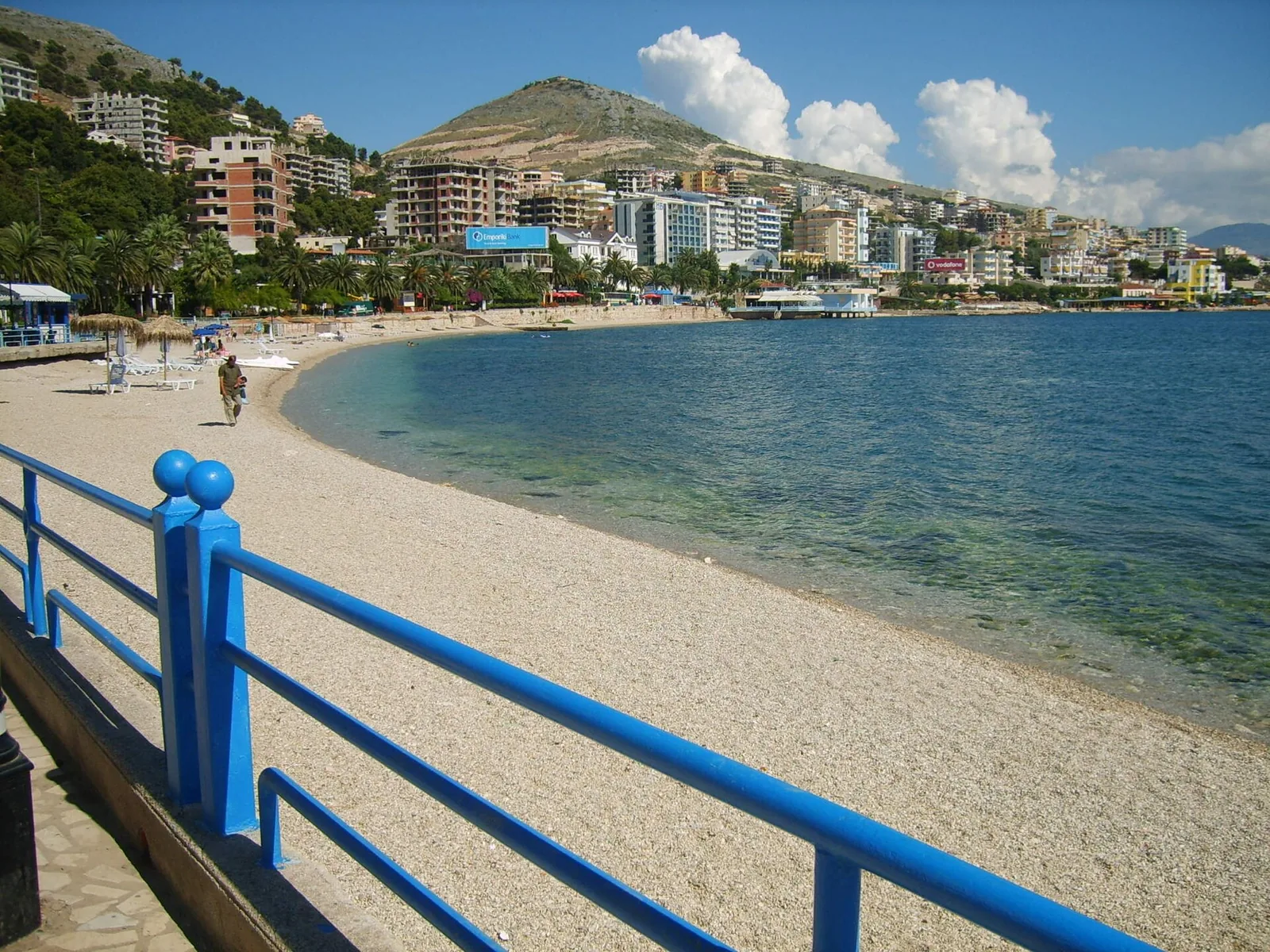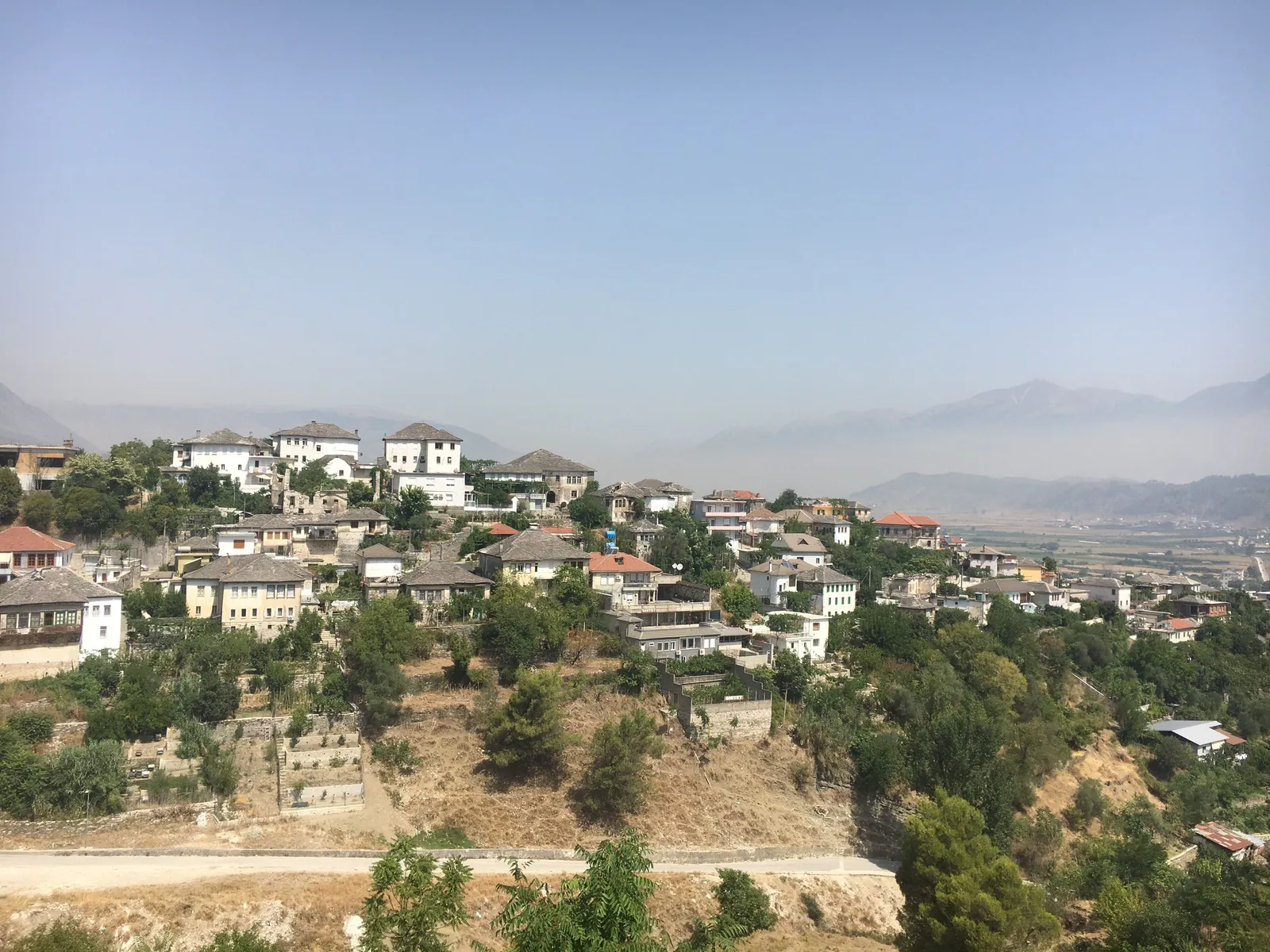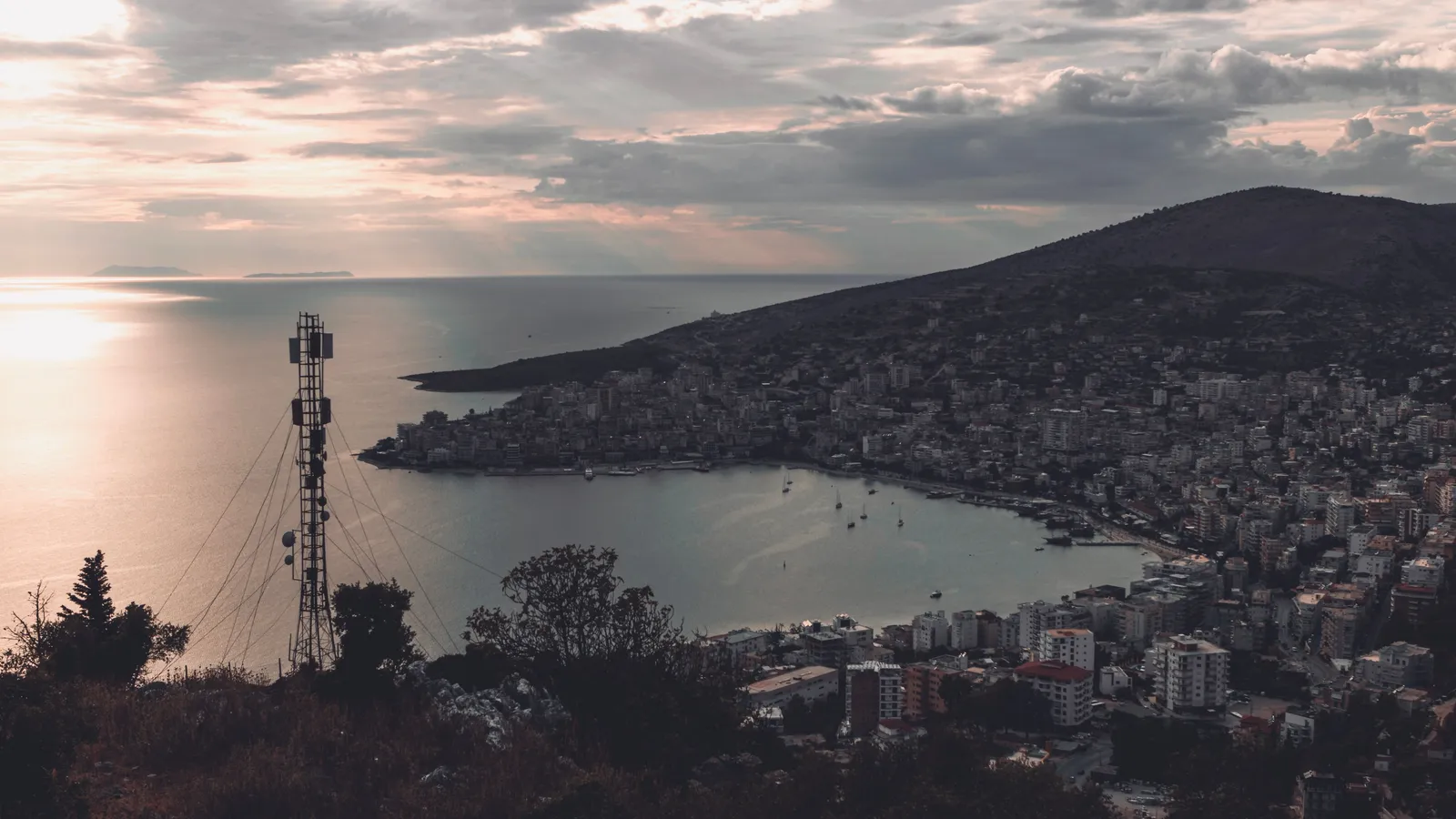
You can see Corfu from the Saranda promenade, and on a clear morning it looks close enough to swim to. That proximity is why the ferry between the two exists, and why so many people treat it as a bus service between a Greek island and an Albanian town.
It is not a bus service. It is a crossing between a Schengen country and a non-Schengen one, in both directions, and that single fact shapes everything from how early you arrive at the port to how long you can stay on Corfu afterwards. Here is how the route actually works.
Who sails it, and when the season runs
Two operators dominate the route. Finikas Lines runs the longer part of the year, with a season that has typically opened around the start of June and closed in the middle of October. Ionian Seaways runs a shorter high season window, broadly July through September.
Those dates move. Operators extend or trim the season based on demand, weather and vessel availability, and a schedule published in March is not a promise in September. The same applies to frequency: at the height of summer there are usually several sailings a day in each direction, and at the shoulders of the season that can thin to one.
The practical rule is that you should never plan a fixed itinerary around a sailing you read about in an article, including this one. Check the operator’s own site or the Saranda port agents in the week before you travel, and have a fallback if the boat you want has stopped running.
Fast boat or conventional ship
There are two kinds of vessel and the difference matters more than the fare gap suggests.
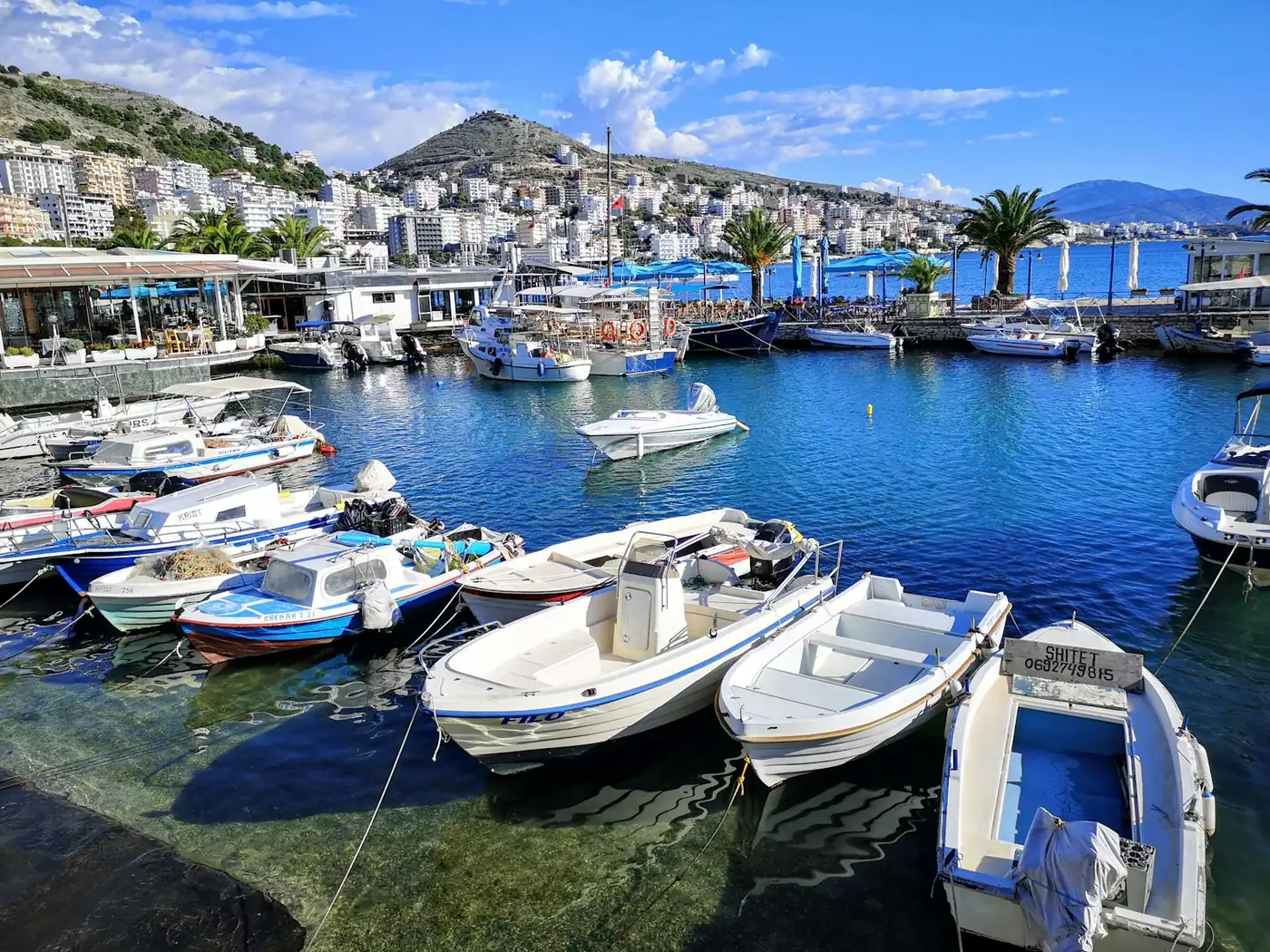
The fast passenger boat crosses in about half an hour. It carries people, not cars, and it is the one to take if you are making a day of it.
The conventional ship takes roughly twice as long and carries vehicles as well as passengers. It is slower to load and slower to clear at the far end, but it is the only option if you are bringing a car, and it copes better with rough water.
Neither crossing is long enough to need planning around meals or seasickness for most people. What does need planning is everything either side of it.
The border nobody mentions
This is the part that gets glossed over, and it is the reason people miss boats.
Both ports run full passport control. Saranda is an Albanian external border post and the Corfu side is a Schengen external border post, which means the checks are real, not a formality, and the queue is part of your journey time. Operators typically ask you to be at the port well before departure, and the reason is the border rather than the boat.
What that border means depends entirely on your passport, so take these in turn.
EU, EEA and Swiss citizens have free movement rights. There is no day counting on the Greek side, no biometric registration and no pre-travel authorisation. Carry a valid travel document and that is the extent of it.
Non-EU passport holders, which includes British, American, Canadian, Australian, New Zealand and South African travellers among many others, are subject to the EU Entry/Exit System, which has been operational since April 2026 at Greek and Italian border points. In practice that means biometric registration when you cross into or out of Greece. It is a database, not a form to fill in, and there is nothing to apply for. ETIAS is not live and applications are not open, so ignore any site telling you to buy one.
The counting rule is the one that trips people up. Days on Corfu count against a Schengen 90 in 180 allowance for those it applies to. Days in Albania do not, because Albania is outside both the EU and Schengen. If you are working through a long European trip, a fortnight in Albania is a fortnight your Schengen clock is not ticking.
Going the other way, Albanian entry rules also vary by passport. US citizens can stay up to a year, most other visa-free nationalities get 90 days in 180, and a few nationalities need to arrange an e-visa before travelling. Our guide to Albanian entry rules sets out which group you are in and what the border officer will actually ask.
What it costs and how tickets work
Published high season fares have sat at roughly 25 EUR for a foot passenger on the conventional boat, around 30 EUR on the fast service, and in the region of 50 EUR for a car, with port charges sometimes billed separately. Fares are sold in euro on both sides of the water.
Treat all of those as indicative. Prices move between seasons and between operators, returns are not always double a single, and the cheapest listing is not always the sailing you want. Buy through the operator or a port agent rather than a third party quoting a schedule from a previous year.
Cross for the day, see the ancient cityOrganised trips from Saranda bundle the transfers to Butrint and the Blue EyeDay trip, or arriving properly
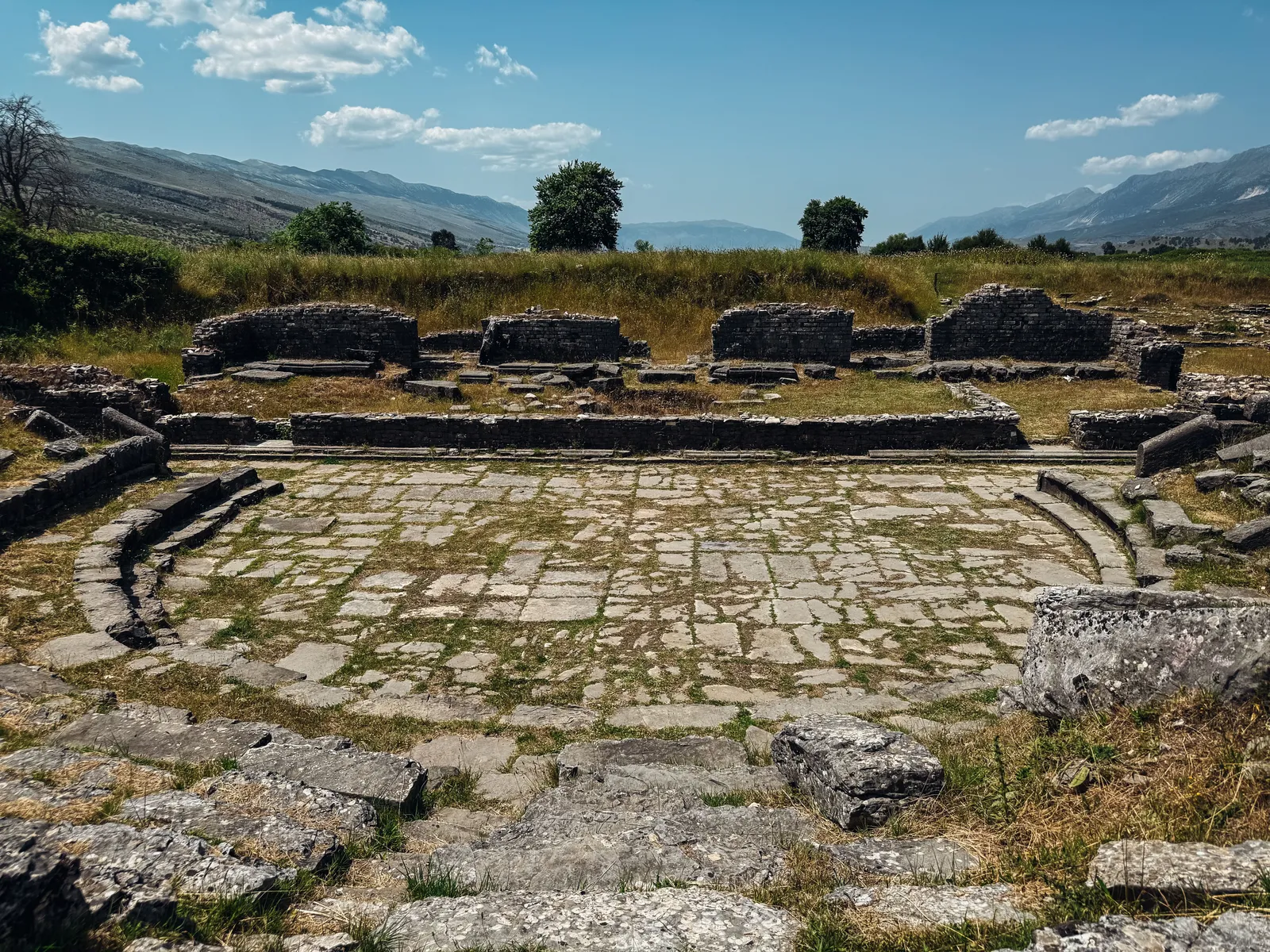
As a day trip from Corfu, the honest maths is four to six hours ashore once you subtract the crossing and two sets of formalities. That covers Saranda itself, a long lunch, and one thing nearby, most commonly the ruins at Butrint. It does not cover the Riviera, which starts an hour north and deserves days rather than hours.
As a one way arrival, it is one of the best ways into Albania there is. You walk off the boat into the middle of a working town with a promenade, a bus station and accommodation at every price, which is a far gentler landing than a long transfer from the capital. Our guide to where to stay in Saranda covers the choice between the town and the beach villages south of it.
And if you are weighing up the two countries rather than combining them, our comparison of Albania and Greece covers what each actually does better.
Practical notes for the port day
Leave the hire car. Cross-border permission is refused often enough that the default assumption should be that your car stays where it is.
Carry the passport itself, not a national identity card, unless the operator has confirmed otherwise for your nationality.
Arrive earlier than feels necessary. The border, not the boarding, sets the timetable.
Bring cash in lek for the Albanian side, because the smaller places in Saranda do not take cards, and the exchange desks at a port are never the good ones.
Confirm the return sailing before you commit to the outbound one, especially at the edges of the season, when the last boat of the day can be earlier than you assume.