This question comes up in almost every conversation about Albania. You have a week, maybe ten days, and the list is already full of beaches, Tirana and possibly the north. There is one day left for an Ottoman town, and there are two of them. Both are UNESCO listed. Both are photographed from every angle. Both sound identical in the descriptions.
They are not identical. The gap between them is much wider than the photographs suggest, and one of them will suit you while the other will feel like a box you ticked.
The comparison in one table
| What decides it | Berat | Gjirokaster |
|---|---|---|
| From Tirana | About 2 to 2.5 hours | About 3.5 to 4 hours |
| From Saranda | About 3.5 to 4 hours | About 1 hour |
| Character | White, open, in a valley | Grey, steep, fortified |
| The castle | Smaller, and still lived in | Vast, and museum like |
| Time needed | 5 to 6 hours | 6 to 7 hours |
| Best for | Day trip from Tirana, couples, food | History, photographers, heading south |
Berat: the easy one to love
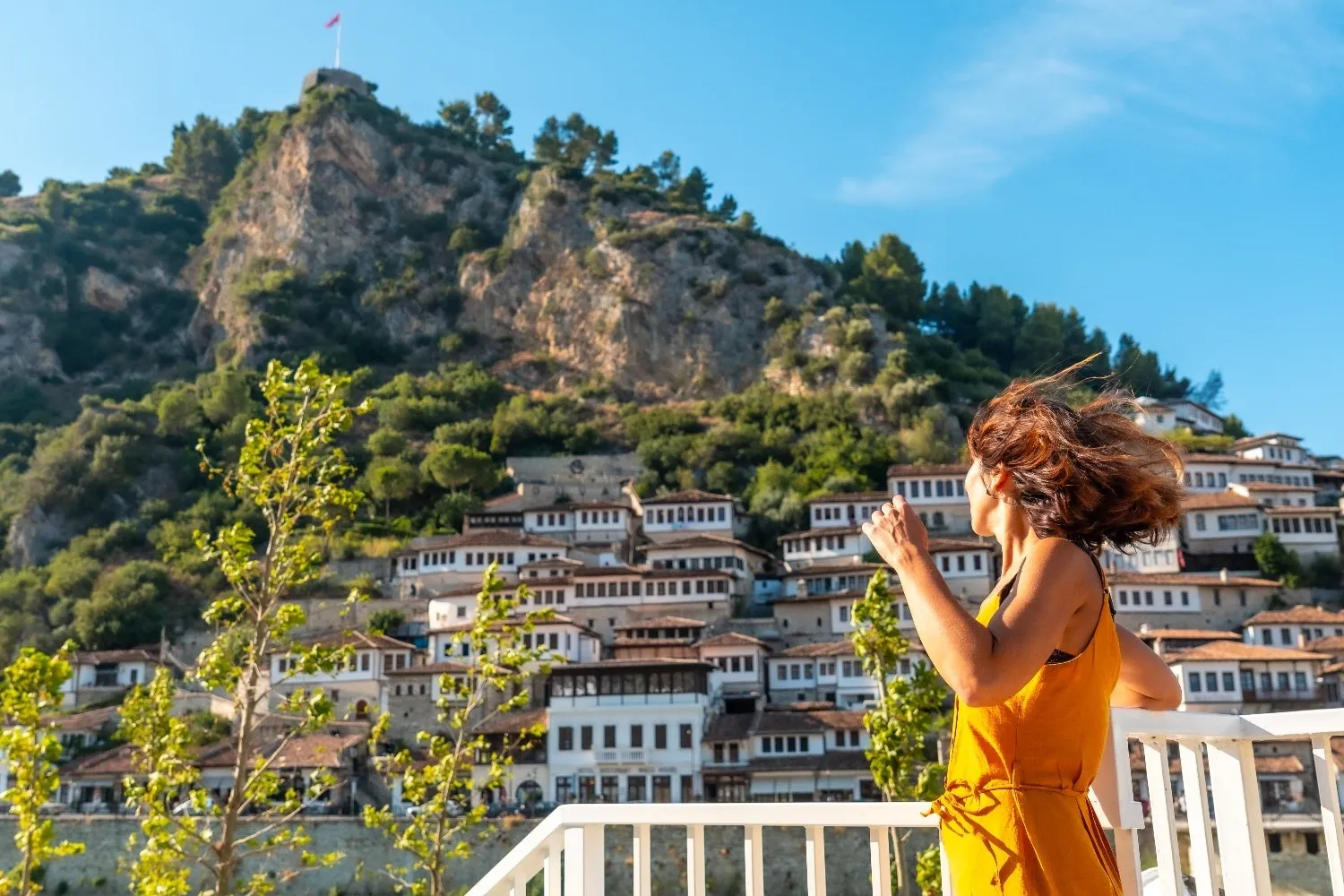
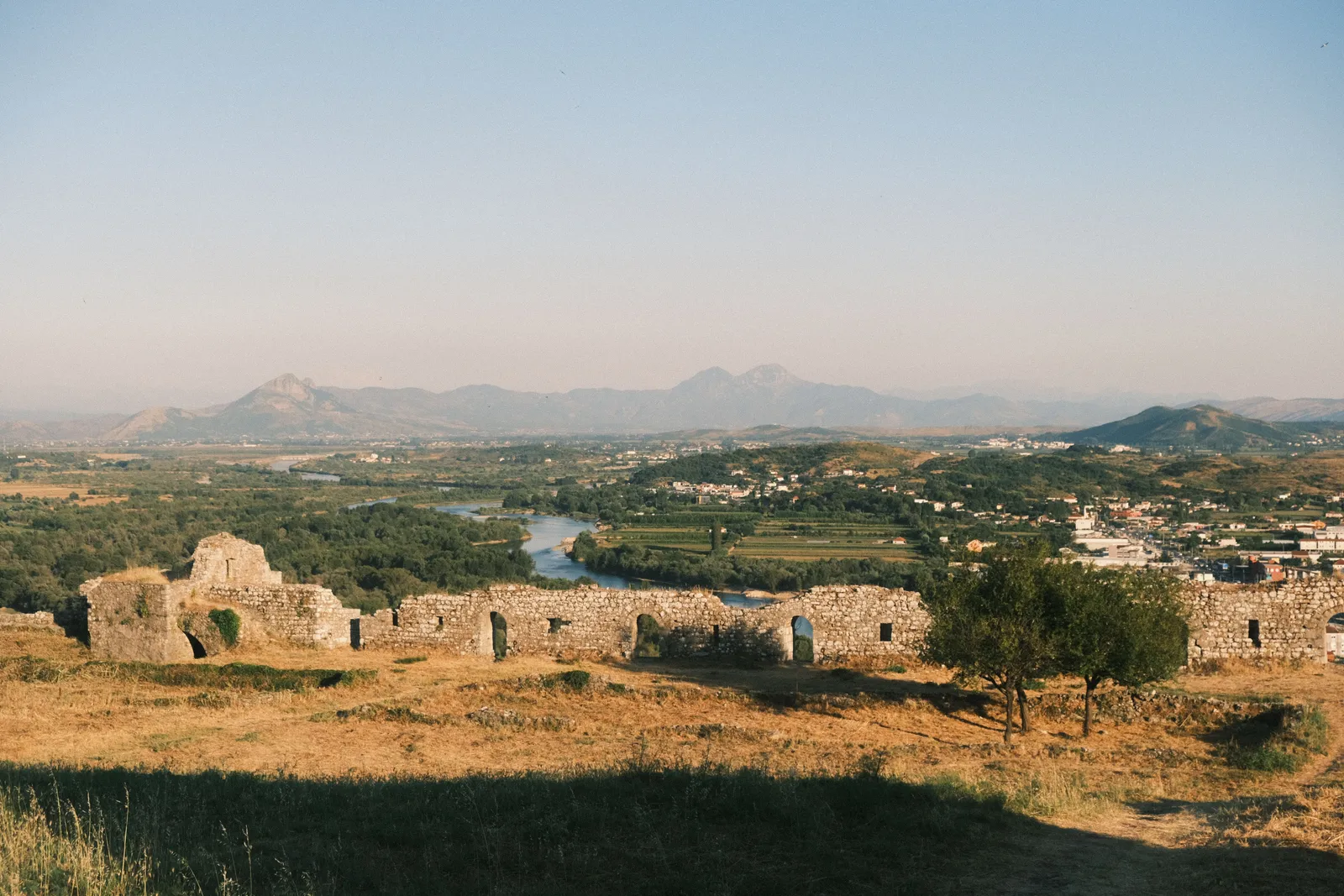
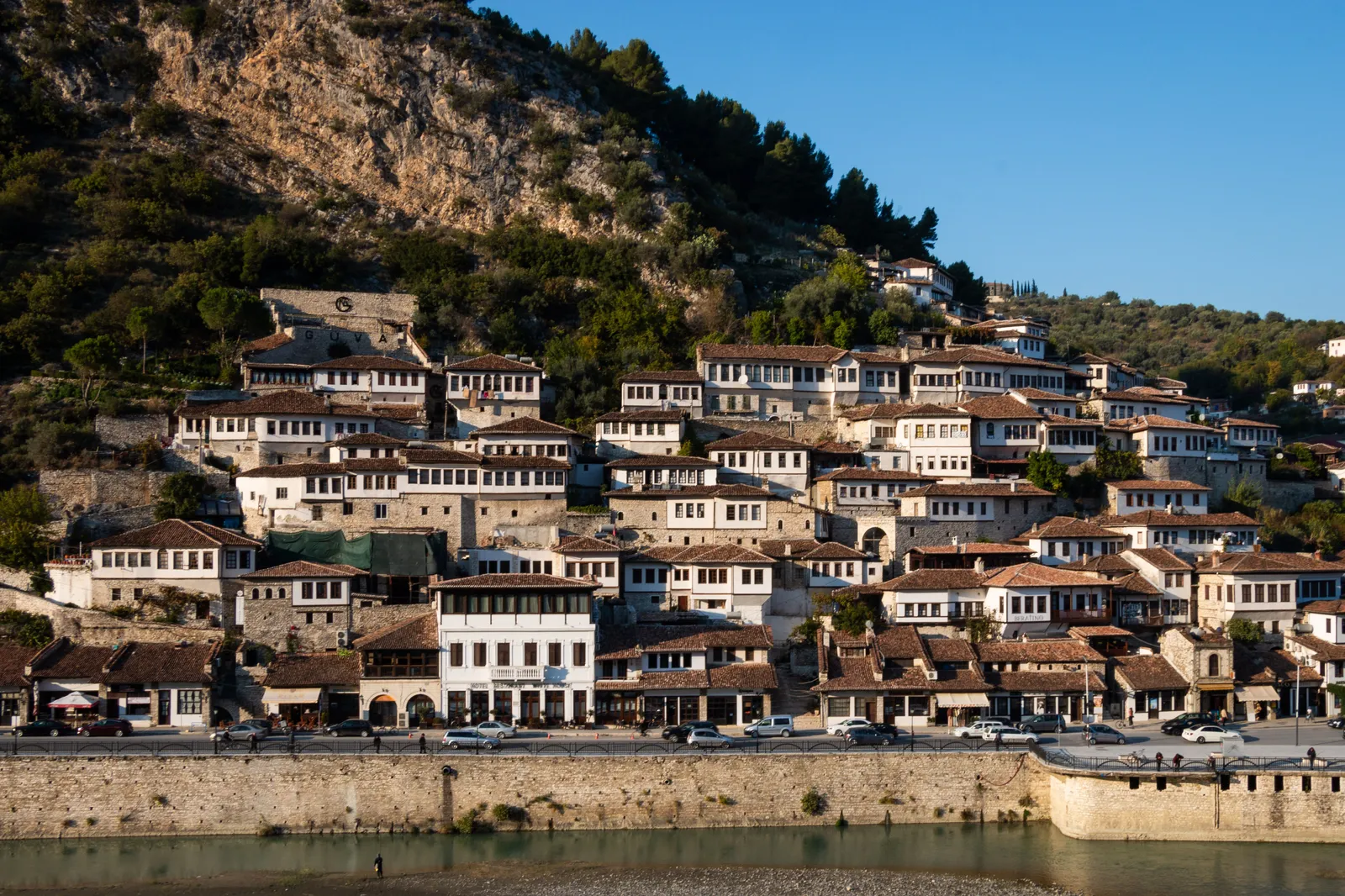
Berat sits in a valley between two hills with the Osum river running through the middle. On both banks, white Ottoman houses climb the slope, and each one carries so many large windows that it looks like more glass than wall. Hence the nickname, the town of a thousand windows, which for once is not marketing. That is genuinely what you see.
What makes Berat easy is that its base is flat. You park near the bridge and everything that matters is within walking distance. Up to the castle, down through the Mangalem quarter, across the stone bridge into Gorica, and from there you look back at the picture everybody knows. There is no point at which the town breaks you.
The detail that surprises people most about Berat castle is that it is not empty. Families live inside the walls. There is washing on lines, there are cats, there are children on bikes, and somebody is growing tomatoes next to a Byzantine church that has been standing for centuries. It is not a set, which is exactly why it works.
Berat also wins the food category comfortably. The restaurant scene there has grown well beyond what you would expect from a town this size, and in the evening you can sit on a terrace above the river eating traditional Albanian dishes at prices that sound like a mistake. Book a table in the evening in July and August, because the genuinely good places fill up.
The downside is the flip side of the same coin. Berat is convenient, so Berat is busy. At the height of summer, in the middle of the day, Mangalem fills with tour groups. Arrive early in the morning or after four and you see a different town entirely.
Gjirokaster: the one that asks something of you
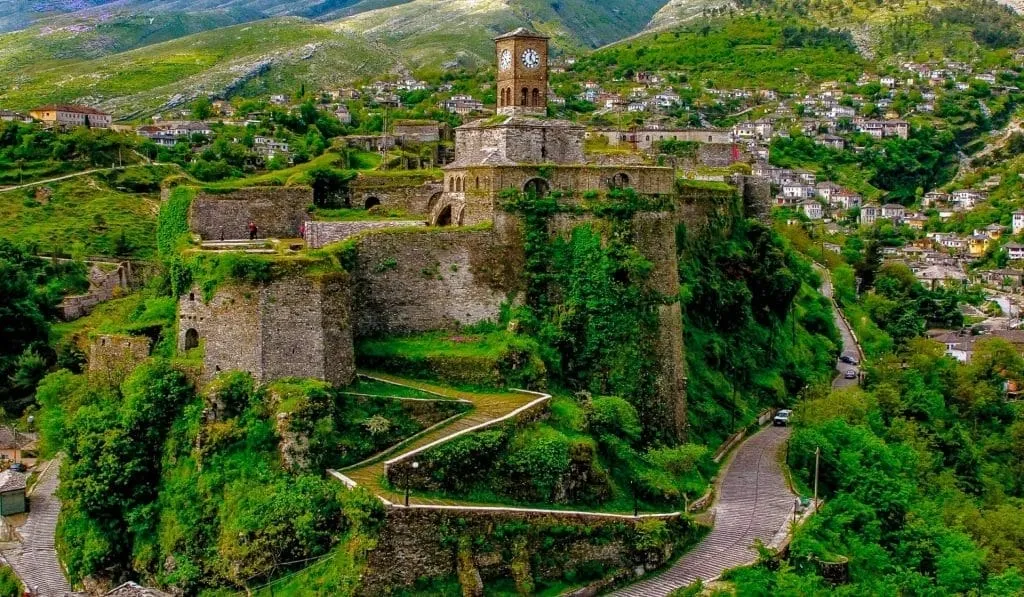
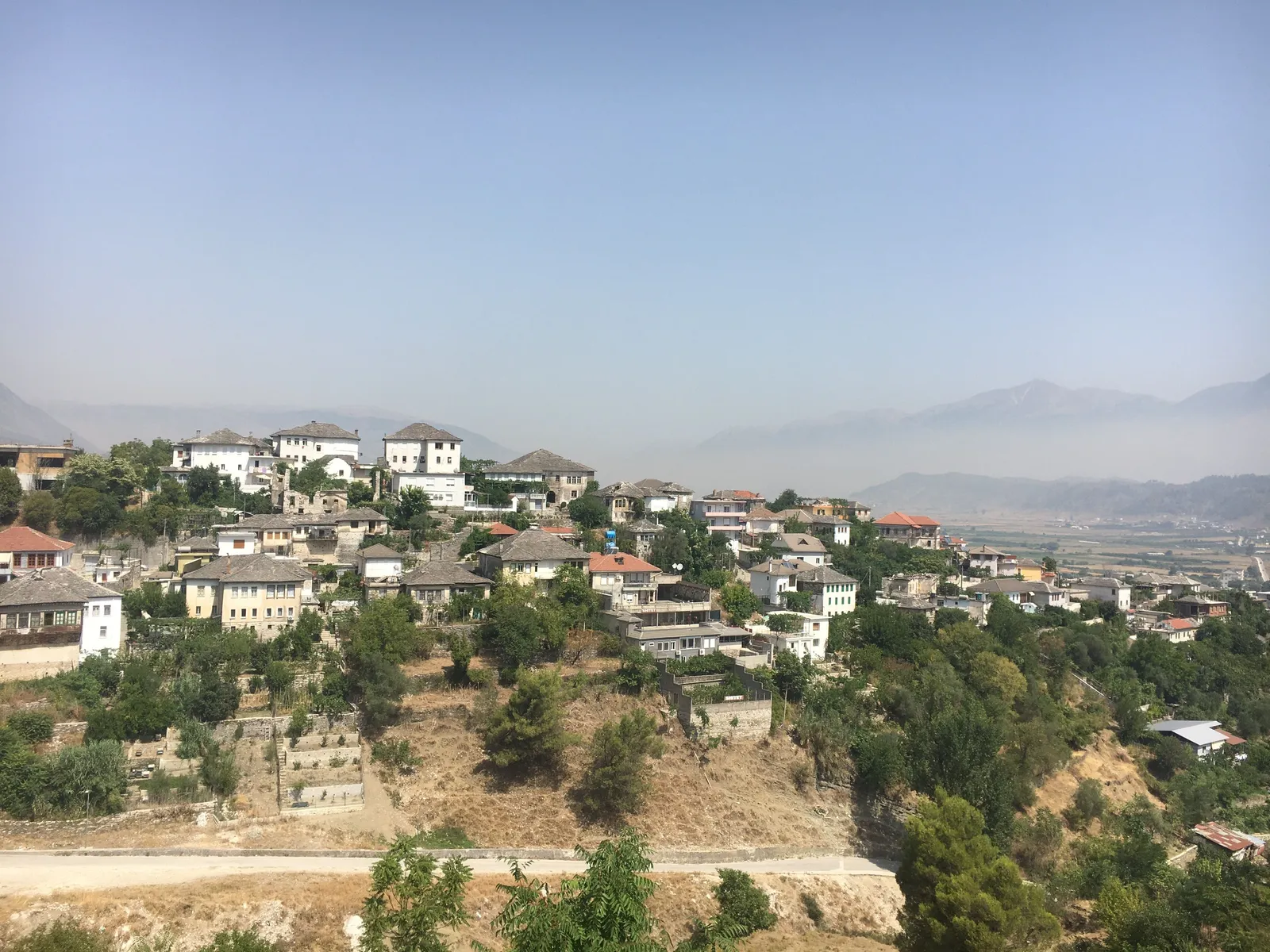
Gjirokaster is built on a single steep hillside and it is grey. Not grey in the miserable sense, but in the sense that every house is built from local stone and the roofs are made of stone slabs too. On an overcast day it looks armoured. In sunshine the stone throws light back and the whole town gleams.
The first thing you notice there is your legs. There is barely a flat metre in Gjirokaster. From the car park to the centre is a climb, from the centre to the castle is another climb, and the historic stone houses that operate as museums are scattered up side lanes. Anyone travelling with complaining knees, or with a pushchair, needs to plan around that rather than discover it.
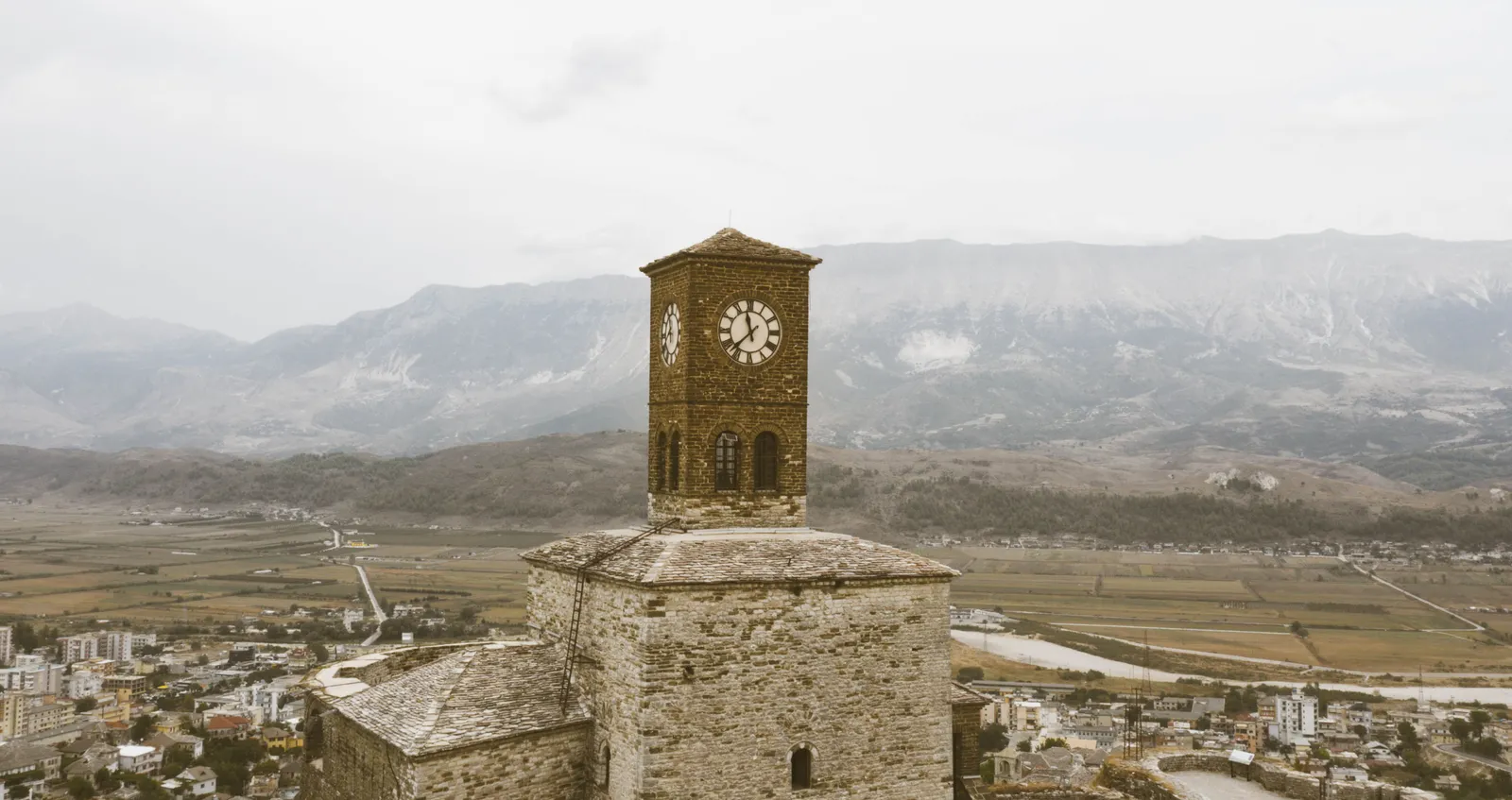
The castle is the main reason to come. It is enormous, dim, and built as long stone corridors leading out to an artillery terrace with a view over the whole Drino valley. It also carries a twentieth century layer that is hard to forget, including a US Air Force jet that landed in Albania in 1957 and was put on show by the regime as a captured spy plane, and communist era tunnels running underneath the town.
 Doing both in one trip?Compare hire cars from Tirana airport
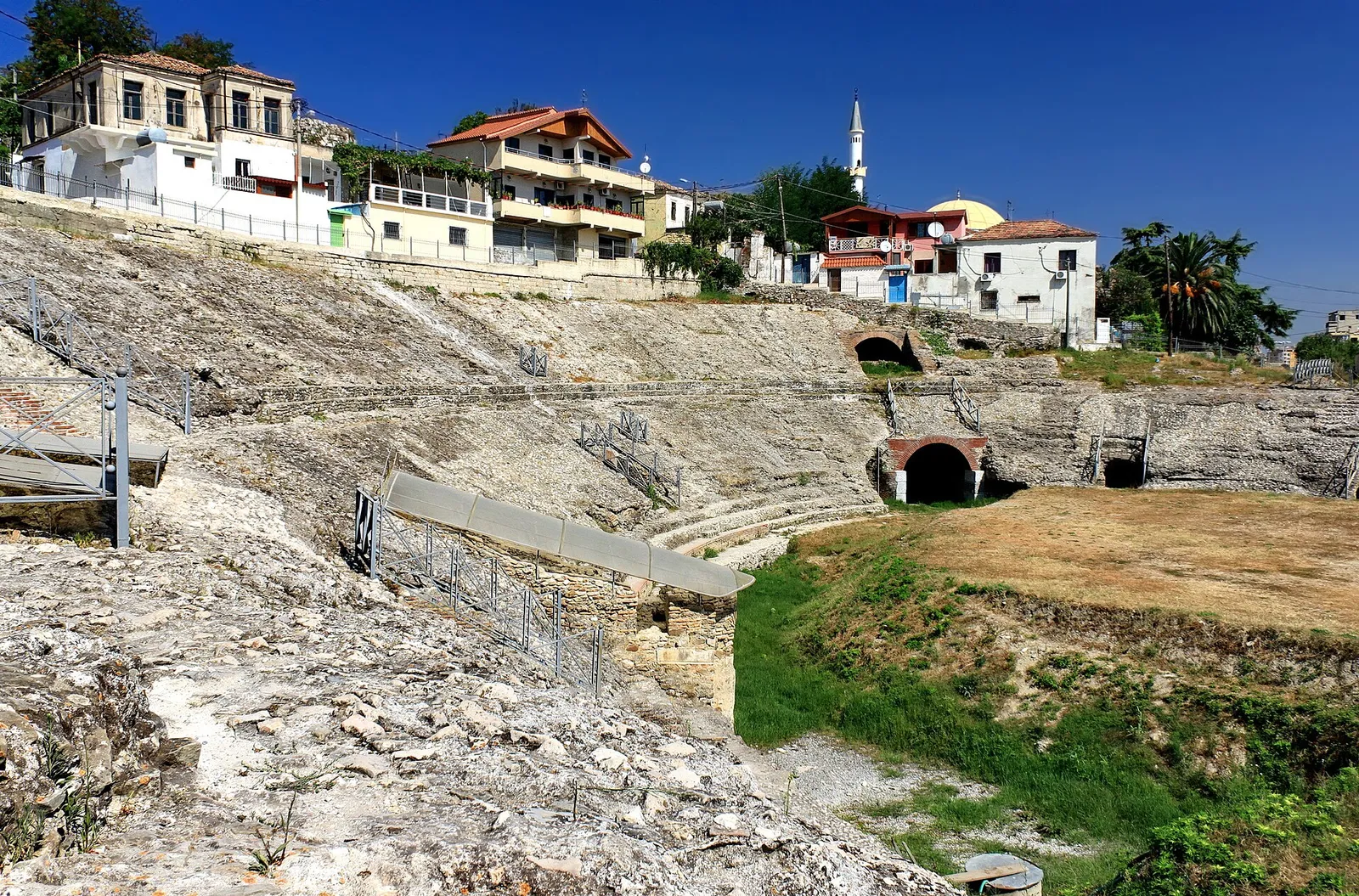
This is also a town with real historical weight. Ismail Kadare, the best known literary voice Albania has produced, was born here. So was Enver Hoxha, the ruler who sealed the country off from the world for decades. The two houses are within walking distance of each other, which is probably the most direct way anyone has ever explained the Albanian twentieth century.
The downside: Gjirokaster is harder work. Fewer good restaurants, fewer places to simply sit, and less forgiveness for anyone who turned up without a plan. It rewards people who came for it and disappoints people who came to tick it off.
Three questions that actually decide it
Where are you starting from? This is the big one and it settles most cases. From Tirana, Berat is a perfectly reasonable day out and Gjirokaster is a day that is mostly driving. From Saranda and Ksamil the picture flips completely: Gjirokaster is close, and Berat becomes an expedition. Look at the map before you decide based on photographs.
Atmosphere or history? If you want to wander, sit, eat well and photograph a beautiful town, Berat. If you want to walk into a castle and come out with a story, Gjirokaster.
Who are you travelling with? With small children or older parents, Berat is far easier. Gjirokaster is steep, and the climbing is not optional, it is the route.
The answer nobody likes: take both
If you are heading south to the Riviera anyway, both towns sit more or less on the axis. Berat is an inland detour off the road from Tirana, and Gjirokaster is close to the main road down to Saranda. A two night route linking them works beautifully, and it is exactly the sort of decision worth making at the planning stage rather than in the car, which is what the Albania beginner guide is for.
Anyone who genuinely has to choose one, and has read this far, probably already knows the answer. If not, we have a detailed Berat day trip guide and a separate Gjirokaster guide, both of which go into the detail this page only summarises.
Practical notes for both
Entry to the castles and the museum houses is paid in both towns, in modest amounts in lek, but prices and opening hours shift between seasons. Check at the ticket desk on the day rather than relying on a figure you read somewhere, this page included.
Bring cash. There are ATMs in both towns, but the lanes, the stalls and the small cafes will not always take a card, and that is precisely where the good things are.
And the one that matters most: do not arrive at midday. Both towns are built on bare stone, and in mid July those slopes turn into an oven. Early morning and late afternoon are when they are genuinely beautiful, and also when you can breathe.