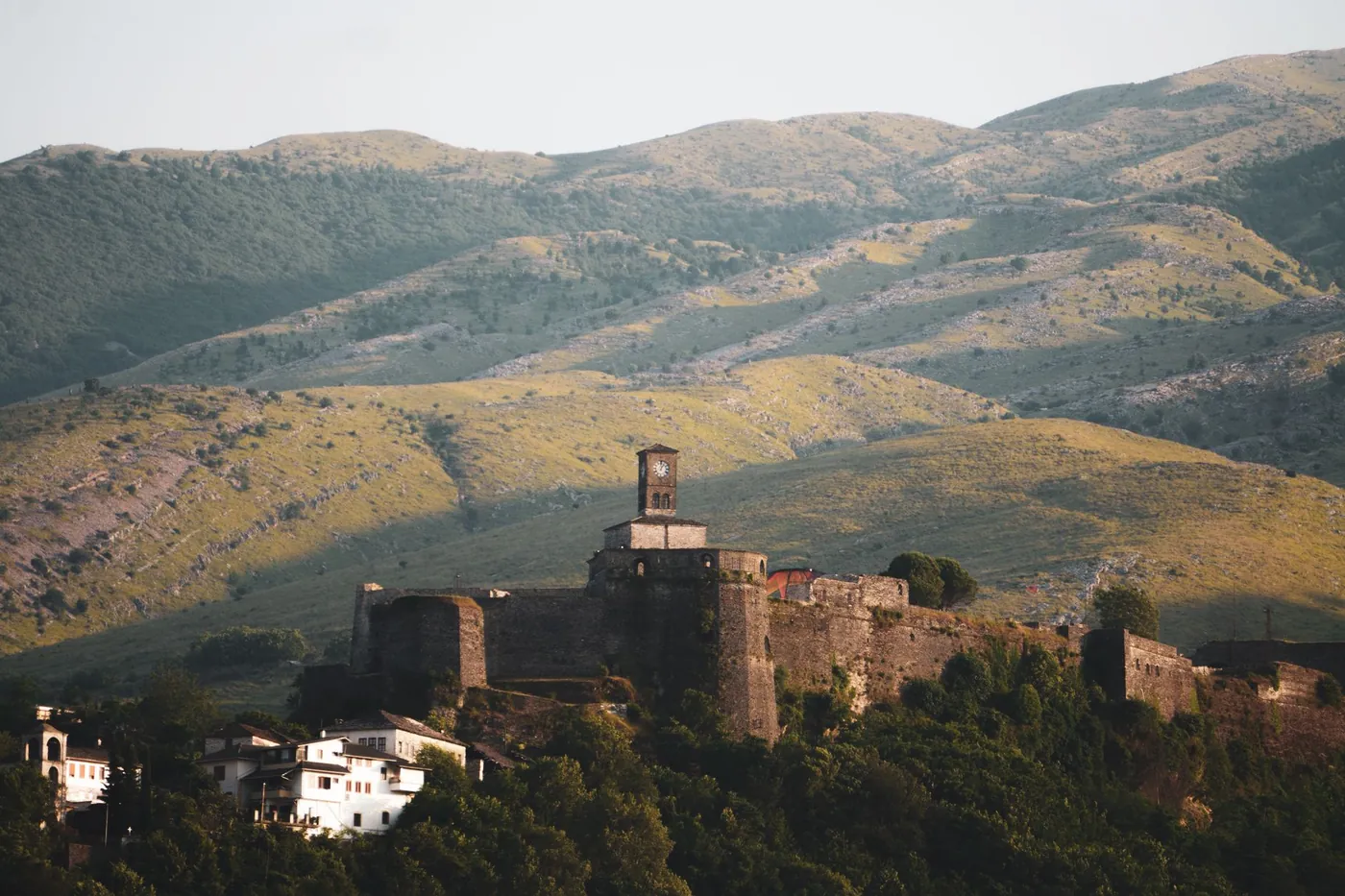
Almost everyone who visits southern Albania passes within a few kilometres of Butrint. Most of them keep driving.
The road out of Saranda runs through Ksamil and simply carries on for another four kilometres to the gate, and the beach wins. Butrint is a UNESCO World Heritage site and the most complete ancient city in the country, and it is routinely treated as the thing you would have done if the weather had been worse.
Two to three hours does it properly. That is the whole argument.
Why this one is different from every other ruin
Albania has castles everywhere and Roman fragments in a dozen towns. Butrint is not more of the same, for two reasons.
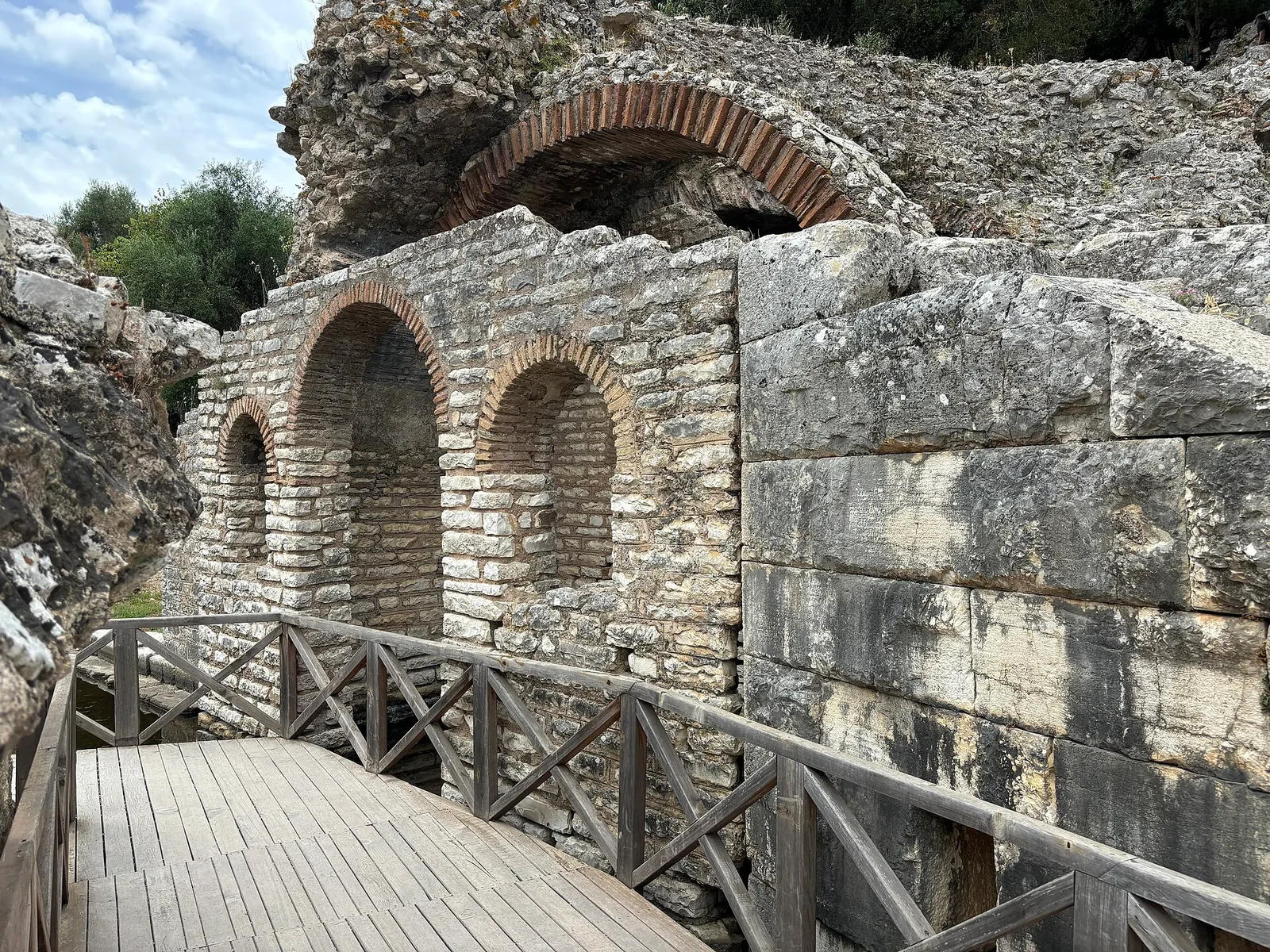
The first is depth. This is not one civilisation’s leftovers but a stack of them on a single site: a Greek city with a theatre and a sanctuary, a Roman colony built over it, a Byzantine bishopric with a baptistery, a Venetian tower guarding the water, and Ottoman traces on top. You walk through the whole sequence in an hour without ever leaving the marked path.
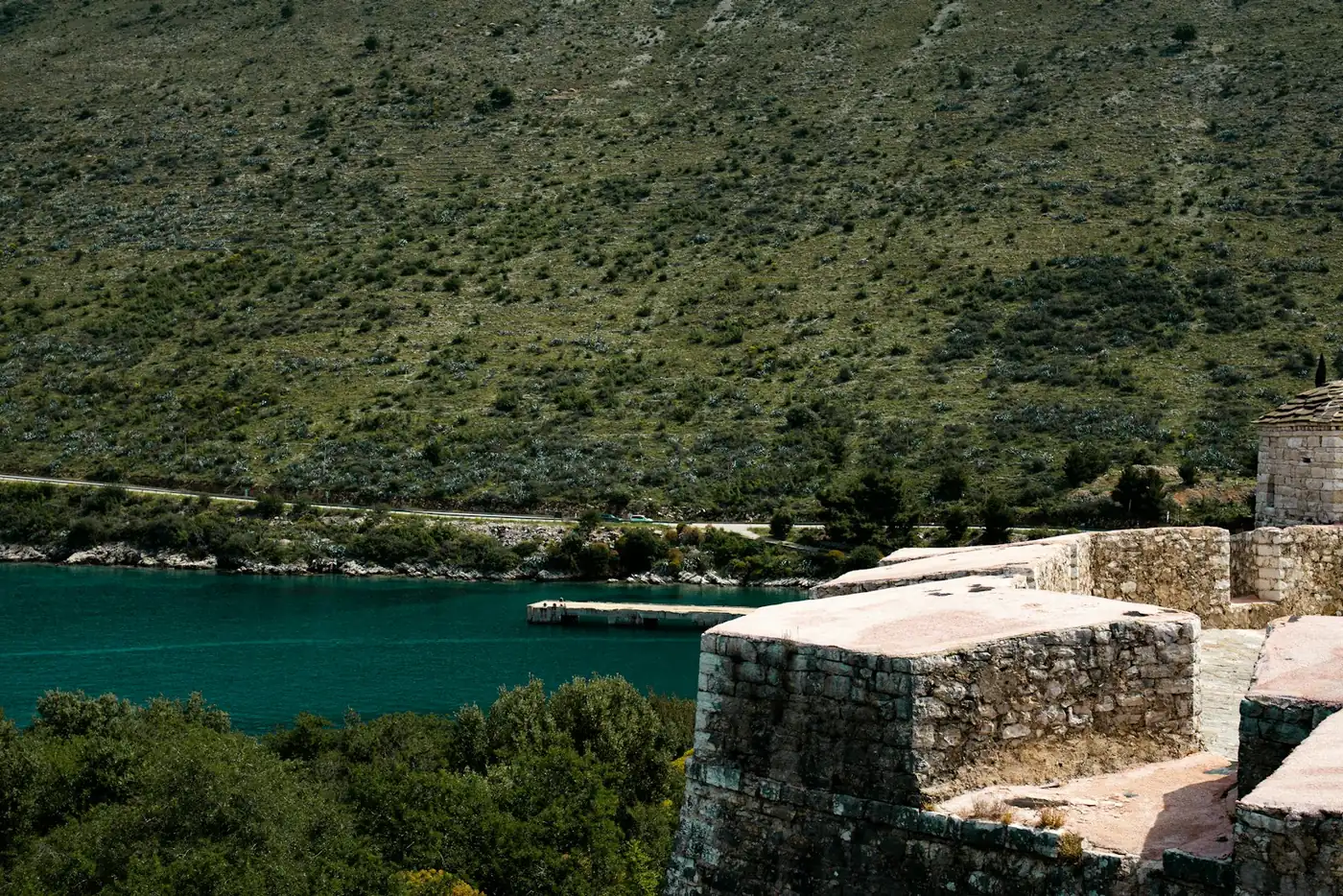
The second is the setting, and it is the part photographs undersell. The site occupies a wooded peninsula between a lagoon and the Vivari channel, inside a national park. The walkway runs under trees for most of its length. There is shade, birdlife on the water, and long stretches where the stones are half absorbed by the forest.
The result feels less like an archaeological compound and more like a walk in a wood that happens to have a city in it.
What you actually walk through
The circuit is signposted and mostly one way, which removes the usual problem of standing in a field wondering what you are looking at.
The theatre is the set piece, cut into the slope and small enough to feel intimate, often with water standing in the lower rows. Just above it sit the remains of the sanctuary the city was originally built around.
The baptistery is the Byzantine highlight and the one to manage expectations about. Its mosaic floor is a protected surface and is frequently kept covered for conservation, so do not plan a visit around seeing it.
The Lion Gate and the walls give you the defensive city, and the path up to the acropolis ends at a small museum inside the later castle, with the best view over the lagoon on the site.
The Venetian triangular fort sits across the water at the channel mouth, and it is the image most people recognise before they know its name.
Tickets, hours and the bits that change
This is where most guides confidently print a number that was true two seasons ago.
Entry for an adult has sat around the 1,000 lek mark in recent seasons, with a reduced rate for teenagers in roughly the 12 to 18 bracket and free entry for younger children. The park sets these itself and has changed them before.
Hours move with the season. In summer the gates have opened in the region of half past eight and stayed open into the evening, with a last entry an hour or so before closing. In winter opening is nearer nine and last entry falls in the mid afternoon, which catches out people arriving after a long lunch in Gjirokaster.
A small boat crosses the channel by the fort. Whether it is running, and whether the crossing is covered by your entry ticket, has varied from season to season. Ask at the ticket office rather than assuming either way.
⚠️ Confirm all of it on the Butrint National Park official website or at the ticket desk on the day. Prices, hours and what is included are the three things at this site that a guidebook cannot keep current.
Getting there from Saranda and Ksamil
The logistics are the easy part, which is another reason skipping it makes little sense.
| From | Roughly | Notes |
|---|---|---|
| Ksamil | 10 minutes | About 4 km, end of the same road |
| Saranda | 25 minutes | Same bus line, through Ksamil |
| Blue Eye | Half a day combined | Standard organised pairing |
By bus, the coastal line that runs from Saranda through Ksamil continues to the site, which makes this one of the few genuinely car free excursions in southern Albania. By taxi it is a cheap hop from either town. By car there is parking at the entrance that fills in the middle of a summer day.
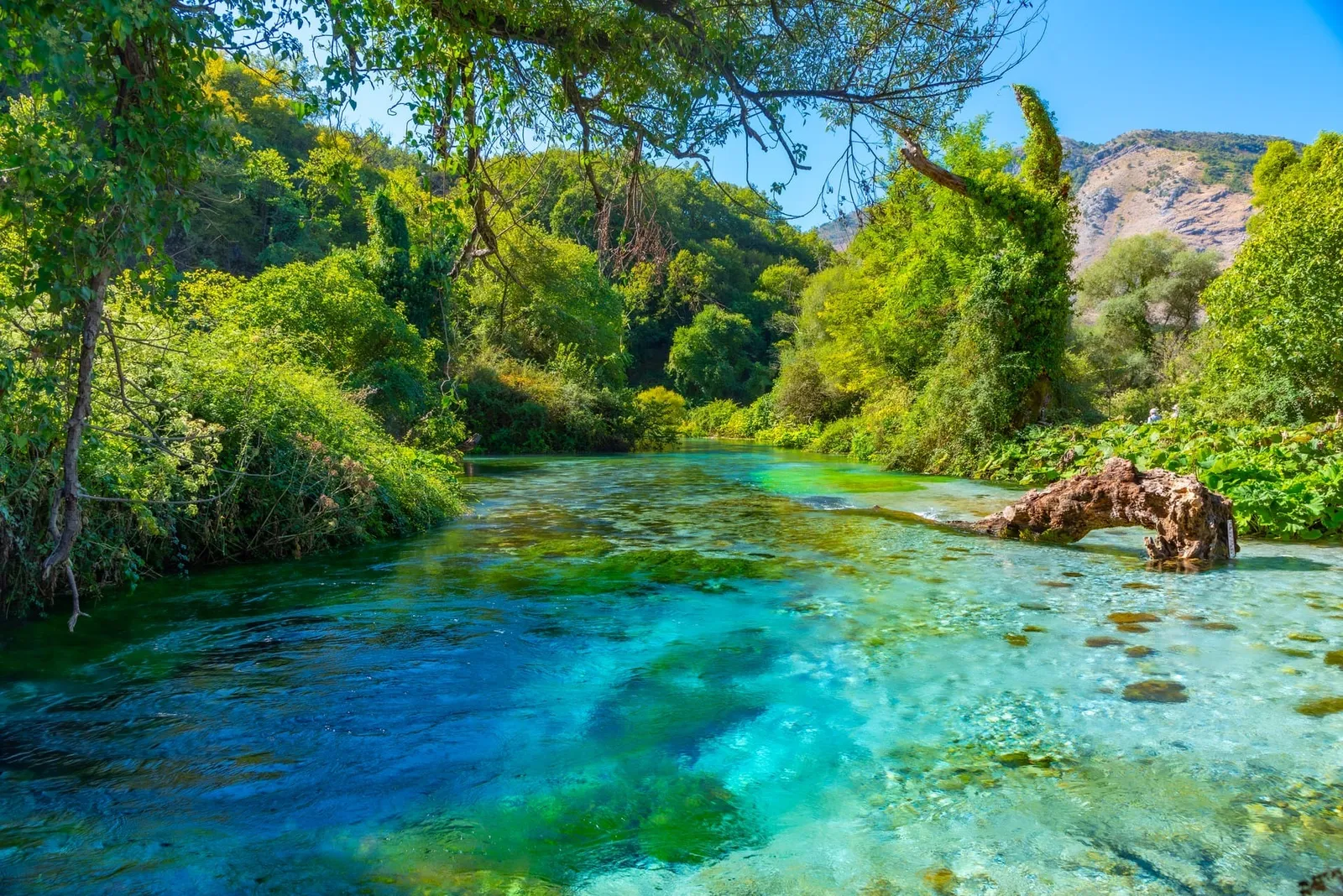
Organised half day trips from Saranda almost always bundle Butrint with the Blue Eye spring inland, which is the sensible pairing if you do not have a vehicle.
 No car in Saranda?Half day trips that pair Butrint with the Blue Eye
When to go, and what to take
Time of day matters more than the month. Coaches and tour groups concentrate in the middle of the day. The first hour after opening and the last two before final entry are the quiet ones, and the light is better at both ends.
Shoes. The path is uneven stone and packed earth with a climb to the acropolis. Beach sandals are a poor choice here.
Water and insect repellent. It is a lagoon in a national park, the shade is real but so are the mosquitoes near the water, especially at dusk.
Shade is genuinely good, which makes Butrint a better July option than most Mediterranean archaeological sites. It is still Albania in high summer, so mornings win.
Where it fits in a southern trip
Because it is a half day rather than a full one, Butrint slots into an existing beach plan rather than replacing one.
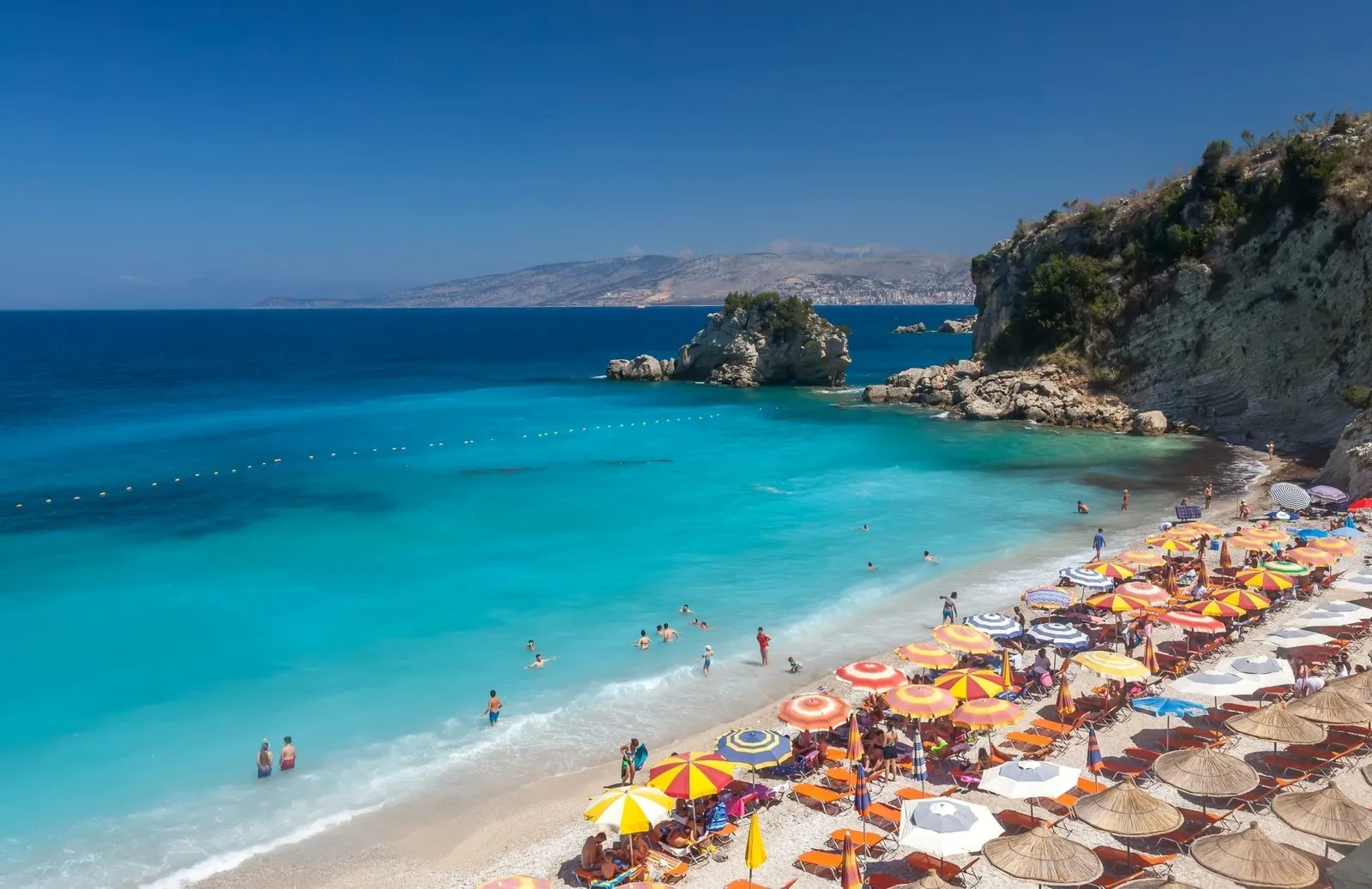
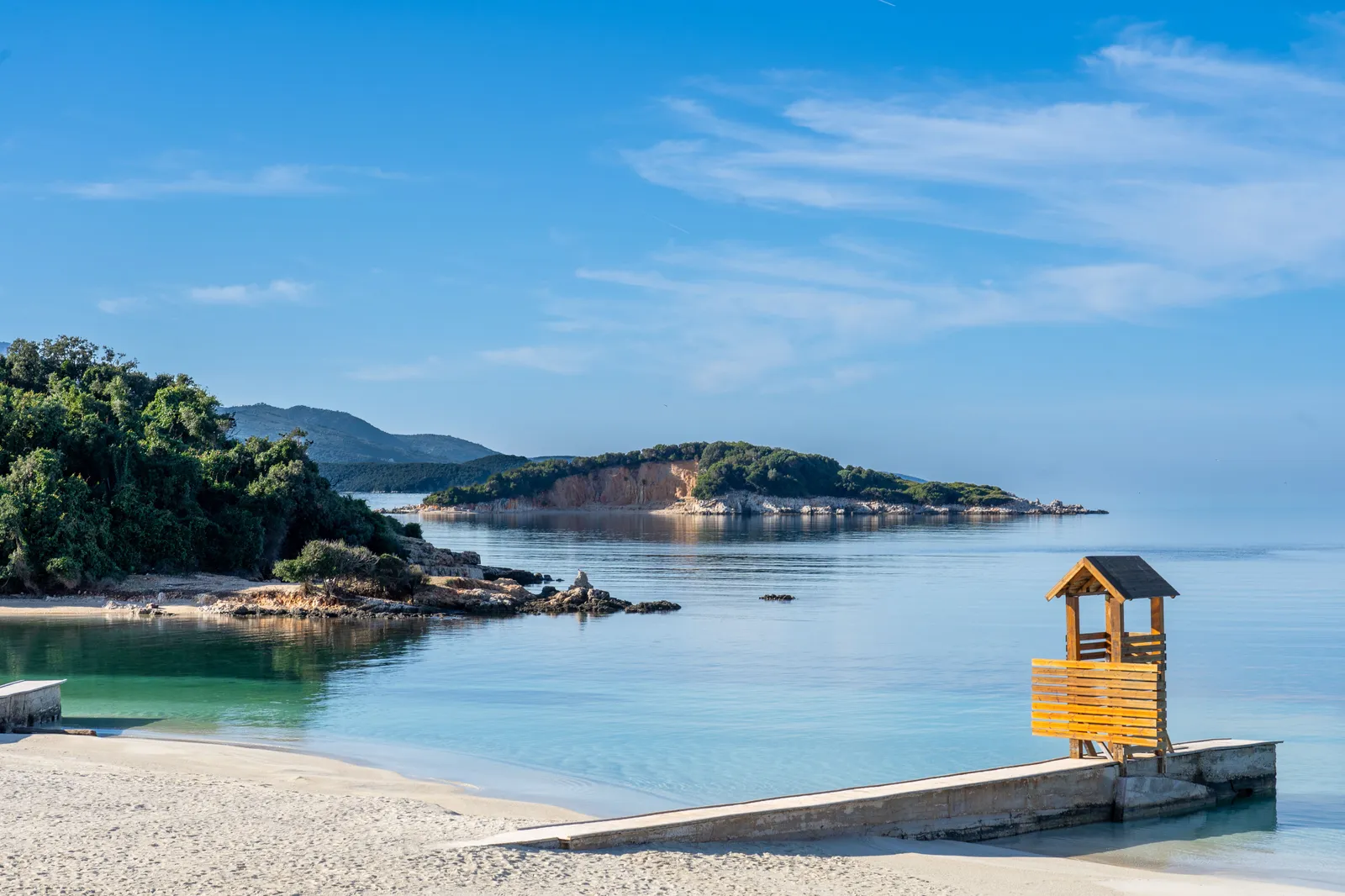
The standard version is a morning at the site and an afternoon in the water at Ksamil, four kilometres back up the road. That is the shape most people land on, and our three days in Saranda and Ksamil plan builds the same pairing into a slower stay.
The historical version treats it as one stop among several. Butrint, the castle above Saranda and the Ottoman old town at Gjirokaster inland make a coherent run through very different centuries, which is the thread our Albanian history route follows across the country.
In one line: it is four kilometres past the beach everyone came for, it takes a morning, and it is the best archaeological site in Albania.