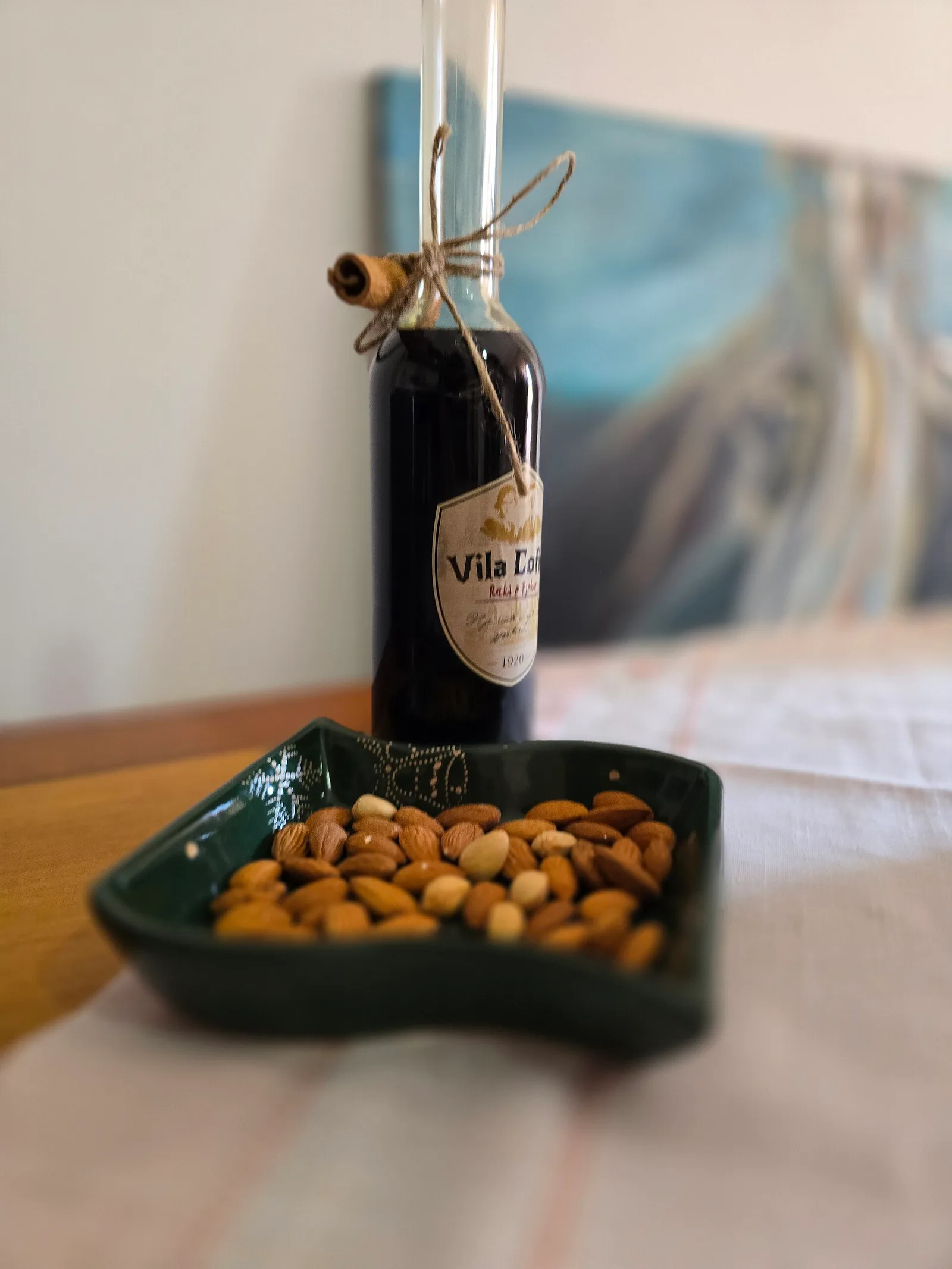
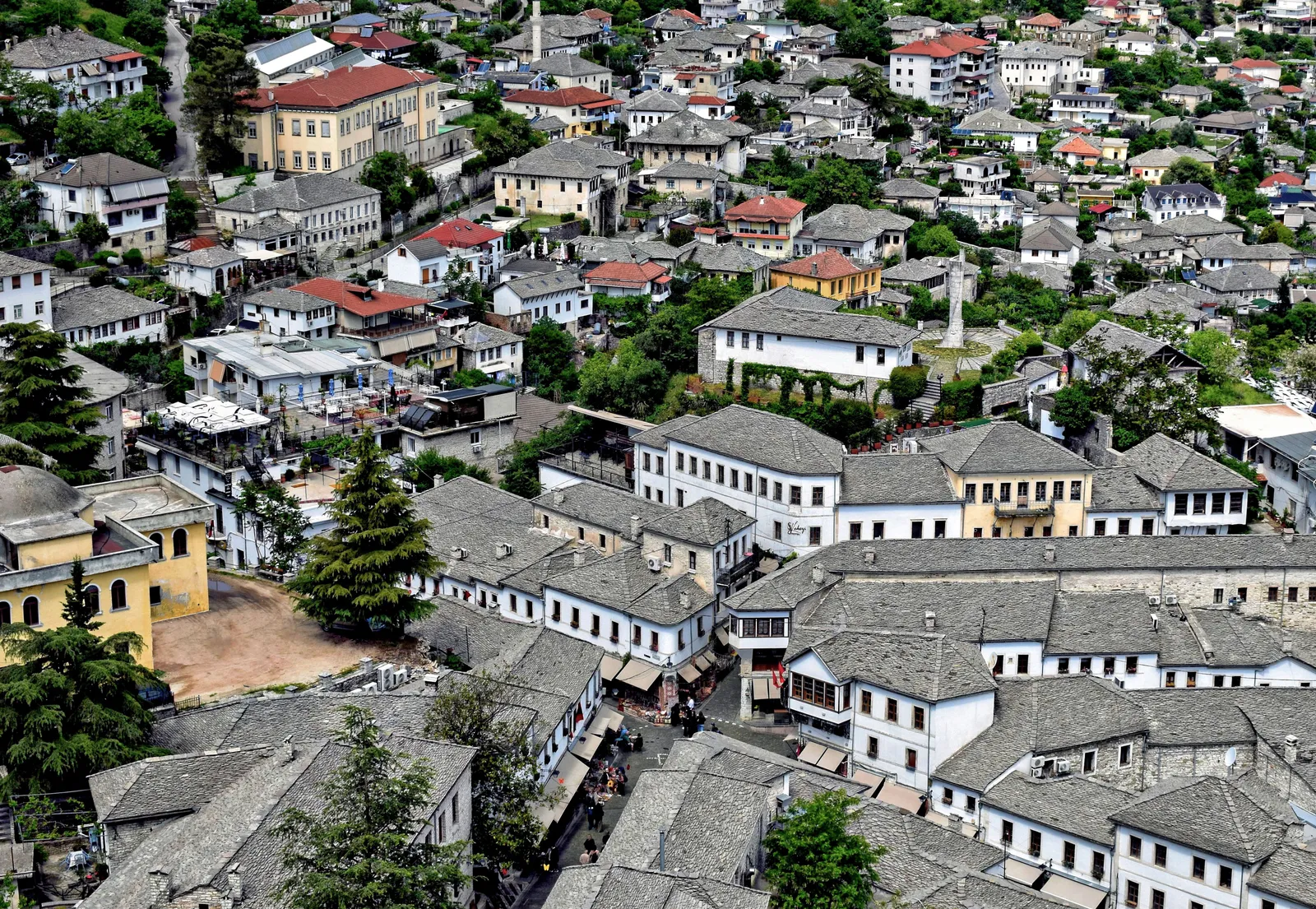
Picture a family guesthouse in Theth. You say faleminderit shumë, thank you very much, instead of a plain thanks, and the woman running the place looks at you as though you had done a magic trick. She may well come back from the kitchen with a plate of cheese and a glass of homemade raki, and tell you that you speak Albanian.
You know about ten words. Two of them can be enough to change the meal.
Albanians do not expect visitors to speak their language. But something shifts when you try, even when you fail. You stop being another tourist and become somebody who made the effort, and in Albanian culture the effort is what registers.
Greetings and the basics
| Albanian | Pronunciation | Meaning |
|---|---|---|
| Tungjatjeta | toon-yaht-YEH-tah | Hello, formal, literally may you live long |
| Përshëndetje | pur-shun-DET-yeh | Hello, neutral and modern |
| Mirëdita | meer-uh-DEE-tah | Good day, the everyday greeting |
| Mirupafshim | meer-oo-pahf-SHEEM | Goodbye |
| Po | poh | Yes |
| Jo | yoh | No |
| Ju lutem | yoo LOO-tem | Please, and also you are welcome |

The words that open doors
| Albanian | Pronunciation | Meaning |
|---|---|---|
| Faleminderit | fah-leh-meen-DEH-reet | Thank you. The single most useful word here |
| Faleminderit shumë | fah-leh-meen-DEH-reet SHOO-muh | Thank you very much. This is the raki one |
| Gëzuar! | guh-ZOO-ahr | Cheers. Make eye contact with everyone at the table |
The eye contact is not optional. Raising a glass and looking at your own drink reads as rude, and going round the table one by one reads as warm. It costs nothing and it is noticed.
Everyday phrases
| Albanian | Pronunciation | Meaning |
|---|---|---|
| Sa kushton? | sah KOOSH-tohn | How much is it? For markets and taxis |
| Ku është…? | koo UH-shtuh | Where is…? Add banja for toilet, hoteli, restorant |
| Një kafe, ju lutem | nyuh kah-FEH yoo LOO-tem | One coffee, please |
| Një kafe turke | nyuh kah-FEH TOOR-keh | One Turkish coffee |
| Një byrek me gjizë | nyuh BEE-rek meh JEE-zuh | One cheese byrek |
| Fatura, ju lutem | fah-TOO-rah yoo LOO-tem | The bill, please |
| Ujë, ju lutem | OO-yuh yoo LOO-tem | Water, please |
| Nuk flas shqip | nook flahs SHCHEEP | I do not speak Albanian. Say it with a smile |
Phrases that make an actual connection
| Albanian | Pronunciation | Meaning |
|---|---|---|
| Si quheni? | see CHOO-hen-ee | What is your name? |
| Unë quhem… | OO-nuh CHOO-hem | My name is… |
| Shqipëria është shumë e bukur! | shchee-puh-REE-ah UH-shtuh SHOO-muh eh BOO-koor | Albania is very beautiful. Try it on a taxi driver |
| Të lumtë goja! | tuh LOOM-tuh GOY-ah | Blessed be your mouth. After good food or a good song |
| Shumë mirë! | SHOO-muh MEER-uh | Excellent. The answer to how is everything |

A pronunciation guide that actually works
ë is the one to get right, because it appears everywhere. It is a schwa, the vowel in sofa or the first sound in about. It is not a full e. Think of the noise you make when you hesitate.
q is a soft ch, close to the ch in church. So qofte, the grilled meatball, is CHOHF-teh.
xh is the j in jam. So xhezve, the little coffee pot, is JEZ-veh.
sh is exactly what it looks like, and rr is a rolled r. If you cannot roll it, do not worry about it. Nobody will misunderstand you.
Tosk and Gheg, in one paragraph
The standard Albanian above is based on Tosk, the southern dialect. Head north to Shkoder, Theth or Valbona and you will hear Gheg, with different verb endings and some shifted consonants.
This does not affect you. The phrases work everywhere, and the reaction to a visitor trying is the same in both halves of the country.
Where English runs out
This is the practical question, and the answer depends on three things: where you are, who you are talking to, and how old they are.
In Tirana, Saranda and Ksamil, and anywhere built around tourism, English is nearly always enough, particularly with younger people. In villages, in markets, with furgon drivers and with older guesthouse owners, it thins out quickly. That is precisely where the tables above earn their place.
There is one more card worth holding. Among the older generation, especially in the coastal cities that grew up on Italian television, basic Italian is often understood as well as English and sometimes better. If you have school Italian somewhere in your memory, try it when English fails. The order that works: an Albanian word to open, simple English for the content, Italian as the lifeboat.
The head gesture that confuses everyone
This causes more misunderstandings than any word in the tables. In Albania a side to side head shake is often used to mean yes, and a small upward tilt of the head can mean no.
Usage today is not consistent, and plenty of locals consciously switch to western gestures when they realise they are talking to a visitor, which somehow makes it worse rather than better.
🔑 The fix is simple: do not read the head. Close with a word. Po for yes, Jo for no. If it is still unclear, repeat the question as a full sentence. In a restaurant, say the dish name out loud and wait for a spoken answer rather than accepting a nod.
Asking for the bill, and haggling politely
In a cafe or restaurant you say Fatura, ju lutem. Nobody will bring the bill before you ask, even if your table has been empty for an hour. That is not neglect, it is local manners.
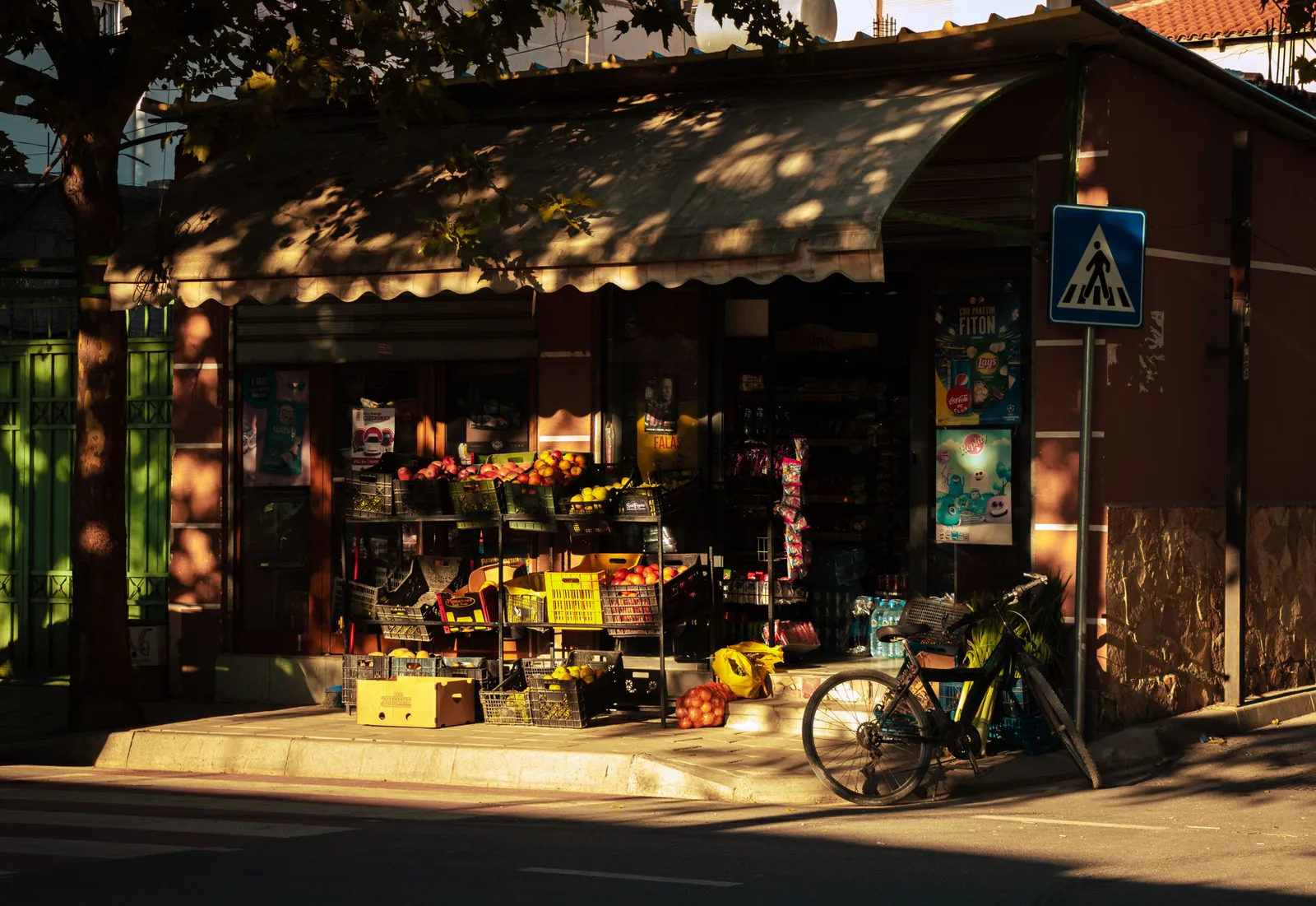
In markets and at souvenir stalls prices are flexible and haggling is fine, but tone decides the outcome. Open with Sa kushton, listen to the price, smile, offer less without pressing. If the seller does not move, faleminderit and walking away is a completely respectable ending, and quite often the price improves at exactly that moment. In shops with price tags, in supermarkets and in cafes there is no haggling at all. Our Tirana shopping guide covers where each rule applies.
How to actually use this
Walk into a shop, say mirëdita. Walk out, say faleminderit. Those two words alone change the atmosphere of the whole exchange.
Do not worry about perfection. Look people in the eye, which matters in Albania. Use your hands freely, because Albanians do, and gestures plus a small vocabulary work far better than either alone.
That glass of raki in Theth, when it comes, comes because of two words. That is what these are for: not fluency, but the moment where somebody decides you are worth the trouble. The raki itself, and everything else that gets poured at that table, is covered in our guide to Albanian drinking culture, and if this is your first trip, start with the Albania beginner guide.