The far south of Albania does something the coast further north does not: it puts ancient ruins, a UNESCO stone town, a natural spring the colour of glass and some of the best beaches in the country all within an hour or two of each other. This is a slower, more layered version of the usual Riviera trip, built around Saranda as a base rather than a coastal drive.
This plan overlaps a little with the beach-focused route further up the coast, so if you have already done four days on the Albanian Riviera, treat that as covering Dhermi, Himare and the drive over the Llogara pass, and use this trip to go deeper into the far south instead. Start with the visa and entry guide if this is your first time in the country, and southern Albania itinerary planning for how the region fits together.
Saranda works as a single base for almost the whole trip, which is part of why this route suits anyone who would rather unpack once than move hotels every night. Only the last day, up in Gjirokaster, asks you to change beds, and even that can be done as a long day trip if you would rather keep the same room for all five nights.
Itinerary at a glance
| Day | Base | Signature experience |
|---|---|---|
| 1 | Saranda | Settling in on the waterfront promenade |
| 2 | Saranda | The ruined city of Butrint |
| 3 | Ksamil | The turquoise islands and the beaches |
| 4 | Saranda | The Blue Eye spring near Muzine |
| 5 | Gjirokaster | The stone old town under its castle |
Day 1: Saranda
Saranda curves around a wide bay facing the Greek island of Corfu, which is close enough on a clear day to feel like part of the view rather than a separate country. Spend the first afternoon on the waterfront promenade, where cafes, ice cream stands and small seafood restaurants line the water and the town has an easy, holiday pace to it.
Climb up into the older streets above the harbour for a view back down over the bay, and settle in for the base you will return to across the next few days. See where to stay in Saranda for how to choose a base here.
Wow moment of the day: the evening light over the bay, when the water, the hills and the lights of Corfu across the strait all catch the same fading colour at once.
Honest note: Saranda’s town beach is fine but not its best asset. Save real beach time for the days ahead rather than judging the coast on day one.
Day 2: Butrint
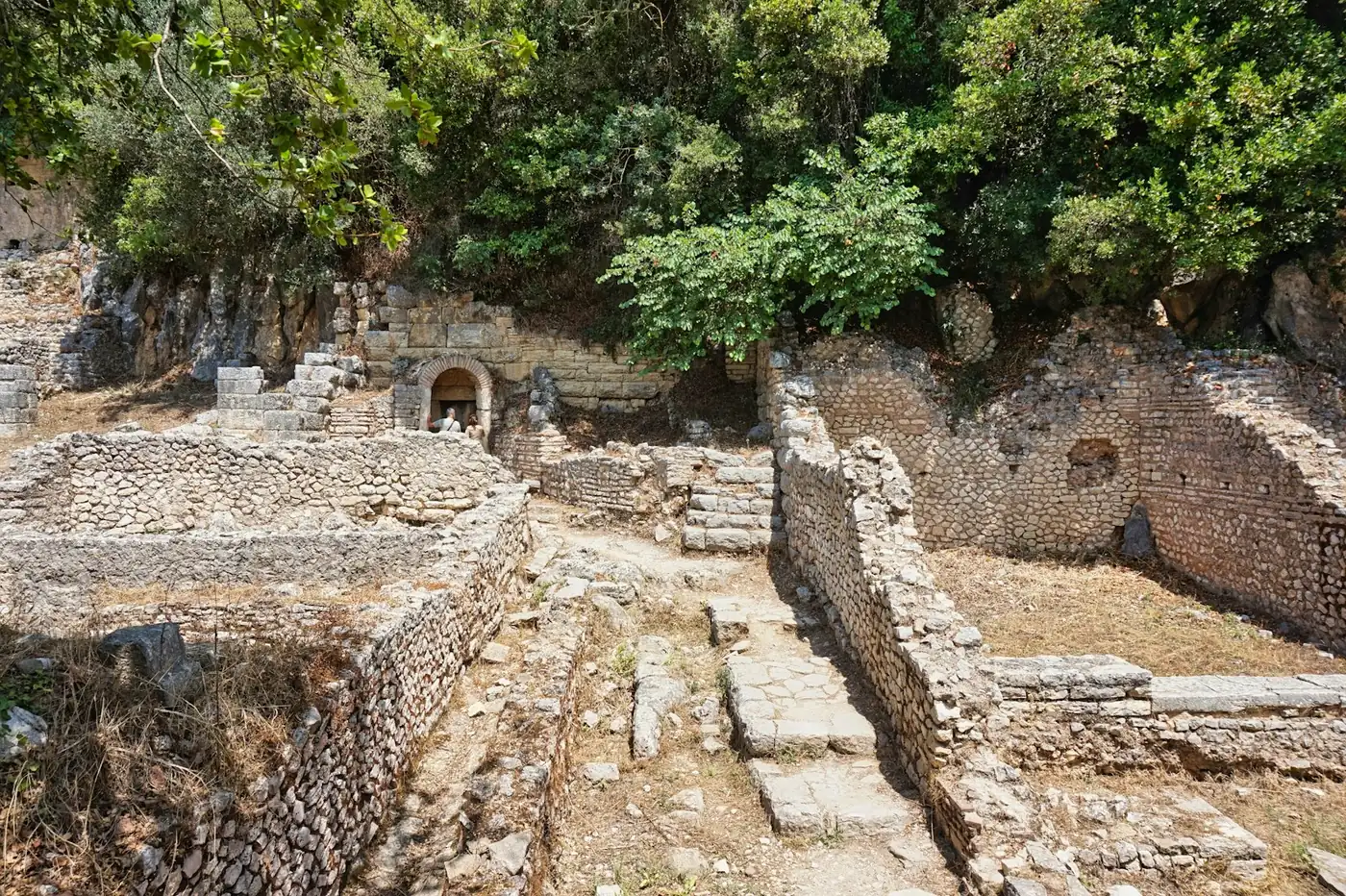
Butrint, a short drive south of Saranda in a national park on a lagoon, is one of the richest archaeological sites in the country, occupied continuously from Greek and Roman times through the Byzantine and Venetian periods. A theatre, a baptistery whose sixth century mosaic floor is normally kept covered, city walls and a hilltop Venetian tower are all reachable on a single walking loop through the site.
The setting is as much the point as the ruins themselves: the whole complex sits among wetland and old-growth forest on the edge of the lagoon, with birdlife everywhere and very little of the usual crowd noise.
Wow moment of the day: the view from the acropolis at the top of the walking loop, out over the lagoon and the Vivari channel winding towards the sea.
Honest note: the baptistery mosaic is normally kept under a protective covering and uncovered only every few years, so do not plan the day around seeing it; other parts of the site are roped off for the same reason.
Day 3: Ksamil
Move down the coast to Ksamil, a small town facing a scatter of tiny islands close enough to some beaches to wade or paddle out to. By the international hydrographic definition, this is the stretch where the Adriatic formally gives way to the Ionian, and the water is a genuinely different colour from anything further north on the coast, closer to the Caribbean palette people expect and are often surprised to find here.
Spend the day between the main beaches and a boat trip out around the islands if the sea is calm. See Saranda and Ksamil in one trip and Saranda or Ksamil, which to choose for how the two towns compare as a base.
Wow moment of the day: the first proper look at the water colour from one of the island viewpoints, somewhere between turquoise and pale green depending on the light.
Honest note: Ksamil’s best beaches are small and genuinely crowded in July and August. Go early, or come in the shoulder months if the crowds matter to you. See staying in Ksamil for how to plan around it.
Day 4: The Blue Eye of the south
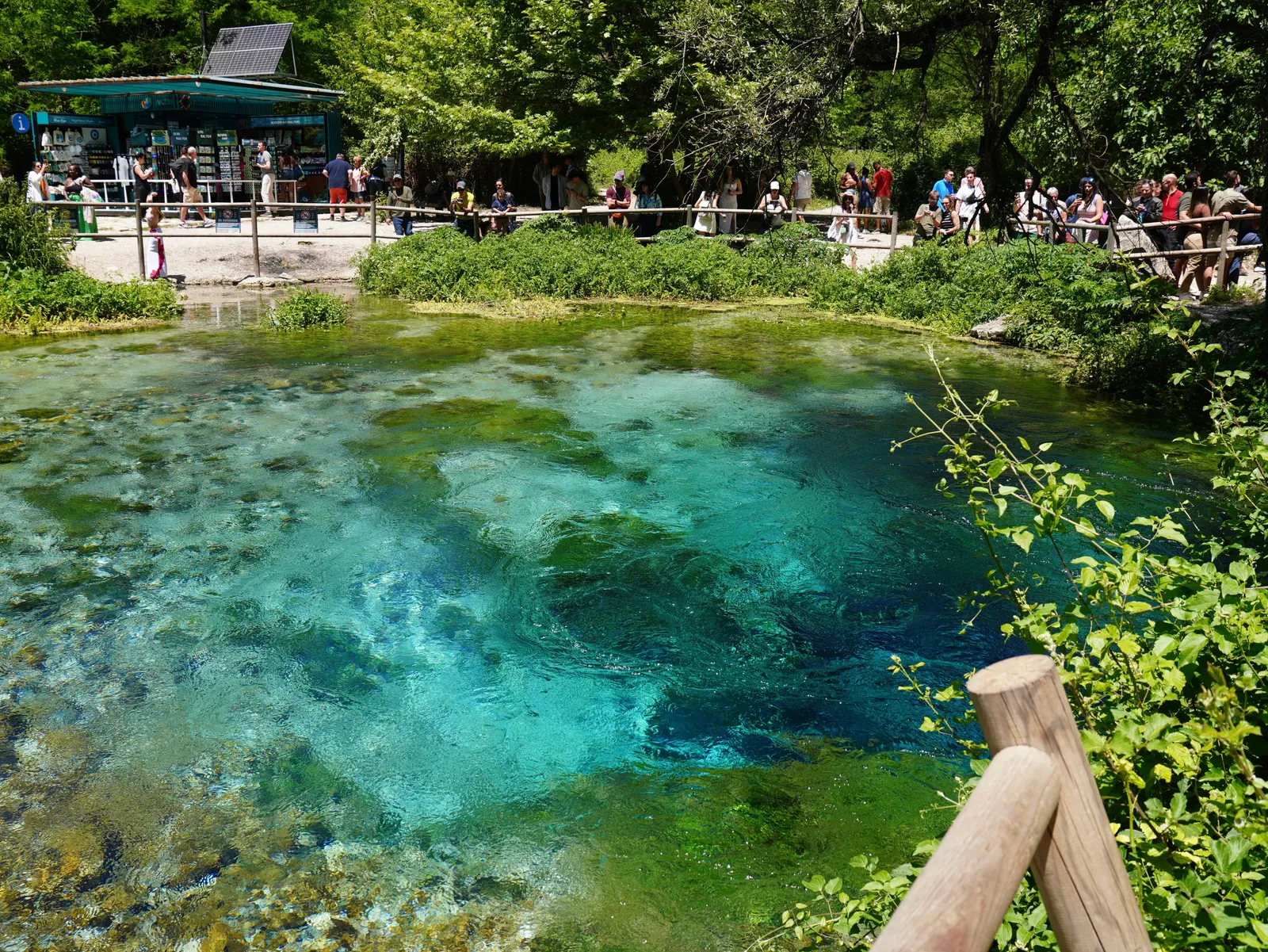
Inland from Saranda, near the village of Muzine, a natural spring known as the Blue Eye pushes water up from a depth divers have never fully measured, in a pool of the same startling, saturated blue that the name promises. It is a smaller, easier stop than the Blue Eye of Theth in the far north, and reachable as a half-day trip rather than a hike. See the Blue Eye of Albania for the full picture of this spring, and our Theth guide for its northern namesake.
Spend the rest of the day back in Saranda or Ksamil, resting ahead of tomorrow’s move inland.
Wow moment of the day: watching the bubbling centre of the spring, where the upward pressure of the water is visible even from the platform above.
Honest note: swimming is not permitted at all points along the spring, and the water is cold. Check current access before planning to get in.
Day 5: Gjirokaster
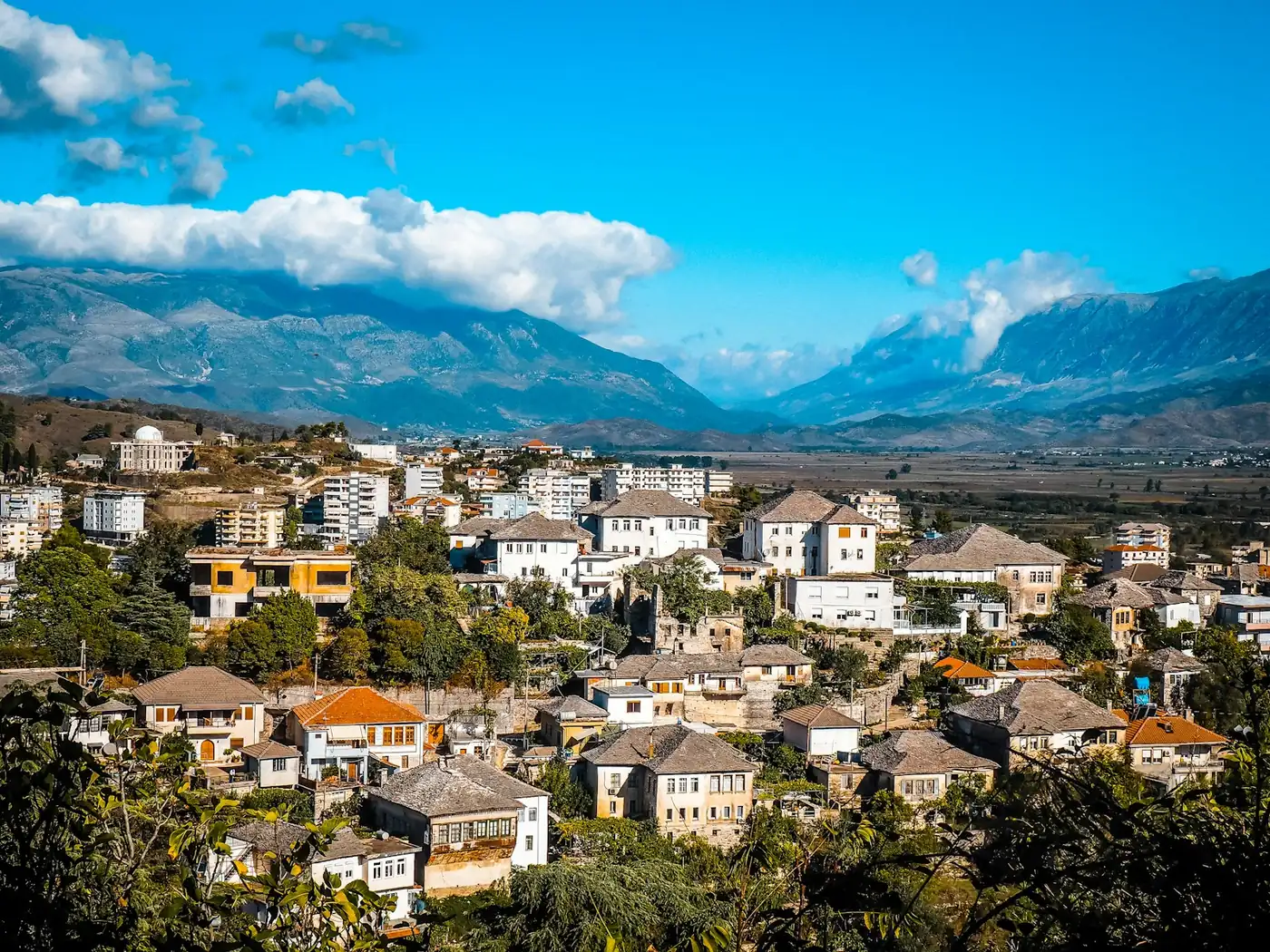
Drive up into the hills to Gjirokaster, a UNESCO-listed Ottoman town of stone-roofed houses climbing a steep slope beneath a hilltop castle, and a complete change of register from the coast below. The old bazaar quarter is still a working commercial street, and several of the grand nineteenth century tower houses are open to visit.
The castle itself is enormous, one of the largest in the Balkans, and holds an odd collection that includes a captured American aircraft from the Cold War era alongside its medieval architecture. See Gjirokaster, the stone city for the full route through both.
Wow moment of the day: the view from the castle ramparts over the grey stone rooftops of the old town, with the Drino valley spread out below.
Honest note: the old town’s cobbled streets are steep and can be slippery when wet, and stone roofs mean little shade in the heat of summer.
What did not fit, and it is worth knowing
The beach-focused stretch of the Riviera further north, including Dhermi, Himare, the hidden cove at Gjipe and the Llogara pass, is deliberately left light here since the four day Riviera route covers it properly. Berat, the other great Ottoman old town, sits roughly three hours north of Gjirokaster and is a separate trip; see five days around Tirana and Berat. The mountains and hiking of the far north are a different country in feel and are covered in five days in the Albanian Alps. If you would rather combine the far south with the drive down the coast instead of heading straight to Saranda, driving in Albania covers what the road down the coast is actually like.
Practical tips
- A car helps but is not essential for Saranda, Ksamil and Butrint, which are close together; Gjirokaster is easier reached with your own wheels. See driving in Albania and renting a car.
- Best beaches in the region are covered separately if you want to rank Ksamil against the Riviera towns further north; see the best beaches in Albania.
- Budgeting the trip, from meals to entrance fees, is covered in Albania travel costs and budget tips for Albania.
- Food along the way leans heavily on fresh seafood on the coast and heartier grilled dishes inland; see the Albanian food guide for what to look for.
- Base yourself in Saranda for the first four nights and move to Gjirokaster for the last, or day-trip Gjirokaster from Saranda if you would rather not pack.
- Shoulder season is worth considering. Late spring and early autumn keep the sea warm enough to swim while thinning the crowds at Ksamil and Butrint.
- Compare this route to the north, if you are choosing between regions rather than doing both; southern Albania itinerary planning lays out the trade-offs.