Most first trips to Albania start with a version of this question: how much can you actually see without a coastline obsession or a hire car for the mountains. The answer is quite a lot. Five days centred on the capital gets you a fortress town, a UNESCO old town famous for its stacked windows, a working Roman port, and a city that has reinvented itself twice in one generation, all without a single long drive.
This loops out from Tirana rather than pushing south to the Riviera, so it pairs well with a later trip focused on the coast: see four days on the Albanian Riviera if that is next on the list. Start with the beginner’s guide to Albania for the basics, and read renting a car in Albania before you land, because a car makes days two to four much easier.
It also works well as a first trip precisely because nothing here demands mountain hiking gear or a long coastal drive. Tirana International Airport sits close enough to the capital that jet lag and the first day’s plans rarely clash, and every stop on this loop is reachable within a couple of hours of the city.
Itinerary at a glance
| Day | Base | Signature experience |
|---|---|---|
| 1 | Tirana | Skanderbeg Square and the Blloku district by night |
| 2 | Tirana | The hilltop castle and bazaar at Kruje |
| 3 | Berat | Arriving under the Ottoman houses of Mangalem |
| 4 | Berat | The castle quarter and the wine hills around it |
| 5 | Durres | The Roman amphitheatre in the middle of a modern city |
Day 1: Landing in Tirana
Start in Skanderbeg Square, the vast, half-empty plaza at the centre of the capital, ringed by the Et’hem Bej Mosque, the clock tower and the brutalist mass of the National History Museum. It is a strange, oversized space that says a lot about the city’s Ottoman, Italian and communist layers all standing next to each other.
Spend the afternoon wandering into Blloku, the former communist-elite quarter that is now the densest concentration of cafes, bars and small shops in the country. It was sealed off to ordinary Tiranans until 1990, which is part of why locals still treat a coffee here as a small act of freedom. See Blloku, Tirana’s coolest neighbourhood for the detail.
Wow moment of the day: the contrast between the communist-era Pyramid, reworked into a colourful public space, and the glass towers rising around it. Few capitals show you thirty years of change this compressed.
Honest note: Tirana traffic is heavy and pavements can be uneven. Wear proper shoes and do not expect to cross the big roads in a hurry.
Day 2: Kruje, castle and bazaar
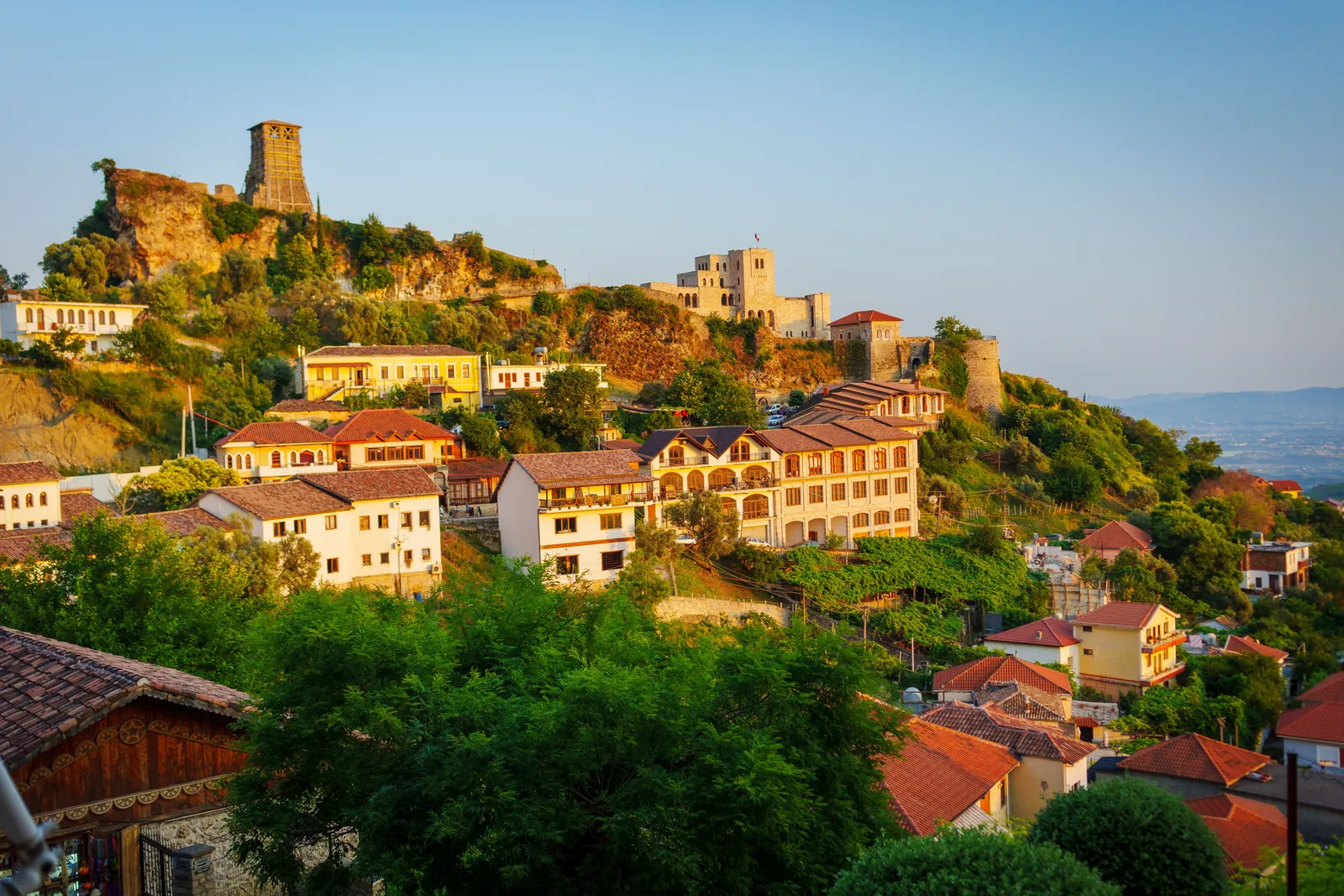
Kruje sits on a mountain ridge under an hour from Tirana and was the stronghold of Gjergj Kastrioti, known as Skanderbeg, the national hero who held off Ottoman armies here in the fifteenth century. The castle above the town holds a museum dedicated to him, and the views over the plain below stretch as far as the coast on a clear day.
Below the castle walls, the Old Bazaar is a cobbled street of small wooden shops selling rugs, silver filigree, antiques and traditional dress, rebuilt in the old style and genuinely used by traders rather than staged purely for visitors. See Kruje castle and bazaar day trip for the full route.
Wow moment of the day: stepping through the bazaar gate and losing the twenty-first century for half an hour, right down to the smell of the woodsmoke from a coffee stall.
Honest note: the bazaar climb is steep and cobbled, and it gets busy with day-trip groups by late morning. Go early if you can.
Day 3: On to Berat
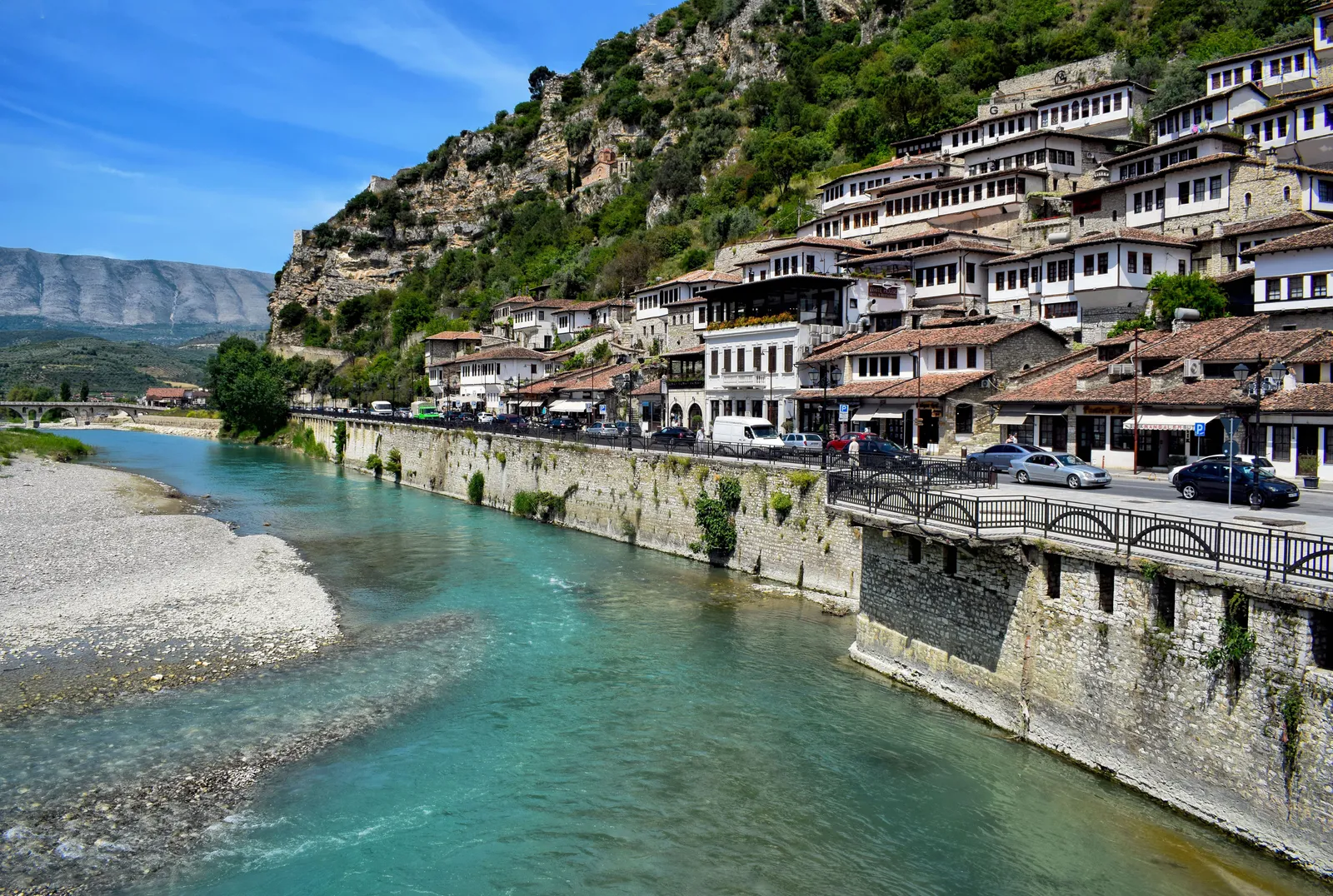
Drive south to Berat, the “town of a thousand windows”, named for the tiers of white Ottoman houses stacked above the Osum river with their windows all facing the same way to catch the light. The old quarters of Mangalem and Gorica sit on either bank, connected by a stone bridge, and the whole ensemble is a UNESCO World Heritage Site.
Spend the afternoon walking Mangalem’s steep lanes, where houses lean over the street and the odd mosque minaret still pokes above the rooftops. See Berat day trip for a route that also works as a single long day from Tirana, if five days is not on the table.
Wow moment of the day: the first view of the stacked houses from across the river at dusk, when the last light catches every window at once.
Honest note: many of the old houses are private homes, not museums. Keep to the public lanes and be quiet in the residential stretches.
Day 4: The castle and the hills above the town
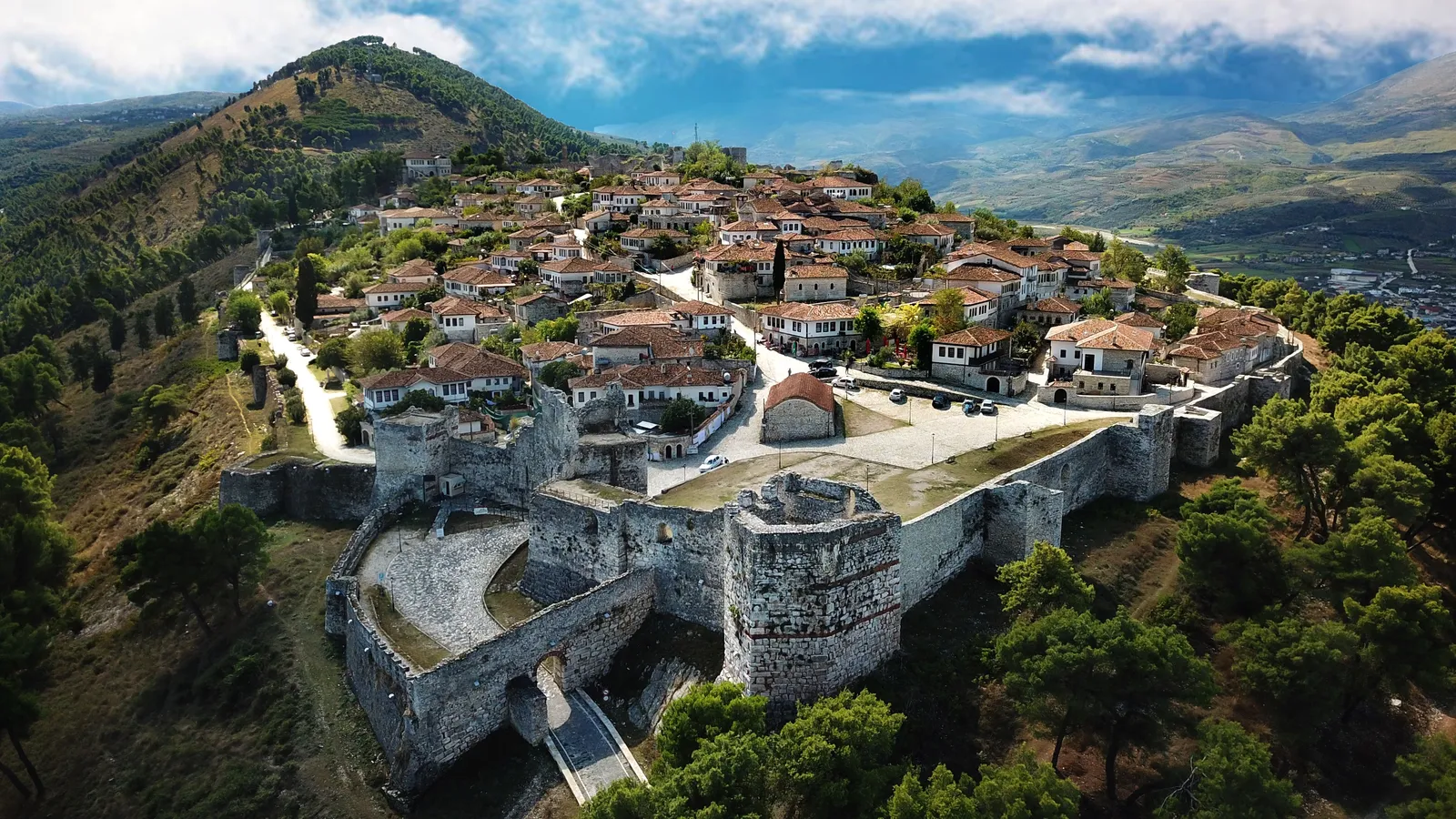
Climb to Berat Castle, which is not a single fortress but an entire inhabited hilltop village behind medieval walls, with Byzantine churches, a small mosque and houses still lived in today. The Onufri Museum inside one of the churches holds a remarkable set of sixteenth century icons.
In the afternoon, head into the hills around Berat, which sit at the edge of one of Albania’s better known wine regions, planted with old local grape varieties alongside newer international ones. A slow drive through the vineyards and orchards is a good counterweight to a morning spent on stone steps.
Wow moment of the day: standing inside the castle walls and realising it is not a ruin, it is a village, with washing lines strung between medieval towers.
Honest note: the castle hill is a genuine climb with loose stone in places, and there is very little shade. Carry water.
Day 5: Durres and back to Tirana
Drive to Durres, Albania’s main port and one of the oldest cities in the country, founded well over two thousand years ago. Its Roman amphitheatre, one of the largest in the Balkans, sits half swallowed by later housing right in the middle of the modern town, an odd and memorable juxtaposition.
Walk the seafront promenade for lunch, then head back to Tirana for the afternoon or, if your flight allows it, fly out directly, since Durres is a short run from Tirana International Airport.
Wow moment of the day: the tunnel entrance of the amphitheatre, where the corridor that once brought gladiators into the arena now opens onto ordinary apartment blocks.
Honest note: parts of the amphitheatre site are fenced for ongoing excavation, so not everything is open to walk through at once.
What did not fit, and it is worth knowing
This loop stays inland and central, so the coast is left out almost entirely. The Riviera towns of Dhermi, Himare and Ksamil, and the ruins at Butrint, are a different trip and a different climate; see four days on the Albanian Riviera for that route. The mountains of the north, including Shkoder, the Koman ferry and the hiking around Theth and Valbona, are further out again and want their own days: see wild northern Albania if that appeals more than the coast.
Gjirokaster, the other great Ottoman old town in the south, is genuinely worth seeing but sits three to four hours from Berat, too far to bolt onto this loop without cutting a day elsewhere. Lake country in the east, around Pogradec and Korce, is another loop again, quieter and cooler than anything on this route; see the Ohrid day trip if that is more your pace.
Practical tips
- Base yourself in Tirana for nights one and two, then Berat for nights three and four, moving back to Tirana or Durres for the last night. See where to stay in Tirana.
- A car makes days two to four easier, though buses run to both Kruje and Berat if you would rather not drive. See driving in Albania.
- Evenings in Tirana are worth planning around, since the city has one of the livelier nightlife scenes in the region. See Tirana nightlife.
- Shopping, from the Kruje bazaar to Tirana’s own markets and boutiques, is genuinely good value here. See shopping in Tirana.
- Airport transfers from Tirana International Airport are straightforward; see Tirana airport transfers for the options.
- If you only have three days, cut Durres and split the time between Tirana and Berat instead; see three days in Tirana for a shorter version of day one and two.
- Plan the wider trip around this loop with Albania itinerary planning, which covers how the regions fit together.