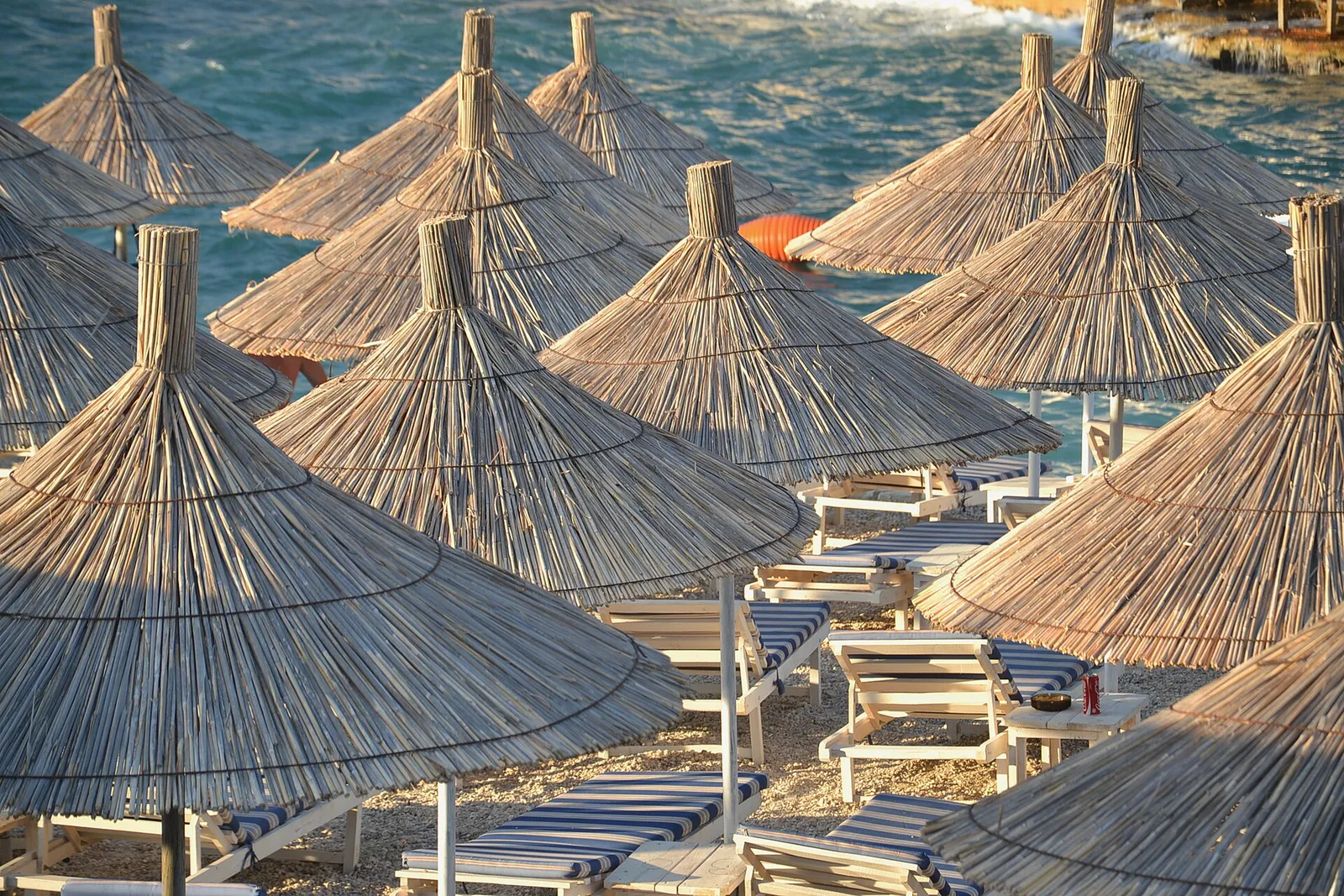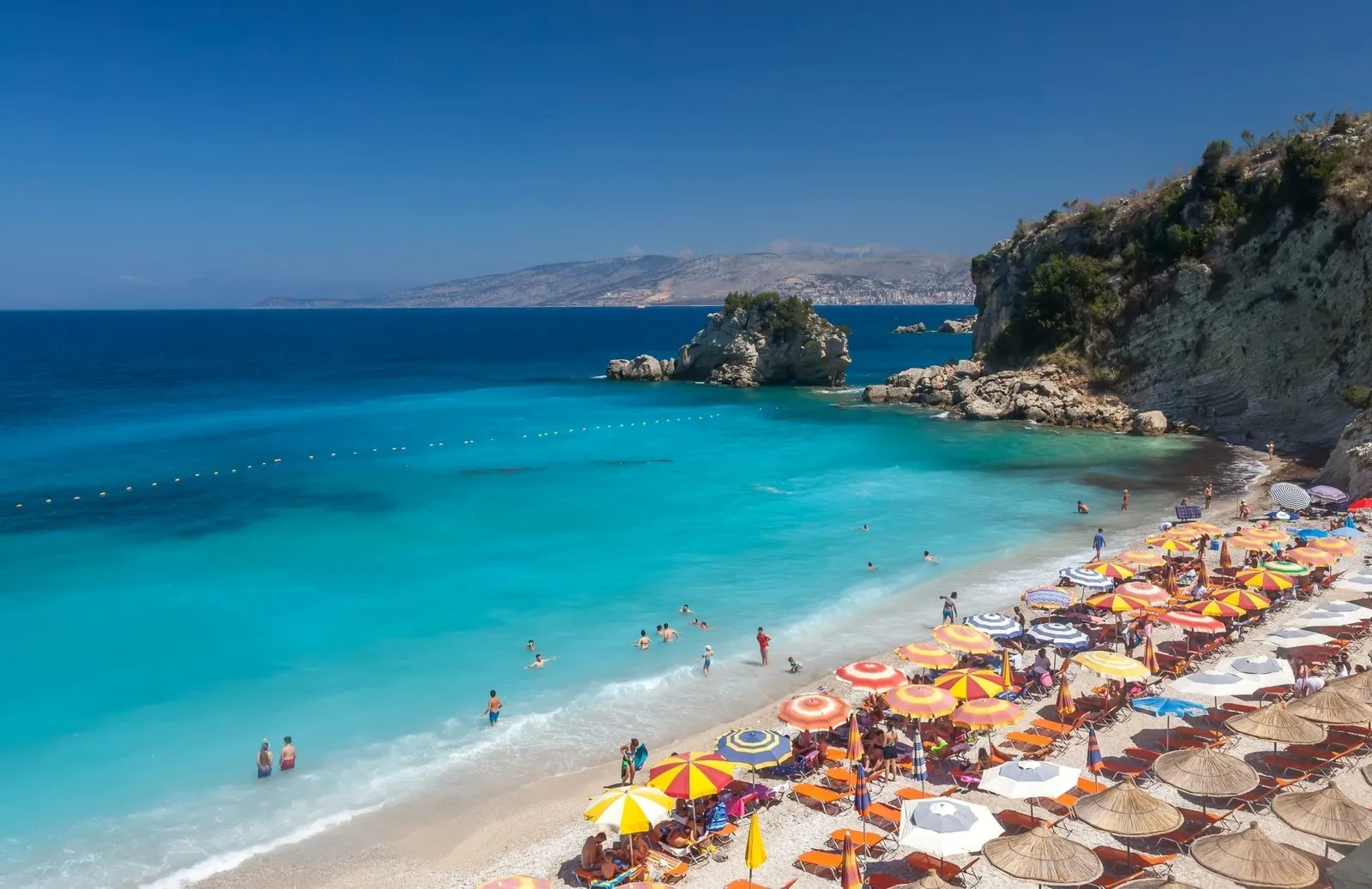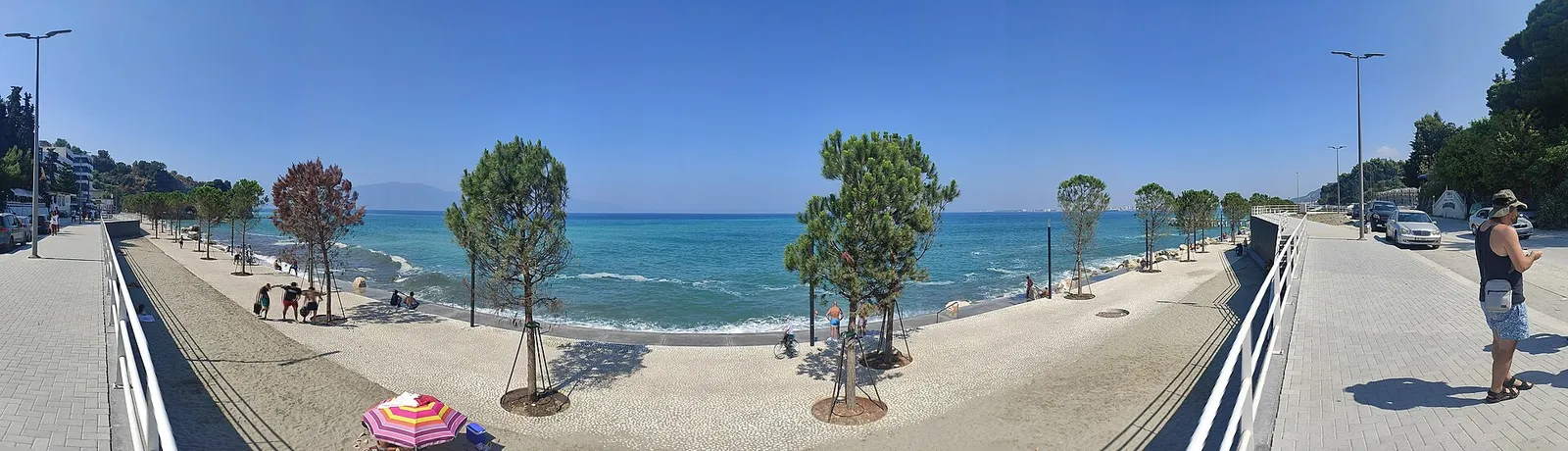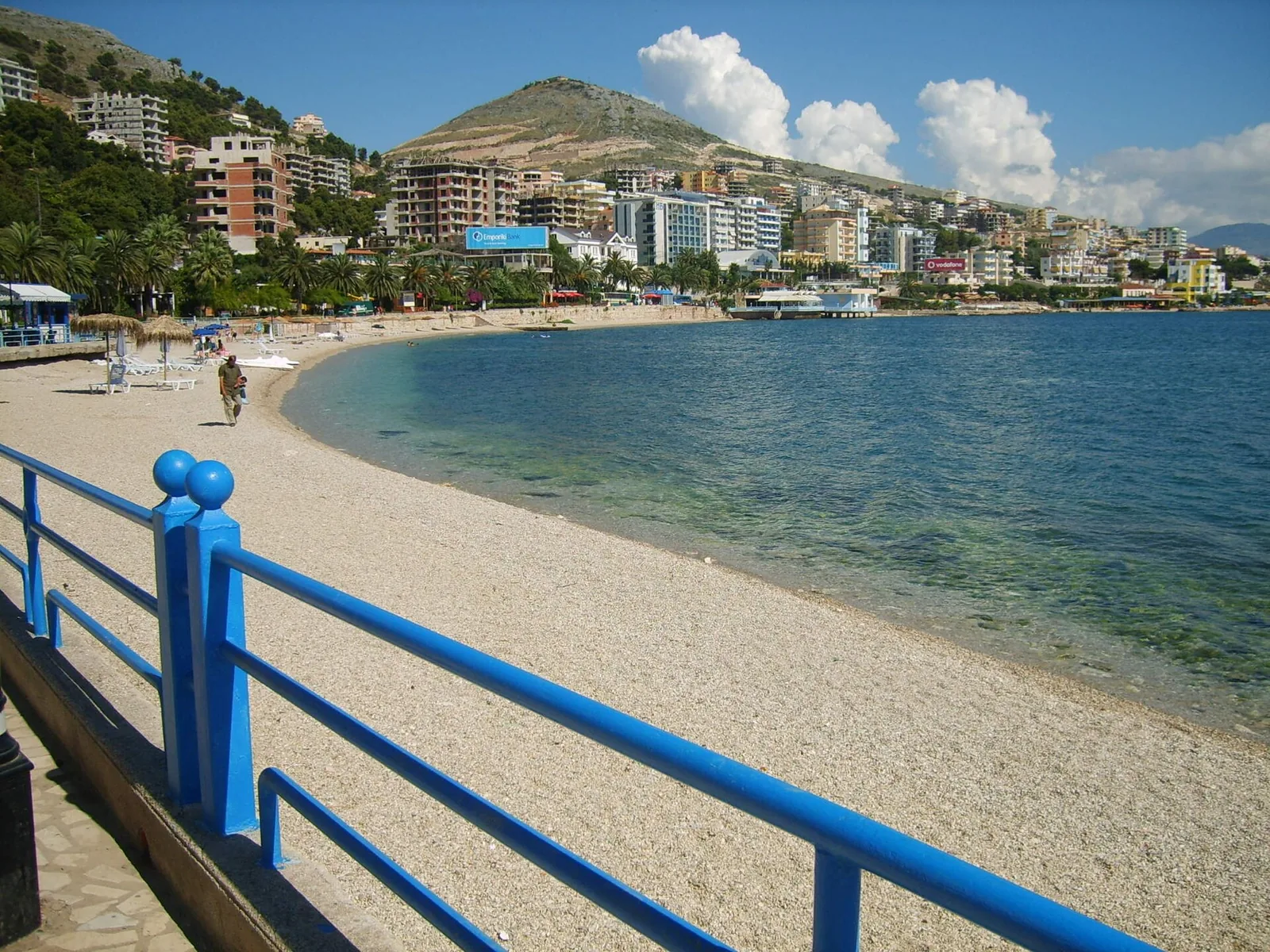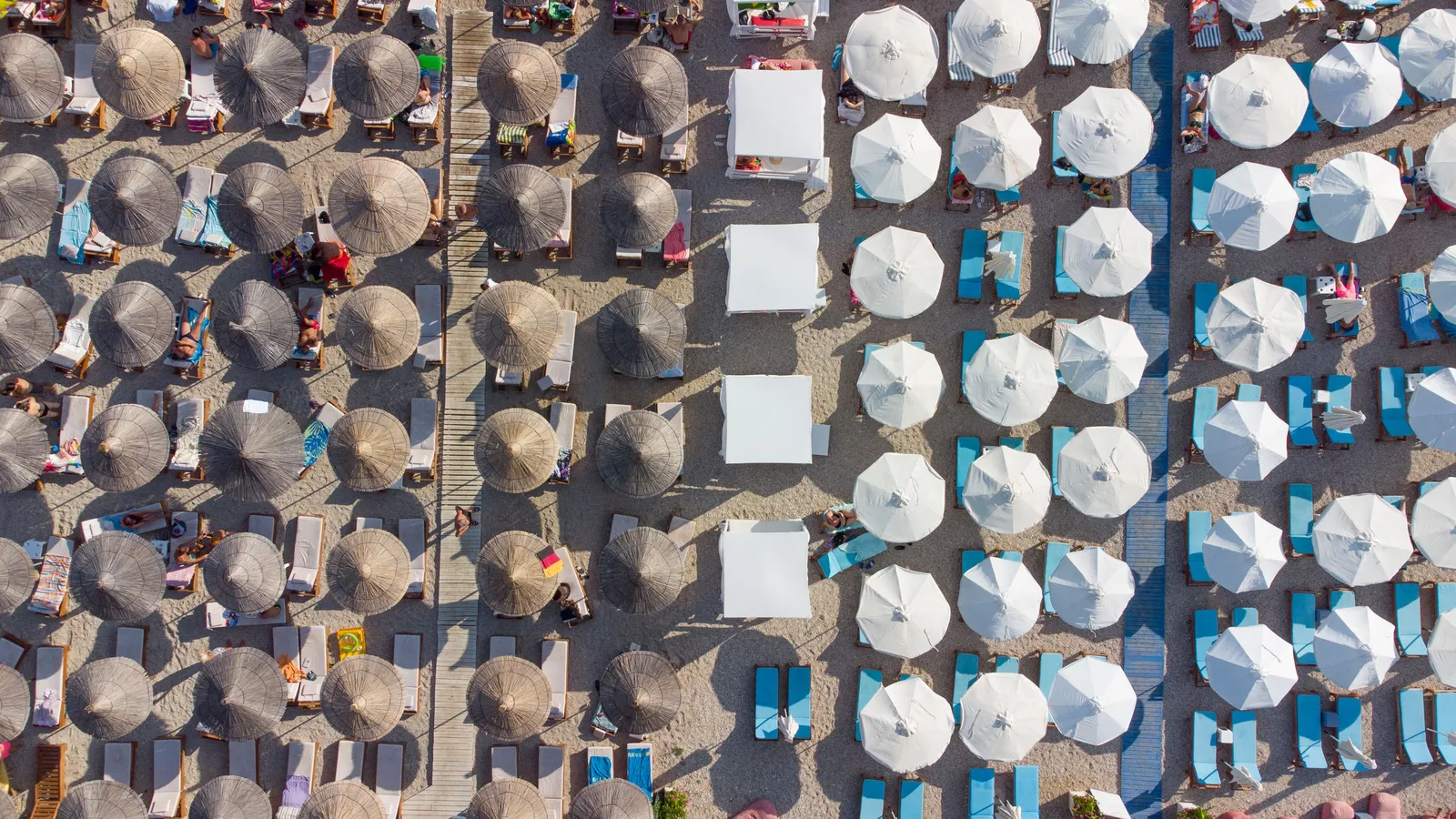
Every summer the same argument plays out on the Albanian coast: someone puts a towel down, and someone else says that part of the beach is taken.
Both people are sometimes right, and the reason is a piece of regulation that most visitors have never heard of. Government rules require at least 30 per cent of beach space in every coastal municipality to remain public, and the Council of Ministers regulation on beach concessions, rewritten in October 2024, has tightened who is allowed to rent loungers on the rest.
Knowing how that works turns a vague sense of unfairness into a practical skill.
The rule, in plain terms
The core of it is a ratio rather than a list of beaches.
At least thirty per cent of beach space in each municipality has to stay public. It is a floor rather than a target, and official statements have put several municipalities well above it. What the ratio does not promise is that the public share sits in the most attractive part of every bay: it is counted across a municipality’s beaches, so a single popular cove can still be largely leased.
And public no longer always means free. An amendment in January 2026 created a category of public beach that the municipality itself runs and charges for, and in 2026 several municipalities, Vlore and Himare among them, rented umbrella sets on such beaches for a few hundred lek. Free stretches still exist next to them: Himare, for one, says the sand without its umbrellas stays free.
The same framework also narrows who may rent sunbeds at all, tying the concession to licensed operators rather than to anyone able to carry a stack of loungers onto the sand.
What that looks like when it works
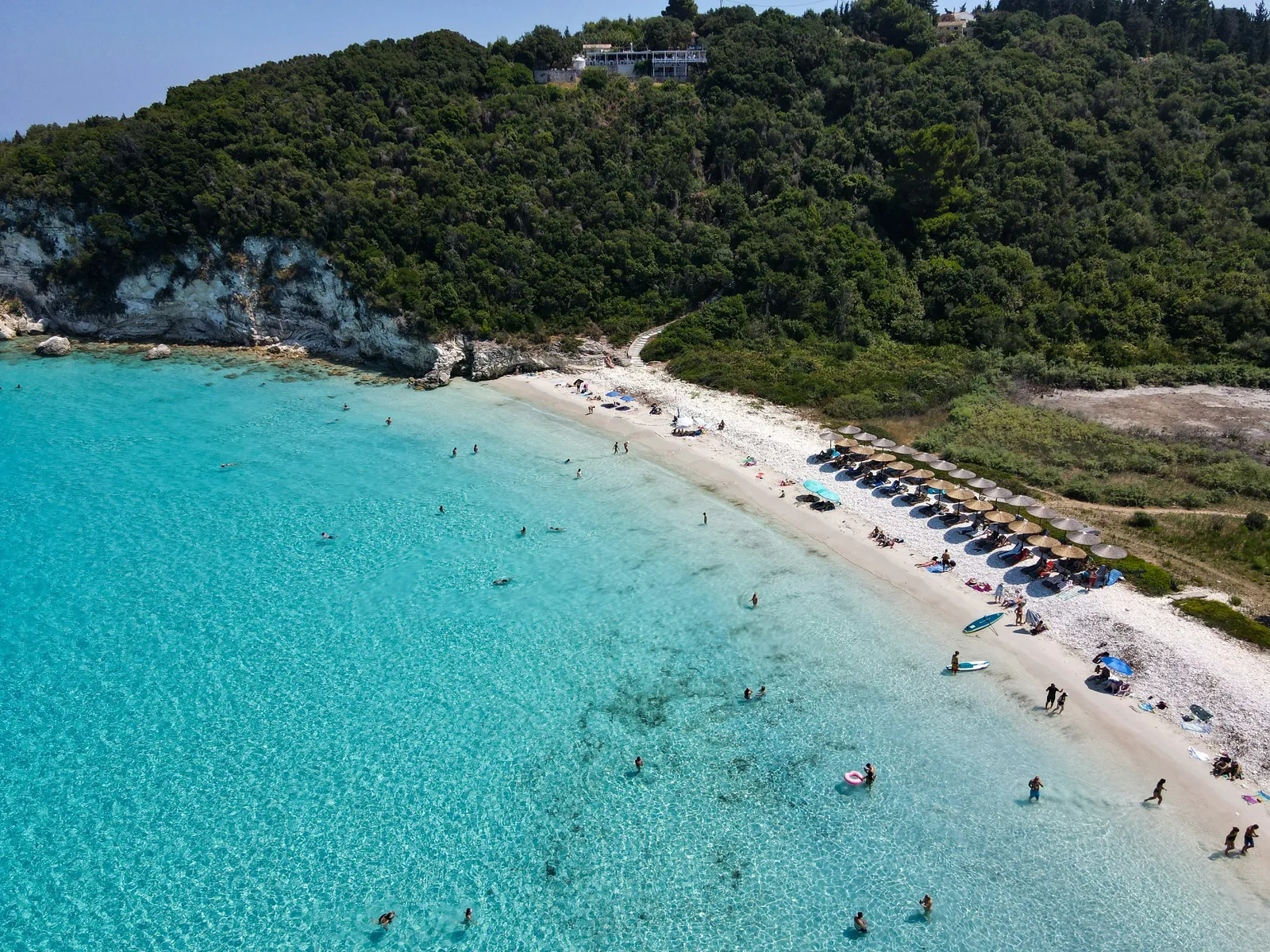
On a beach where the municipality has actually implemented it, the layout is obvious within about ten seconds of arriving.
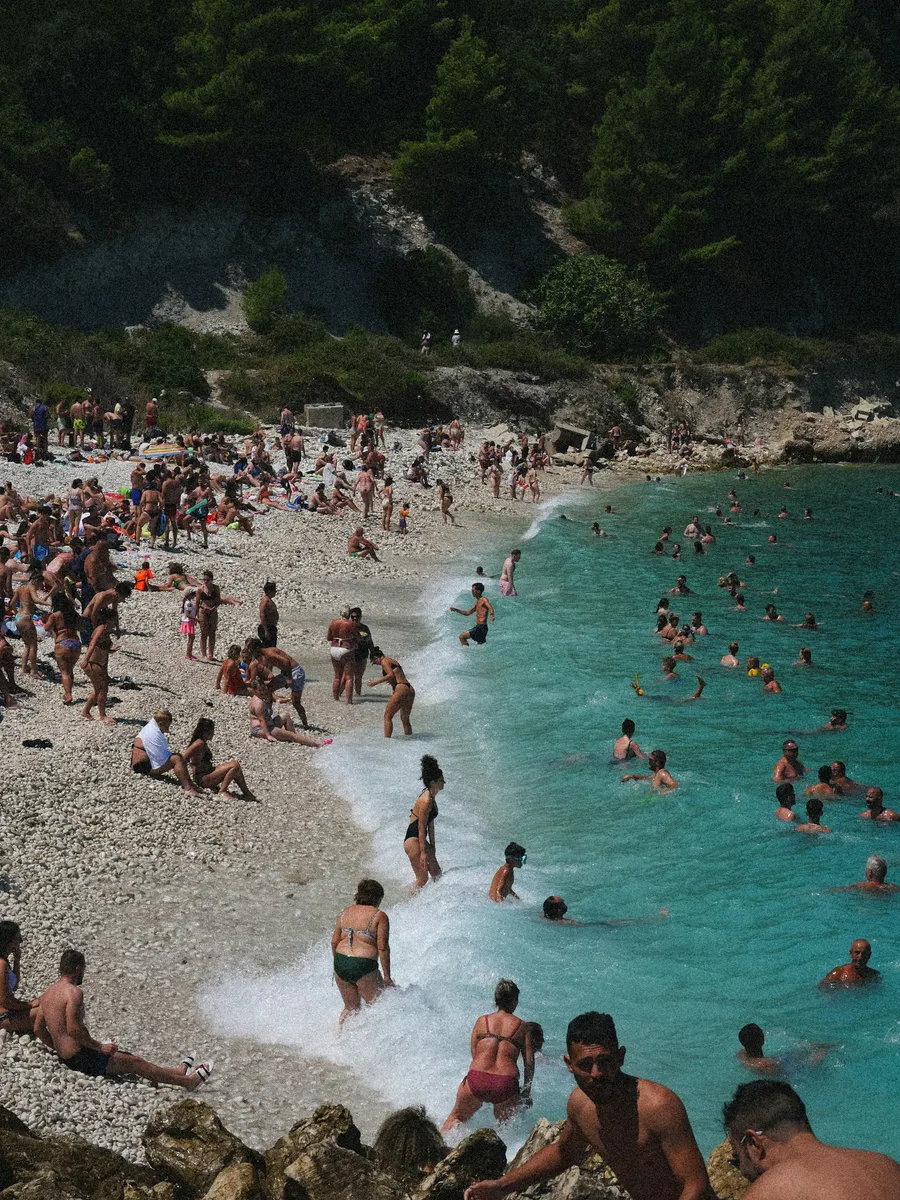
You see ordered rows of matching loungers with a bar behind them, and then a clearly separate section of open sand or shingle, often signed, sometimes with a shower post and a block of toilets. People with their own towels and umbrellas sit there. Nobody comes to move them along.
That is the version the rule describes, and on the better run beaches of Vlore, Durres and parts of the southern Riviera you will find something close to it.
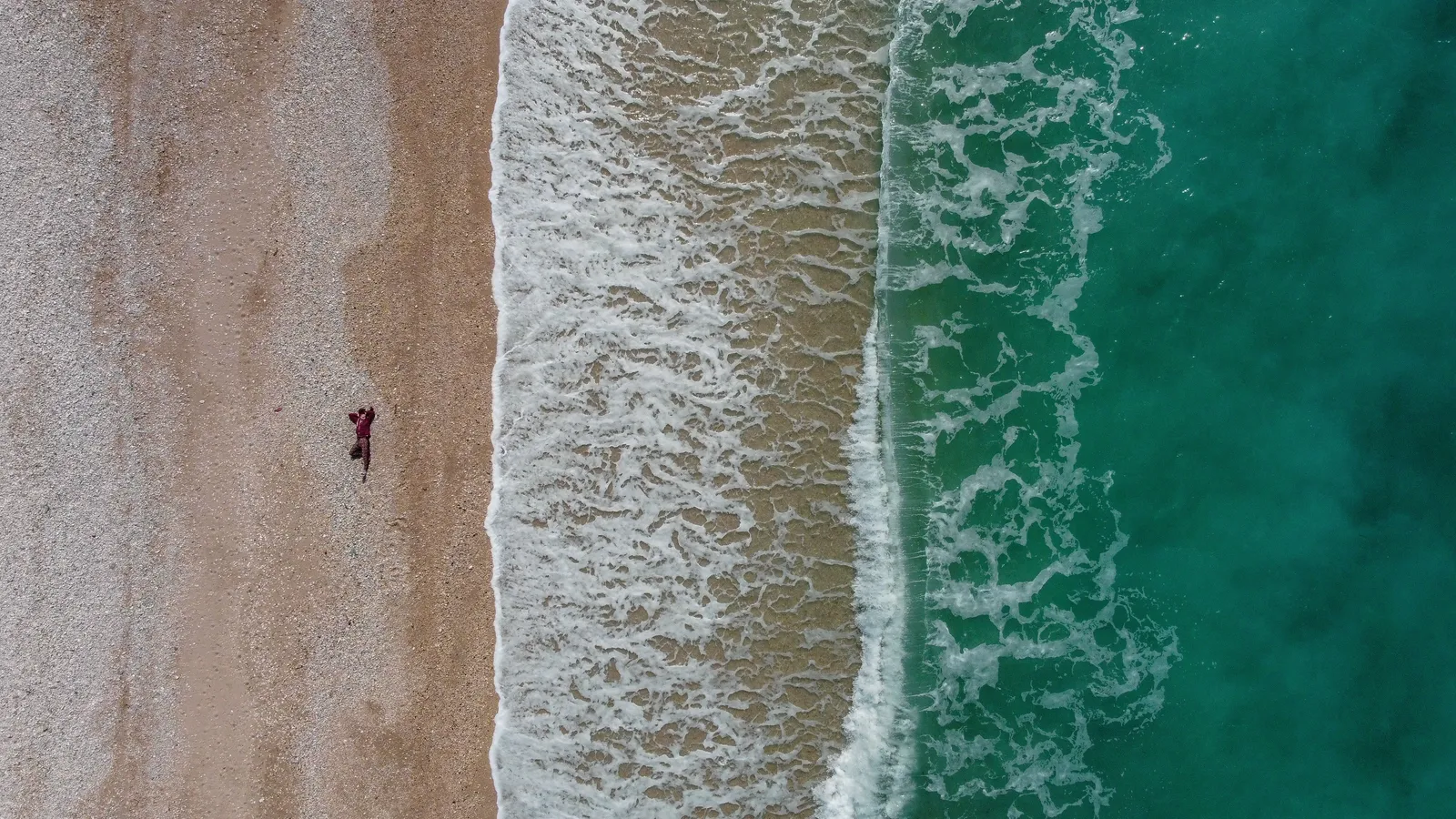
The other thing worth noticing is the water. The free stretch is public shoreline, not a lesser beach: the sea is the same sea, and on a pebble coast the swimming off an unlit public section is frequently better than the swimming in front of a crowded bar.
Why it looks different from one bay to the next
Here is the part guides tend to leave out, because it complicates the headline.
Implementation is uneven. Albania’s State Audit Office has reported that the split is not always applied on the ground, and that some public sections were placed away from the main beach. The rule is national and the delivery is municipal, and municipalities vary enormously in how seriously and how quickly they have taken it on. Some have marked, equipped and staffed their free zones and publish where they are. Others have done very little, and the free share exists mainly as a gap between two operators’ rows, unsigned and without a shower in sight.
There is also a seasonal element. A free zone that is staffed and swept in early August may be neither in mid June or late September, when the same beach has a fraction of the visitors and a fraction of the municipal attention.
🔑 The practical takeaway: treat the free section as something you look for rather than something you expect to be advertised, and treat the local bashkia, the municipality, as the authority on where it is on a given beach.
Finding the free stretch on a busy beach
Three habits find it almost every time.
Walk to the ends. Concessions cluster at the centre of a bay, closest to the road, the car park and the bar. The free section is very often at one or both ends, five minutes further on foot than most people are prepared to walk with a cool box.
Look for the break in the rows. Where the geometry stops, the concession stops. That physical line is more reliable than any signage.
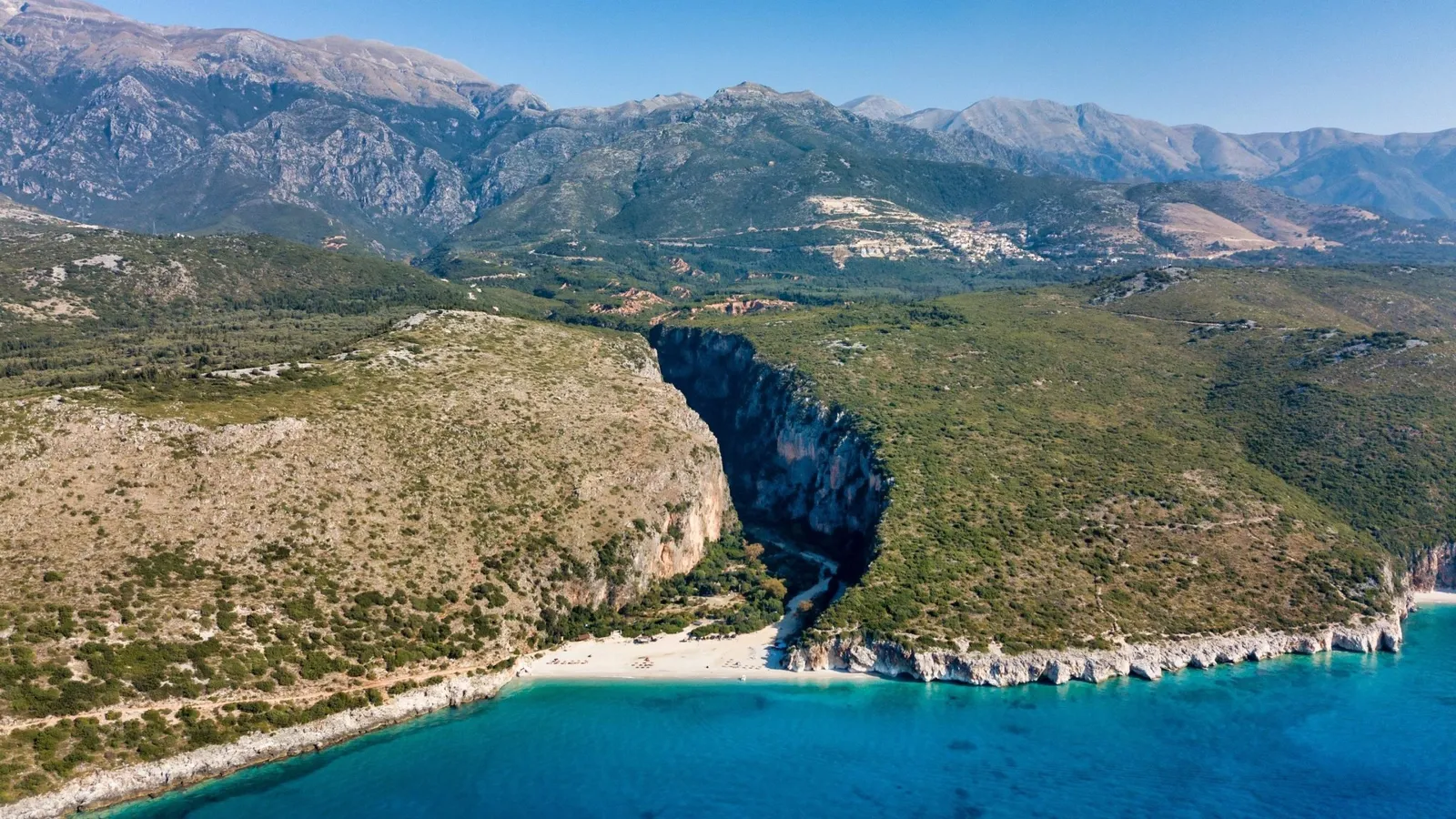
Go one bay along. The Riviera is a mountain road with beaches hanging off it at intervals, and the cove twenty minutes past the famous one is frequently half empty and entirely unleased. This is the single biggest advantage of having your own transport here, and it is the same argument our guide to the best beaches in Albania makes about the harder to reach coves.
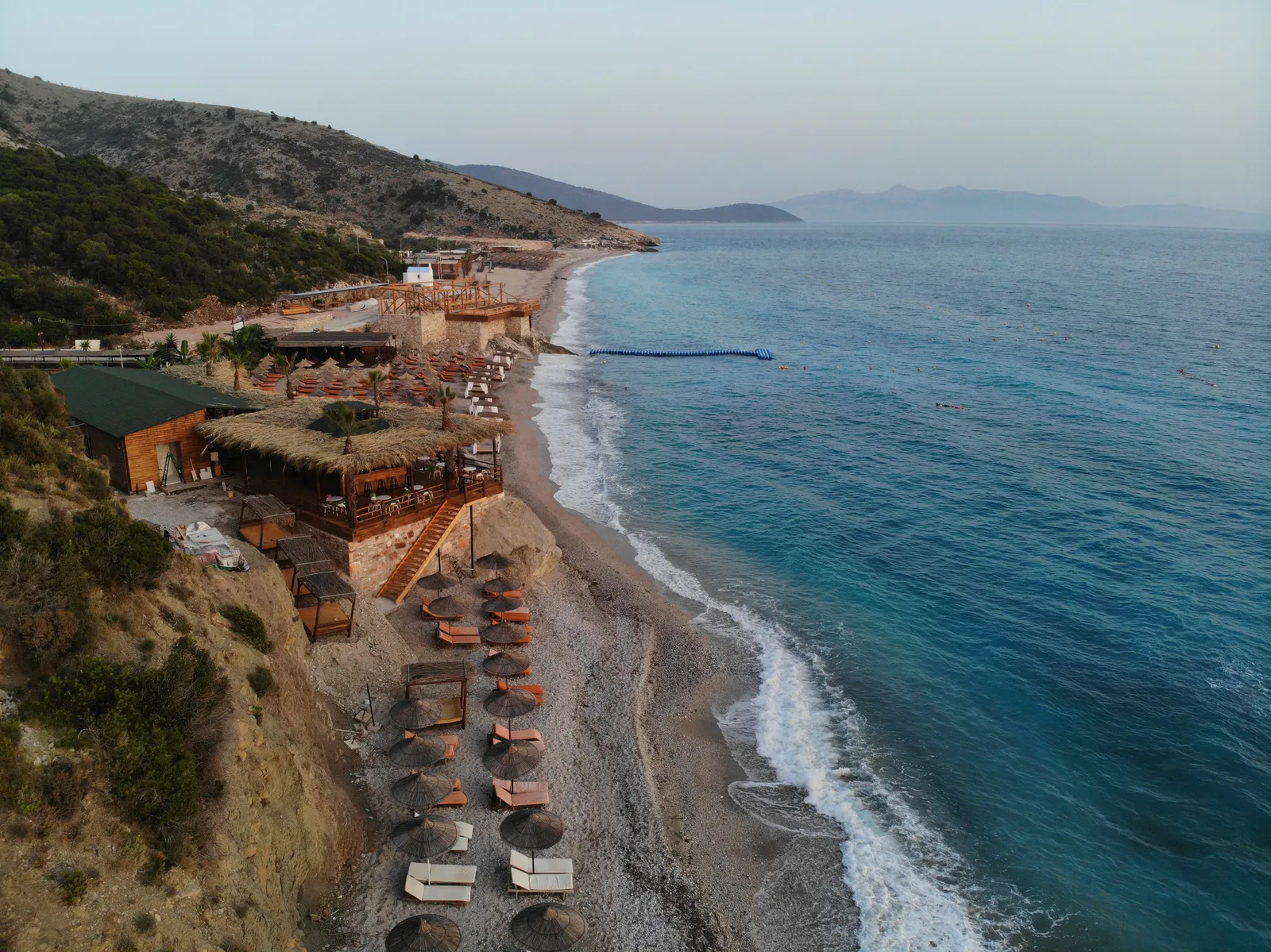 The free beaches are the ones the bus does not stop atCar hire is what turns a single beach into a whole coast
What the paid side now costs
Prices on the coast have moved fast, and older advice about how cheap it all is has not kept up.
Rates now run across a wide band. Municipally run sets on public beaches were priced at a few hundred lek in 2026, and private operators on the popular beaches are widely reported at roughly 1,500 to 4,000 lek for two loungers and an umbrella for the day in peak season, with the central coves at Ksamil at the top. Quieter bays sit lower, and the fashionable beach clubs can sit above the band.
Two things soften it. Many operators discount or waive the charge against food and drink at their bar, which changes the maths if you were going to eat there anyway. And half day rates are common from the middle of the afternoon.
⚠️ Do not trust a price list by beach, including one you read online. Rates here are set by individual operators, move within a season and vary by row. Ask at the beach.
When paying is the better call
Free is not automatically the right answer, and pretending otherwise makes for a worse holiday.
Shade is the real product. Natural shade on this coast is scarce, and on a pebble beach in August an umbrella is not a luxury. If you are there from ten until five with children, buy the set.
Facilities follow the money in the places where the public provision is thin, so the lounger charge is sometimes buying you a toilet and a rinse as much as a bed.
And the cost sits in proportion. Set against what accommodation, food and fuel run to over a week, a couple of sunbed days is a small line, and our Albania budget guide puts it next to the costs that actually move a trip total.
The way to use the rule is not to refuse ever to pay. It is to know that you always have the option not to, and roughly where along the bay that option is. Which stretch of coast to point yourself at in the first place is a separate question, and one our Riviera overview answers bay by bay.